Smart Money Concept: институциональный стиль торговли | Upscale


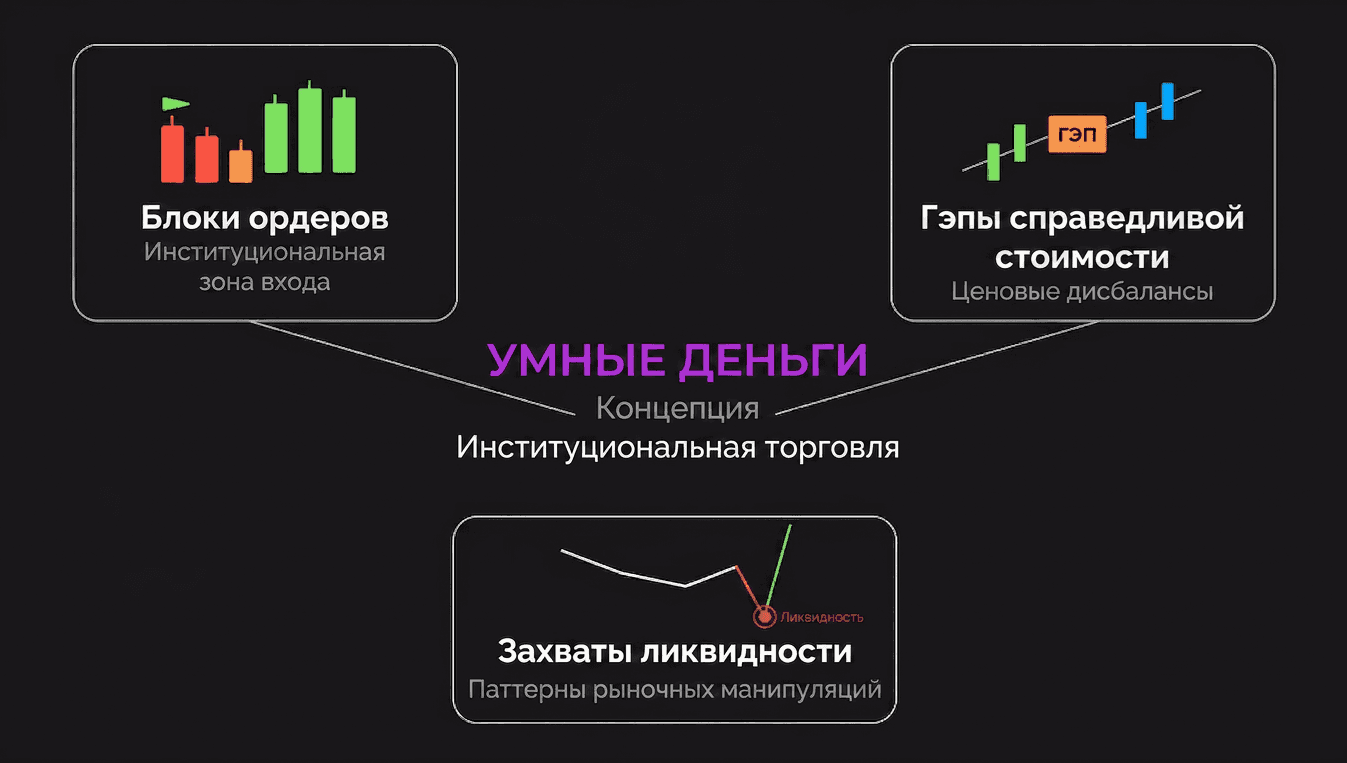
Smart Money Concept (SMC) — это методология торговли по ценовому движению, которая фокусируется на чтении институционального потока ордеров, а не на запаздывающих индикаторах. Она определяет три ключевых элемента на графике: блоки ордеров (order blocks — последняя противоположная свеча перед крупным импульсом, обозначающая зону накопления институциональных позиций), гэпы справедливой стоимости (FVG — ценовые дисбалансы, возникающие когда объём ордеров превышает доступную ликвидность) и захваты ликвидности (спроектированные движения за очевидные уровни поддержки или сопротивления для срабатывания розничных стоп-лоссов перед настоящим институциональным движением). Методология набрала популярность потому, что отражает реальный механизм функционирования рынка форекс с оборотом $7,5 трлн в день по данным Triennial Survey BIS 2022 — институции не могут просто купить по рынку на миллиарды, не обнаружив намерений, поэтому они накапливают, манипулируют и распределяют позиции по паттернам, оставляющим следы на графике. Ниже — разбор ключевых компонентов, торгового фреймворка и отличий SMC от традиционного технического анализа.
Почему SMC существует: проблема институционального потока
Ключевой принцип торговли по Smart Money Concept основан на структурной реальности финансовых рынков: институциональные инвесторы двигают рынки, а розничные трейдеры реагируют на эти движения. Согласно Triennial Survey BIS 2022, ежедневный оборот форекс достиг $7,5 трлн, при этом подавляющее большинство обрабатывалось центральными банками, коммерческими банками, хедж-фондами и транснациональными корпорациями. Розничный трейдер со счётом $50 000 невидим на этом масштабе. Институция, размещающая ордер на $500 млн по EUR/USD — нет, и она не может просто отправить этот ордер без катастрофического проскальзывания.
Это создаёт фундамент SMC: институции вынуждены накапливать позиции во времени, часто манипулируя ценой для сбора необходимой ликвидности. Они толкают цену в очевидные зоны розничных стоп-лоссов, заполняют свои ордера за счёт панических продавцов, а затем двигают цену в реальном намеченном направлении. Научившись распознавать эти следы, трейдеры позиционируют себя вместе с институциональным потоком, а не в качестве его контрагента.
Ключевые компоненты Smart Money Concept
Понимание фундаментальных строительных блоков создаёт основу для институционального стиля торговли. Эти компоненты работают вместе, раскрывая где крупные участники рынка разместили свои ордера и как намерены двигать цену.
Блоки ордеров (Order Blocks) — институциональные зоны входа
Блоки ордеров — это последняя противоположная свеча перед значительным ценовым движением. Они определяют зоны, где были размещены крупные институциональные ордера. Когда банки и хедж-фонды входят в крупные позиции, они не могут просто исполнить рыночный ордер без массивного проскальзывания. Вместо этого они накапливают позиции постепенно, создавая характерные ценовые паттерны.
Бычьи блоки ордеров формируются, когда нисходящая свеча сменяется сильным восходящим движением — это означает, что институции завершили продажи и начали агрессивные покупки. Медвежьи блоки ордеров появляются, когда восходящая свеча предшествует резкому падению — здесь институции завершили покупки перед открытием коротких позиций. Ключ к определению валидных блоков — импульсное движение прочь от зоны: институциональные ордера создают взрывное ценовое движение из-за чистого объёма исполнения.
Блоки ордеров в SMC функционируют иначе, чем традиционные поддержка и сопротивление. Вместо зон, где цена многократно отскакивает, блоки ордеров представляют незаполненные институциональные ордера, ожидающие исполнения. Когда цена возвращается в эти зоны, институции добавляют к своим позициям, создавая сильные реакции.
Гэпы справедливой стоимости и рыночная структура
Гэпы справедливой стоимости (FVG) возникают, когда цена движется настолько быстро, что оставляет неэффективности в рыночной структуре. Эти гэпы проявляются как пространства на графике, где не происходило торговли на определённых ценовых уровнях, создавая дисбалансы, которые рынок обычно стремится заполнить. В методологии SMC гэпы справедливой стоимости представляют зоны, где институциональные ордера подавили доступную ликвидность, вызвав прыжок цены без нормального аукционного процесса.
Анализ рыночной структуры в SMC фокусируется на определении последовательности максимумов и минимумов для определения направления и силы тренда. Слом структуры (BOS) происходит, когда цена однозначно пробивает предыдущий максимум или минимум, подтверждая продолжение тренда. Смена характера (ChoCH) происходит, когда цена пробивает против установленного тренда, сигнализируя о потенциальном развороте. Эти структурные пробои часто совпадают с гэпами справедливой стоимости, поскольку институции исполняют ордера достаточного объёма, чтобы одновременно сломать структуру и создать ценовые неэффективности.
Когда цена откатывается для заполнения гэпа в рамках бычьей рыночной структуры, это создаёт оптимальные возможности для входа в длинную позицию. И наоборот, ралли в медвежьи гэпы во время нисходящих трендов предлагают идеальные короткие позиции. Комбинация структурного анализа и определения гэпов отделяет SMC от базовой торговли по ценовому движению.
Захваты ликвидности — чтение институциональной манипуляции
Захваты ликвидности — одна из наиболее мощных концепций в SMC. Институциям необходима существенная ликвидность для заполнения крупных ордеров, и эта ликвидность находится прямо за очевидными уровнями поддержки и сопротивления, где розничные трейдеры размещают свои стоп-лоссы. Перед крупными движениями «умные деньги» часто толкают цену за эти уровни для срабатывания розничных стопов, создавая пул ликвидности для своих реальных позиций.
Классические паттерны захватов ликвидности включают «охоту за стопами» ниже недавних минимумов в восходящих трендах и рейды выше недавних максимумов в нисходящих. Эти движения спроектированы для выбивания розничных трейдеров перед резким разворотом цены в намеченном направлении. Сигналы подтверждения: быстрые развороты на высоком объёме, поглощающие свечи, возвращающие пробитый уровень, и немедленное движение обратно в предыдущий диапазон. Трейдеры, распознающие эти паттерны, избегают выбивания и могут даже входить в позиции в направлении истинного институционального движения.
Психологическое воздействие выбивания по захвату ликвидности запускает именно те эмоциональные реакции, которые уничтожают трейдерские счета — фрустрацию, торговлю из мести и нарушение правил. Опрос PipFarm среди 2 777 проп-трейдеров (2025) показал, что 73% проваленных счетов нарушали собственные стоп-лоссы более чем в 30% случаев, и что 37,5% определили эмоциональную торговлю после убытков как свою основную проблему. Понимание захватов ликвидности как спроектированных событий, а не рыночной несправедливости, фундаментально меняет реакцию трейдеров на них.
Торговый фреймворк Smart Money Concept
Реализация торговли по SMC требует систематического подхода, объединяющего все ключевые компоненты в связную стратегию. Процесс начинается с мультитаймфреймового анализа, обычно с дневных или 4-часовых графиков для определения общей рыночной структуры и направления тренда. Трейдеры отмечают ключевые блоки ордеров, гэпы справедливой стоимости и зоны ликвидности на старших таймфреймах, прежде чем спуститься на младшие для точных входов.
Правила входа требуют совпадения нескольких факторов. Идеальный вход происходит когда цена достигает блока ордеров старшего таймфрейма в рамках рыночной структуры, создаёт гэп справедливой стоимости на таймфрейме входа, после прохода ликвидности с очевидных уровней. Это совпадение значительно повышает вероятность по сравнению с входами по одному фактору. Трейдеры ждут подтверждения через свечные паттерны — обычно поглощающие свечи или сильные закрытия обратно в зону блока ордеров — перед исполнением позиций.
Критерии выхода фокусируются на логических целях прибыли, а не на произвольных соотношениях риск/прибыль. Первая цель обычно находится на следующем противоположном блоке ордеров или гэпе справедливой стоимости, тогда как финальные цели направлены на крупные пулы ликвидности за очевидными максимумами или минимумами. Стоп-лосс размещается за блоком ордеров, по которому торгуется, с учётом потенциальных захватов ликвидности, которые могут произойти перед основным движением. Этот подход согласует выходы с местами, где институции вероятно будут фиксировать прибыль, а не с круглыми числами без контекста рыночной структуры.
Размер позиции в торговле по SMC следует институциональным принципам управления рисками. Вместо риска фиксированного процента на каждую сделку, практикующие SMC масштабируют размер позиций на основе факторов совпадения и качества сетапа. Высококачественные сетапы с несколькими подтверждающими факторами оправдывают бо́льшие позиции, поскольку вероятность существенно возрастает с количеством подтверждений. И наоборот, сделки на основе одного фактора получают минимальный размер. Этот переменный подход зеркалирует то, как институциональные трейдеры распределяют капитал между возможностями разного уровня убеждённости.
Трейдер Максим, представленный в подборке верифицированных историй успеха проп-трейдеров, заработал $860 с funded-аккаунта $10 000 используя именно этот фреймворк — блоки ордеров и зоны ликвидности в сочетании со строгой дисциплиной риска 0,7–0,8% на сделку и не более 1–2 сделок в день. Данные PipFarm подтверждают этот паттерн: 45,1% успешных проп-трейдеров совершают лишь 1–2 сделки в день. Качество сетапа важнее частоты.
SMC vs традиционные методы торговли
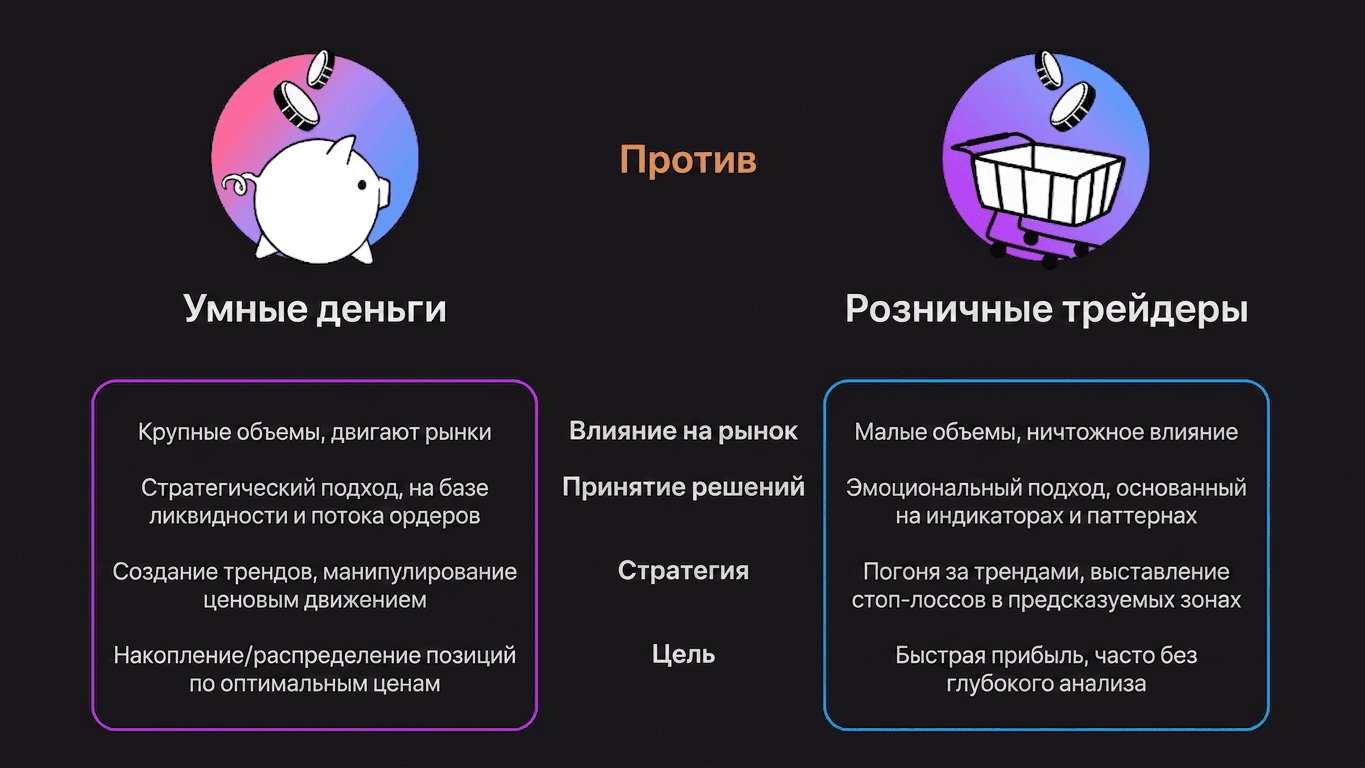
Различие между Smart Money Concept и традиционным техническим анализом выходит за рамки терминологии. Традиционная торговля сильно зависит от запаздывающих индикаторов, рассчитывающих значения по прошлым ценовым данным. Скользящие средние, MACD, RSI и аналогичные инструменты реагируют на уже произошедшие ценовые движения, создавая неизбежную задержку генерации сигналов. К моменту срабатывания этих индикаторов институции часто уже разместили свои позиции и начали фиксировать прибыль.
Торговля по SMC действует проактивно, а не реактивно. Определяя куда институции должны идти для нахождения ликвидности и заполнения ордеров, SMC-трейдеры позиционируются впереди крупных движений, а не гонятся за импульсом после его развития. Это фундаментальное различие объясняет, почему SMC-практики часто входят в позиции, которые выглядят контринтуитивно для традиционных технических трейдеров. Когда конвенциональный анализ показывает перепроданность, предполагающую отскок, SMC-трейдеры распознают захваты ликвидности, подготавливающие дальнейшее падение.
Торговля по спросу и предложению представляет собой ближайшую традиционную методологию к SMC, поскольку обе фокусируются на определении зон значительных ордеров. Однако спрос/предложение обычно рассматривает эти зоны как статические области, где цена многократно реагирует, тогда как SMC признаёт динамическую природу институционального потока ордеров. Блоки ордеров представляют незаполненные ордера, которыми институции активно управляют, корректируя позиции по мере эволюции рыночных условий.
Разрыв в эффективности между методологиями становится очевиден на рынках в диапазоне, где традиционный технический анализ испытывает трудности. Индикаторы генерируют противоречивые сигналы при консолидации, тогда как SMC ясно определяет зоны ликвидности, которые нацелены институции, и блоки ордеров, от которых они строят позиции. Это преимущество особенно ценно для трейдеров, ищущих стабильность в разных рыночных условиях.
Применение к конкретным рынкам
Smart Money Concept в торговле форекс
Валютные рынки обеспечивают идеальные условия для применения SMC благодаря массовому институциональному участию в валютных операциях. Согласно Triennial Survey BIS 2022, ежедневный оборот форекс достиг $7,5 трлн, при этом центральные банки, коммерческие банки и транснациональные корпорации обеспечивают подавляющий объём. Эта концентрация создаёт чёткие блоки ордеров и паттерны ликвидности. Мажорные пары — EUR/USD, GBP/USD и USD/JPY — демонстрируют особенно чистые SMC-сетапы благодаря концентрации институционального потока, предотвращающей чрезмерные манипуляции.
Круглосуточная природа форекс-рынка позволяет определять институциональный поток ордеров через различные торговые сессии. Лондонская и нью-йоркская сессии обычно демонстрируют наиболее значительную активность «умных денег», с чёткими захватами ликвидности на открытиях сессий, когда институции позиционируются на день вперёд. Валютные пары часто уважают блоки ордеров в течение длительных периодов, поскольку институциональные форекс-позиции остаются активными дни или недели, создавая надёжные зоны для множественных возможностей входа. Трейдеры, реализующие стратегии SMC на форексе, фокусируются на структуре старших таймфреймов, используя M15 или M30 графики для входов — в соответствии с методичным темпом, в котором институции строят валютные позиции.
Дей-трейдинг по Smart Money Concept
Применение SMC к дей-трейдингу требует корректировки фокуса на таймфреймы при сохранении тех же ключевых принципов чтения институционального поведения. Дей-трейдеры обычно работают с M5–M15 графиками для входов, используя H1 и H4 для структуры и определения блоков ордеров. Более быстрые таймфреймы требуют ускоренного принятия решений, но преимущество — в захвате институциональных движений в рамках одной сессии без удержания позиций через ночь.
Интрадей-паттерны SMC часто вращаются вокруг захватов ликвидности в начале крупных сессий. Минимум азиатской сессии часто прокалывается на открытии Лондона, когда институции собирают стопы перед продвижением цены выше — создавая классические SMC-сетапы входа. Аналогично, на открытии Нью-Йорка часто происходят рейды на максимум или минимум европейской сессии перед тем, как проявится истинное направленное движение. Дей-трейдеры, понимающие эти паттерны, позиционируются для извлечения прибыли из разворотов, следующих за сбором ликвидности.
Сжатые таймфреймы в дей-трейдинге усиливают важность точности исполнения. Входы должны происходить на точном краю блока ордеров, а не где-либо внутри зоны, и стоп-лоссы нуждаются в жёстком размещении для поддержания благоприятного соотношения риск/прибыль на краткосрочных движениях.
Управление рисками для торговли по SMC
Институциональный стиль управления рисками отделяет стабильно прибыльных SMC-трейдеров от тех, кто испытывает трудности, несмотря на понимание технических концепций. В отличие от розничного подхода, фокусирующегося преимущественно на процентных стоп-лоссах, управление рисками в SMC учитывает контекст рыночной структуры и паттерны институционального поведения при определении параметров позиции.
Размещение стоп-лосса в торговле по SMC всегда учитывает потенциальные захваты ликвидности за пределами торгуемого блока ордеров. Вместо размещения стопов на очевидных уровнях — например, прямо под минимумом блока — институционально-мыслящие трейдеры добавляют буфер для фитилей, которые могут выбить стопы перед разворотом. Этот подход принимает чуть более широкие стопы в обмен на избежание преждевременных выходов из позиций, которые в итоге отрабатывают. Исследование Локка и Манна (2005), анализировавшее фьючерсных трейдеров на Чикагской товарной бирже, показало, что трейдеры, быстрее режущие убытки, зарабатывали в среднем на 65% больше в год — но это относится к убыткам, где торговый тезис был инвалидирован, а не к фитилям, тестирующим очевидные стоп-зоны перед разворотом.
Размер позиции в SMC корректируется на основе совпадения факторов сетапа и уровня убеждённости. Когда множество факторов совпадают — блоки ордеров старшего таймфрейма, гэпы справедливой стоимости, подтверждение рыночной структуры и свидетельства захвата ликвидности — трейдеры могут комфортно увеличить размер позиций, поскольку вероятность существенно возрастает с количеством подтверждений. И наоборот, сделки на основе одного фактора получают минимальный размер. Этот переменный подход обеспечивает соответствие выделенного капитала качеству возможности.
Соотношение риск/прибыль в торговле по SMC фундаментально отличается от традиционных подходов фиксированного соотношения. Вместо произвольных целей 2:1 или 3:1 трейдеры определяют логические цели прибыли на основе рыночной структуры. Первая цель обычно на следующем противоположном блоке ордеров или крупном гэпе справедливой стоимости, тогда как финальные цели направлены на пулы ликвидности за очевидными структурными уровнями. Фокус остаётся на структурной логике, а не на достижении математического соотношения.
Продвинутые концепции и психология SMC
Мастерство Smart Money Concept выходит за рамки распознавания технических паттернов к пониманию психологической динамики между институциональными и розничными участниками. Институции намеренно конструируют ценовое движение для провоцирования эмоциональных реакций у розничных трейдеров, создавая ликвидность и позиционирование, необходимые для их реальных сделок. Распознавание этой манипуляции при избежании эмоциональных реакций отделяет успешную реализацию SMC от теоретических знаний.
Психологическое измерение критично, поскольку захваты ликвидности спроектированы для провоцирования именно тех реакций, которые уничтожают розничные счета. Когда стоп выбивают, естественные реакции — гнев, торговля из мести и нарушение правил — те же паттерны, которые Джаред Тендлер, автор «The Mental Game of Trading», категоризирует как тильт несправедливости и тильт отчаяния. Для трейдеров, изучающих SMC, распознавание технических паттернов — лишь половина работы. Другая половина — перестройка эмоциональной реакции на события манипуляции. Для более глубокого разбора этой психологической архитектуры смотрите пять типов торгового тильта и фреймворк Best Loser Wins Тома Хугарда.
Блоки-брейкеры — продвинутая SMC-концепция, где прежде бычьи блоки ордеров проваливаются и становятся медвежьими зонами, и наоборот. Это происходит когда институциональное настроение меняется достаточно значительно, чтобы бывшая поддержка стала сопротивлением. Трейдеры, адаптирующиеся к этим паттернам, избегают борьбы против перепозиционированного институционального потока.
Блоки митигации функционируют аналогично блокам ордеров, но представляют зоны, где институциям необходимо митигировать (сократить) существующие позиции перед открытием новых направленных сделок. Эти зоны часто проявляются как незначительные откаты в сильных трендах, где «умные деньги» фиксируют частичную прибыль или корректируют позиции перед следующим движением. Понимание различия между митигацией и первичными блоками ордеров предотвращает путаницу относительно того, какие зоны удержатся для крупных разворотов, а какие — лишь краткие паузы в текущих трендах.
Практическая реализация для систематической практики SMC начинается с демо-счёта или бумажной торговли до тех пор, пока распознавание паттернов не станет автоматическим. Трейдеры должны ежедневно отмечать блоки ордеров, гэпы справедливой стоимости и зоны ликвидности в реальном времени, а затем анализировать, как цена взаимодействовала с этими уровнями. Эта осознанная практика строит навык распознавания, необходимый для успеха в реальной торговле. Переход к реальным рынкам должен начаться с минимальных размеров позиций, постепенно масштабируясь по мере развития стабильности в течение месяцев.
Ключевые выводы
Smart Money Concept даёт розничным трейдерам фреймворк для торговли вместе с институциональными участниками, а не в качестве их контрагента. Эффективность методологии проистекает из её основы в реальной рыночной механике — потоке ордеров, ликвидности и структурной реальности того, что институции, оперирующие миллиардами долларов, не могут двигаться тихо. Три ключевых компонента (блоки ордеров, гэпы справедливой стоимости, захваты ликвидности) — не произвольные паттерны; это видимые следы того, как крупные ордера реально заполняются на рынках, где BIS сообщает о $7,5 трлн ежедневного форекс-оборота.
Путь от изучения SMC к прибыльному применению — это преимущественно распознавание паттернов, построенное через осознанную практику, а не поиск секретных индикаторов. Отмечайте блоки ордеров, гэпы справедливой стоимости и зоны ликвидности в реальном времени на инструментах, которые планируете торговать. Наблюдайте, как цена реально реагирует. Анализируйте график после. Начните с демо-торговли, пока паттерны не станут автоматическими. Переходите к реальной торговле только с минимальными размерами позиций. Масштабируйте только после стабильных результатов на протяжении минимум 50–100 сделок.
Психологическая работа важна не менее технической. Захваты ликвидности спроектированы для провоцирования эмоциональных реакций — фрустрации, торговли из мести, нарушения правил. Трейдеры, распознающие манипуляцию как нормальную черту институционального поведения, а не рыночную несправедливость, сохраняют самообладание когда цена выбивает стопы. В сочетании с дисциплинированным управлением размером позиции и структурным таргетированием, SMC становится одним из наиболее надёжных фреймворков для розничных трейдеров, готовых вложить месяцы практики.
Начните прямо сейчас: 👉 Upscale.trade | Telegram-бот
Подписывайтесь: 📺 YouTube | 𝕏 Twitter
Часто задаваемые вопросы
Как определить валидные блоки ордеров?
Валидные блоки ордеров демонстрируют специфические характеристики: импульсное движение прочь от зоны, чистая свечная структура без чрезмерных фитилей и позиционирование в контексте более широкой рыночной структуры. Свеча, предшествующая импульсу, должна демонстрировать чёткое отторжение одного направления с последующим взрывным движением в противоположное. Блоки старших таймфреймов несут бо́льшую значимость, чем младших, а блоки, формирующиеся после захватов ликвидности, оказываются надёжнее случайных точек разворота. Совпадение с гэпами справедливой стоимости или крупными структурными уровнями значительно усиливает валидность блока.
Работает ли Smart Money Concept на самом деле?
Базовая предпосылка SMC верифицируема: институции, обрабатывающие основную часть ежедневного форекс-рынка $7,5 трлн, не могут исполнять крупные ордера, не оставляя следов в ценовом движении. Будет ли конкретный трейдер зарабатывать на SMC — полностью зависит от дисциплины исполнения, навыка распознавания паттернов и управления рисками — тех же факторов, которые определяют успех с любой методологией. SMC — не гарантированная система; это фреймворк чтения институционального потока, требующий месяцев осознанной практики для стабильного применения.
Можно ли торговать по SMC на маленьком счёте?
SMC эффективно работает со счетами любого размера, поскольку методология фокусируется на процентном управлении рисками, а не на абсолютных размерах позиций. Маленькие счета особенно выигрывают от высоковероятных сетапов SMC и благоприятных профилей соотношения риск/прибыль, позволяя наращивать капитал через стабильное исполнение. Ключ — принятие размеров позиций, соответствующих балансу счёта, а не использование чрезмерного плеча ради произвольных целей прибыли.
Чем SMC отличается от торговли по спросу и предложению?
Хотя обе методологии определяют зоны значительных ордеров, SMC признаёт динамическую природу институционального потока ордеров в отличие от статических зон спроса/предложения. SMC включает захваты ликвидности, гэпы справедливой стоимости и изменяющуюся рыночную структуру в анализ, тогда как традиционный подход спроса/предложения фокусируется преимущественно на зонах реакции. SMC-трейдеры понимают, что институции активно управляют позициями и создают паттерны манипуляции перед крупными движениями, добавляя слои анализа за рамками базового определения зон.
Какие индикаторы дополняют анализ по SMC?
SMC функционирует как полностью самостоятельная методология, не требующая индикаторов, поскольку фокусируется на чистом ценовом движении и потоке ордеров. Некоторые трейдеры добавляют анализ объёма или VWAP для подтверждения уровней институционального участия, но запаздывающие индикаторы (скользящие средние, осцилляторы) обычно конфликтуют с принципами SMC. Сила методологии — в прямом чтении ценовой структуры без математических трансформаций, вносящих задержку.
Подходит ли SMC полным новичкам?
SMC предъявляет более крутую начальную кривую обучения, чем базовый технический анализ, поскольку требует понимания рыночной механики и институционального поведения, а не простого следования сигналам индикаторов. Однако новички, посвящающие себя надлежащему обучению, часто развивают лучший торговый фундамент через SMC, чем те, кто начинает с подходов, зависимых от индикаторов. Мастерство обычно занимает месяцы последовательного изучения и практики.
Почему меня постоянно выбивает по стопу перед тем, как цена идёт в моём направлении?
Выбивание резкими фитилями перед разворотом цены — это учебное определение захвата ликвидности. Институциям нужна ликвидность для заполнения позиций, и эта ликвидность находится в очевидных стоп-зонах ниже недавних минимумов или выше недавних максимумов. Решение двойное: размещайте стопы с буфером за пределами торгуемого блока ордеров, а не прямо на очевидных уровнях, и перестройте эмоциональную реакцию на эти события. Согласно опросу PipFarm среди 2 777 проп-трейдеров, 73% проваленных счетов нарушали собственные стоп-лоссы более чем в 30% случаев — часто после выбивания захватами ликвидности и входа в сделки из мести.