Best Loser Wins: Tom Hougaard's Philosophy for Traders


Best loser wins is the trading philosophy of high-stakes trader Tom Hougaard, which holds that success in trading is determined not by the number of winning trades but by the quality of how you handle losses. According to FPFX Tech data from 300,000 prop firm accounts, only 7% of traders ever receive a payout, and a PipFarm survey of 2,777 prop traders (2025) shows that 73% of failed accounts violated their own stop-losses in more than 30% of cases. Below is the science behind loss aversion, five false beliefs that make losses painful, and practical tools to rewire your relationship with losing.
Here's a paradox they won't teach you in technical analysis courses: the best traders in the world aren't the ones who win the most. They're the ones who lose the best.
Sounds like motivational nonsense? Let's look at the numbers. According to FPFX Tech, which analyzed 300,000 prop firm accounts, only 7% of traders ever receive a payout. A PipFarm survey of 2,777 prop traders shows that 37.5% name emotional trading after losses as their primary problem, and 37.8% cite lack of discipline. Not strategy. Not timeframes. Not indicators. The inability to handle losses properly.
And here's another number: 73% of failed accounts violated their own stop-losses in more than 30% of cases. These aren't analysis errors. It's the same decision — "I don't want to take this loss" — repeated dozens of times.
This article isn't about how to "stop fearing losses" (useless advice). It's about rebuilding the very architecture of your thinking so that losses stop being emotional catastrophes and become what they actually are: an operating cost of a profitable business.
"Best Loser Wins" — Where This Idea Comes From
This philosophy was formulated by Tom Hougaard — one of the most well-known high-stakes retail traders in the world. His background leaves no room for skepticism: degrees in economics and finance from two British universities, a role at JPMorgan Chase, ten years in the City of London as chief market strategist for a CFD broker. After that — a transition to fully independent trading.
The scale of his positions is hard to fathom: while the average retail trader risks $10 per point, Hougaard regularly trades at up to $3,500 per point. He won multiple trading competitions, and in one turned $30,000 into more than $1,300,000 in a single year.
But the most important thing isn't his results — it's his central conclusion, reached over more than 20 years in the markets:
People don't lose because they don't know enough about technical analysis. They lose because they don't understand what the market does to their head.
Hougaard trades live in front of thousands of viewers — for free. Not for publicity. For one simple demonstration: his approach to losses is radically different from how 95% of traders lose.
The three principles his philosophy is built on were borrowed from a legendary trader on the Chicago Mercantile Exchange:
- I assume I'm wrong — until the market proves otherwise.
- I expect discomfort.
- I add when others cut. I cut when others add.
If you just thought "this contradicts everything I've been taught" — that's exactly the point.
Why Your Brain Sabotages Your Trading: The Science of Loss Aversion
The problem isn't you personally. The problem is neurobiology that evolved over millions of years for a completely different environment.
In 1979, psychologists Daniel Kahneman and Amos Tversky formulated Prospect Theory, for which Kahneman later received the Nobel Prize in Economics. Their key discovery for traders:
The pain of a loss is felt approximately 2.5 times more intensely than the pleasure of an equivalent gain.
Translated into trading language: when you lose $500 on a trade, your brain activates pain centers significantly more than pleasure centers would activate from a $500 profit. This isn't a character flaw — it's literally neurochemistry. Your brain is physiologically programmed to avoid realizing losses, preferring the uncertainty of an unrealized minus to the definite pain of a closed position.
Neurobiological research (Kuhnen & Knutson, 2005, Stanford University) confirmed this using fMRI: financial losses activate the anterior insula — the same brain region that responds to physical pain and disgust. Moreover, activation of this region predicts future "risk-free" decisions — meaning the brain literally begins avoiding any risk after a loss, even when the expected value is positive.
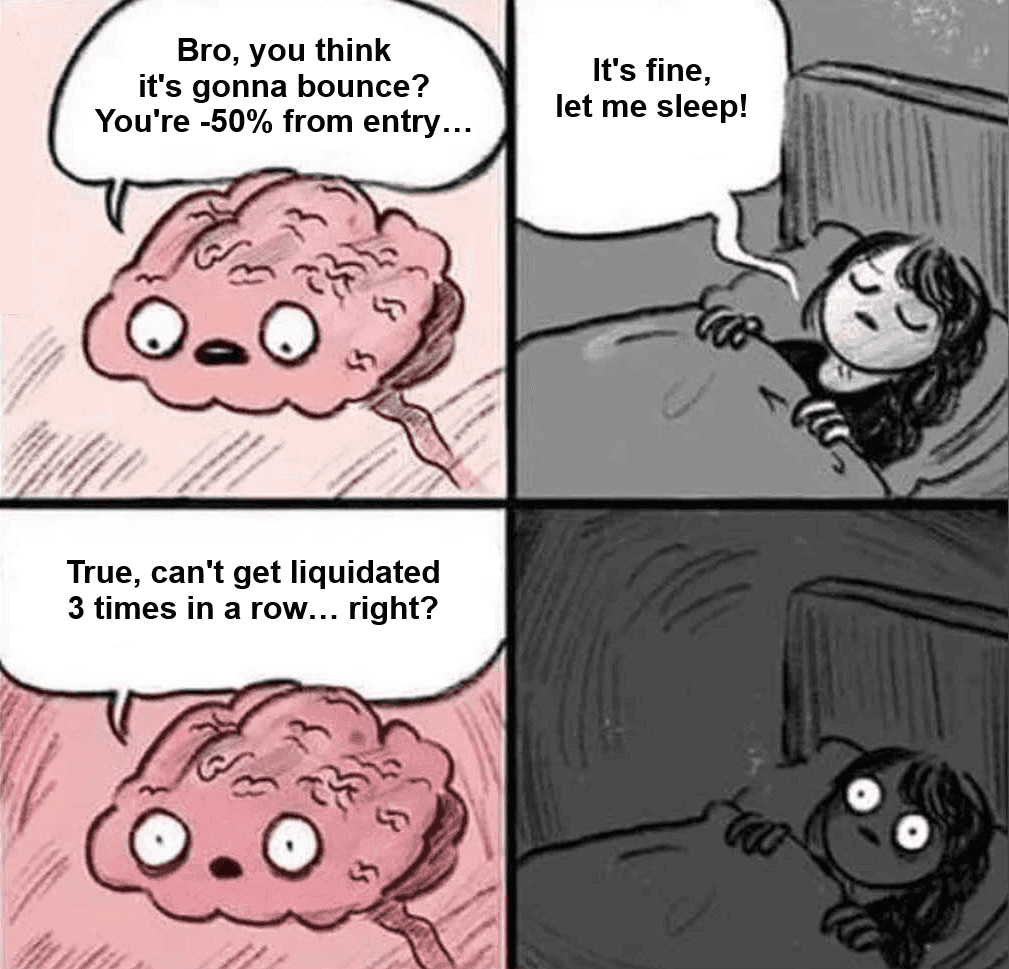
This gives rise to the disposition effect — one of the most destructive cognitive biases in trading, first described by Shefrin and Statman in 1985:
- When a trade is profitable, the trader becomes risk-averse: wanting to lock in profit immediately before it turns into a loss.
- When a trade is losing, the trader becomes risk-seeking: willing to hold the position indefinitely, hoping for a reversal, just to avoid realizing the pain.
The result? You systematically cut winners and hold losers — doing the exact opposite of what's needed for consistent profitability. Research by Odean (1998, UC Berkeley) on a sample of 10,000 brokerage accounts found that traders sell winning positions 50% more often than losing ones. And research by Barber & Odean (2000) established that this pattern destroys 2–5% of annual returns for the typical investor.
Here's simple math. If you take profits at 10% but let losses run to 20%, you need a win rate of 67% just to break even. Most traders operate with a 40–55% win rate. At that ratio, you're guaranteed to lose money — and no indicator will fix that.
Two Traders: Anatomy of Identical Strategies with Different Results
Imagine two traders with the same strategy, the same $100,000 account, and the same 50% win rate.
Trader A — "normal." They take profits at the first sign of reversal (average winner: +1R). They hold losers, move stops, hope for a comeback (average loser: −2R).
Trader B — "best loser." They cut losses quickly and ruthlessly (average loser: −1R). They hold winners, add to positions when the trend is confirmed (average winner: +2.5R).
After 100 trades at 1% risk per trade:
- Trader A: 50 × $1,000 − 50 × $2,000 = −$50,000 (down 50%)
- Trader B: 50 × $2,500 − 50 × $1,000 = +$75,000 (up 75%)
Same win rate. Same strategy. The $125,000 difference is determined entirely by how each handles losses and profits.
This isn't a theoretical example. Researchers Locke and Mann (2005), analyzing futures traders on the Chicago Mercantile Exchange (CME), found that susceptibility to the disposition effect negatively correlates with future earnings. Put simply: the worse a trader is at losing, the less they earn. Moreover, their data showed that traders who closed losing positions faster earned an average of 65% more per year than those who held onto losers.
Five False Beliefs That Make Losses Painful
Losses don't cause pain on their own — they cause pain through the filter of your beliefs. Here are the five most common.
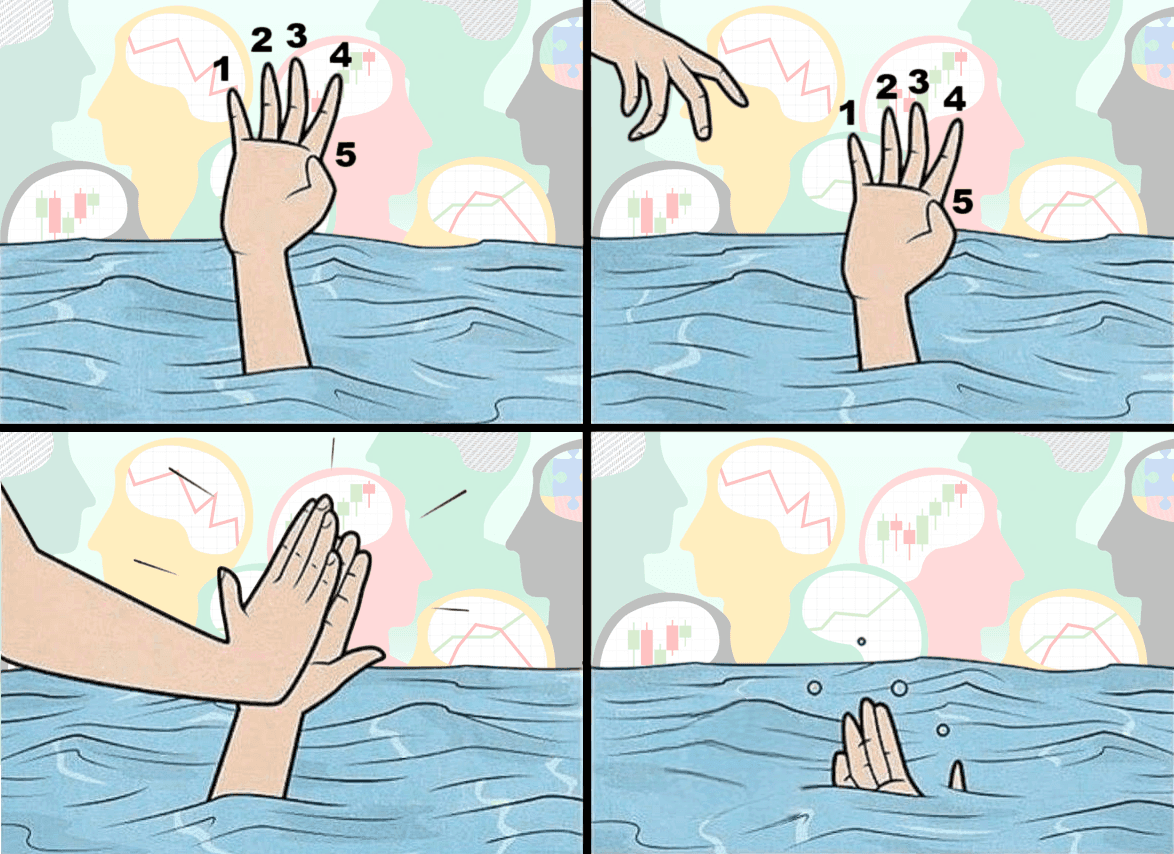
Belief 1: "A Loss = I Was Wrong"
Reality: a loss taken according to your rules isn't a mistake. It's the normal operation of a probabilistic system. If your win rate is 60%, then four losses out of ten trades means your strategy is working perfectly. A mistake is breaking the rules. A loss according to plan is a success.
Belief 2: "Good Preparation Should Produce Profit"
Reality: the quality of your analysis determines the quality of your odds, not the outcome of any individual trade. Even the world's best cardiac surgeon loses patients. That doesn't make them a bad surgeon — it means medicine is probabilistic. Trading is too. Jared Tendler, a licensed therapist and author of "The Mental Game of Trading," calls this "entitlement tilt" — the belief that effort must convert into results.
Belief 3: "A Loss Is Losing Money"
Reality: a loss is purchasing information. You paid the market to test a hypothesis, and the hypothesis wasn't confirmed. It's not a "loss" — it's an operating expense, like paying for your platform, internet, or education. No business operates without expenses.
Belief 4: "I Need to Make Back the Loss"
Reality: the market doesn't care how much you've lost. Every new trade is a separate probabilistic event, unconnected to the previous one. Trying to "get back what's yours" isn't a strategy — it's an emotional reaction that consistently leads to larger losses. The PipFarm survey confirms: emotional trading after losses is the number one problem for 37.5% of prop traders.
Belief 5: "If I Move My Stop, the Market Might Reverse"
Reality: the market doesn't know where your stop is. When you move your stop-loss, you're not "giving the trade more room" — you're increasing your loss in the hope of avoiding pain. This is the classic manifestation of loss aversion: the brain prefers the uncertainty of an unrealized loss to the certainty of a realized one. PipFarm data shows the consequences: 73% of failed accounts violated their stop-losses systematically.
Rewiring Your Mindset: Three Principles of the "Best Loser"
Principle 1: Assume You're Wrong
The typical trader enters a trade and looks for confirmation they're right. The "best loser" enters with the assumption they're wrong — and waits for the market to prove otherwise.
This isn't pessimism. It's a fundamentally different cognitive frame. When you assume you're right, every tick against you is a threat to your self-image. You cling to the position, move your stop, ignore exit signals. When you assume you're wrong, a loss stops being a surprise — it was built into the plan.
In psychology, this is called a "pre-mortem analysis" — a technique proposed by Gary Klein, a psychologist who studies decision-making. Instead of asking "what could go wrong?", you start with the assumption "everything went wrong" and analyze why. Research shows that pre-mortem analysis reduces overconfidence by 30%.
Practice: before every trade, say: "This trade will most likely be a loser. I'm entering because the expected value is on my side across a series of trades, not in any single one." This isn't a mantra — it's a statistical fact.
Principle 2: Expect Discomfort
Comfort in trading is a red flag. If you're comfortable holding a losing position, you're not cutting the loss when you should. If you're comfortable sitting in a winning trade, you've probably already taken partial profit too early.
Hougaard emphasizes: correct trading decisions almost always feel wrong. Cutting a loss — painful. Holding a profit when you want to lock it in — anxiety-inducing. Adding to a winning position — terrifying. That's precisely why most people don't do it.
Practice: add a "discomfort level" column (1–10) to your trading journal for every decision. After a month, analyze: do your best trades correlate with high discomfort levels? Almost certainly — yes.
Principle 3: Do the Opposite of the Crowd
When on a losing streak, the crowd reduces position size or stops trading. When on a winning streak, the crowd increases position size and feels invincible.
The "best loser" does the reverse: adds to winning positions (because the market is confirming they're right) and cuts losers quickly (because the market is disproving the hypothesis).
This isn't recklessness. It's math: your profits must be significantly larger than your losses for the system to work. The only way to achieve this is to let winners grow and ruthlessly limit losers.
Practical Tools: How to Rebuild Your Relationship with Losses
1. The "Book of Horrors"
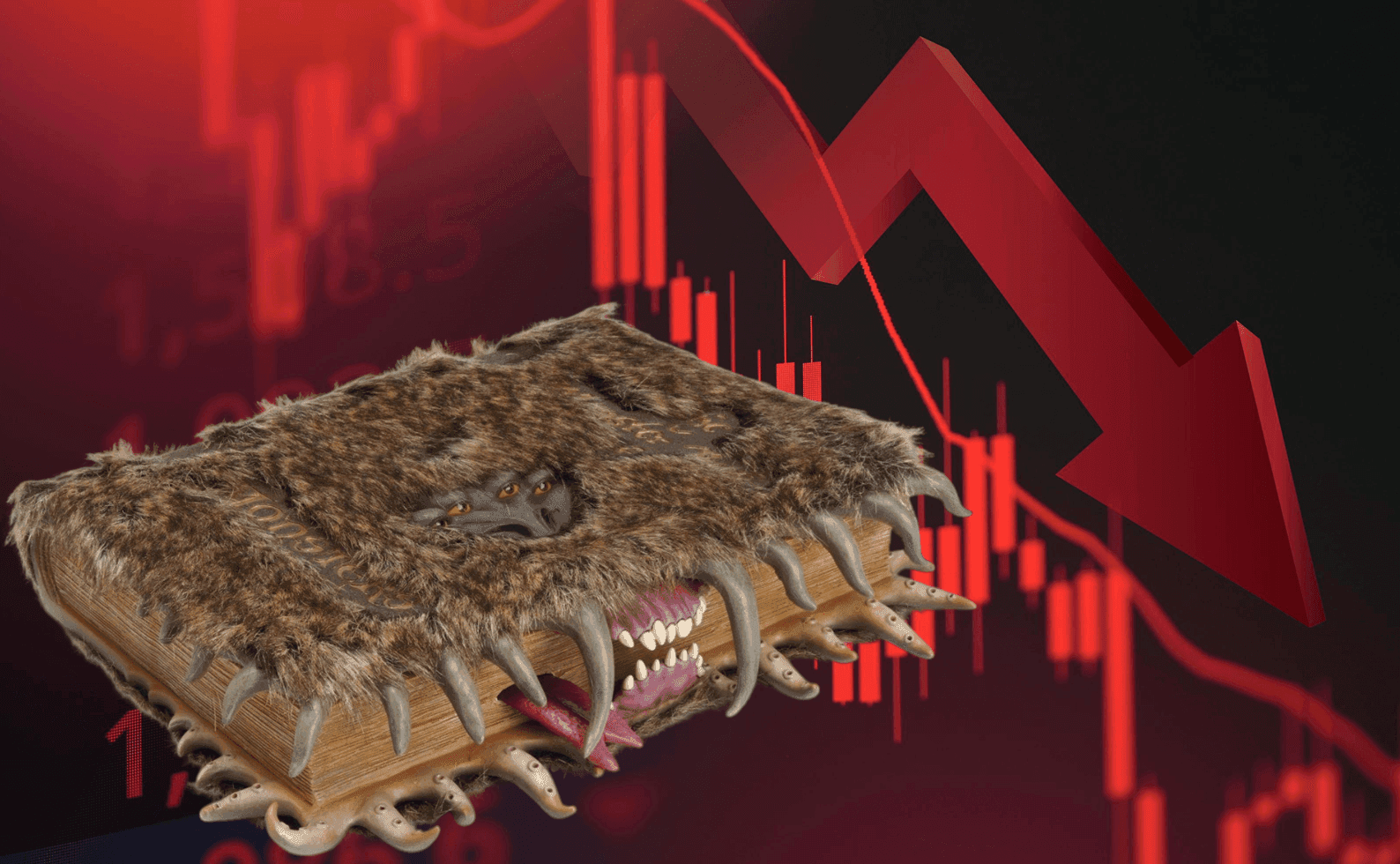
Start a separate notebook where you record your worst trades. Not for self-punishment — for training acceptance. For each trade, write down:
- What happened (facts)
- What you felt
- How you reacted
- What the final loss was
- What you'd do differently
The brain suppresses painful memories — but those memories contain the most valuable lessons. The "Book of Horrors" doesn't let you forget, and each rereading reduces the emotional charge of those memories. This principle is based on exposure therapy — a scientifically validated method of reducing emotional reactivity through repeated controlled exposure.
2. Pre-Session Loss Visualization
Before every trading session, spend 3 minutes on the following exercise:
Imagine that your first three trades today are losers. Not "possibly losers" — guaranteed. Visualize: you opened a position, the market moved against you, your stop was hit. Three times in a row. You lost 3% of your account.
Now ask yourself: "What will I do after this?"
If your answer is "continue according to plan," you're ready to trade. If your answer is "increase position size to make it back" or "I'll be angry" — cut your position size in half or skip the session.
3. Separate Evaluation of Decisions and Outcomes
Create two columns in your trading journal:
Column 1: Decision Quality (1–5). Rate how accurately you followed your plan, regardless of outcome.
Column 2: Trade Result (profit/loss).
A good trade with a loss = 5 / minus. This isn't failure — it's successful execution with a negative outcome. A bad trade with a profit = 1 / plus. This isn't a win — it's luck.
Your goal is to maximize the average score in the first column. The second will take care of itself across a series of trades.
4. The "Acceptance Ladder" for Losing Streaks
The standard reaction to a losing streak is escalation: bigger position, wider stop, more aggressive entry. The "best loser" does the opposite — builds a de-escalation ladder:
- 1 loss: standard position size, no changes
- 2 losses in a row: 75% of standard position
- 3 losses in a row: 50% of standard position + mandatory 30-minute break
- 4 losses in a row: trading day is over
This system works not because it "protects you from yourself" — it works because it takes the load off willpower. When the architecture decides for you, the brain doesn't need to spend resources fighting emotions.
5. Financial Reappraisal of Losses
Calculate the annual "cost of losses" for your strategy. If you trade with a 55% win rate, an average loss of 1R, and an average profit of 2R, then over 100 trades at $500 risk per trade:
- Total losses: 45 × $500 = $22,500
- Total profits: 55 × $1,000 = $55,000
- Net profit: $32,500
Now $22,500 isn't "money you lost." It's the cost of doing business that generates $32,500 in net profit. What business with 59% margins would you call a failure?
Print out this math. Put it next to your monitor. Every time a loss triggers an emotional reaction, look at it.
How This Works in Prop Trading
The prop environment adds a unique layer of pressure: you're risking not just money but access to capital. The challenge fee is paid. The drawdown limit is fixed. The profit target is ticking. According to industry data, only 5–10% of traders pass the evaluation phase, and only 10–15% of funded traders ever receive a payout.
Under these conditions, loss aversion intensifies dramatically. But this is exactly where the "best loser" philosophy becomes not a luxury but a necessity.
Use the firm's limits as an ally. The daily drawdown limit isn't a punishment — it's a built-in safety mechanism. Set your personal limit at 50–70% of the firm's limit. When yours triggers, the day is done, but the account is safe. PipFarm data shows that 45.1% of successful prop traders make only 1–2 trades per day. Fewer trades — fewer opportunities for emotional escalation.
Break your target into micro-steps. A "10% challenge target" creates pressure. A "0.3–0.5% per day" target doesn't. On a $100,000 account, that's $300–500 per day. A small number doesn't activate the belief "I deserve this profit" — and doesn't cause panic when a trade goes red.
Don't check your balance mid-session. Balance is a trigger for all destructive patterns. Close the P&L panel, trade by setups, check balance once at end of day.
Treat the challenge as a series of 100 trades, not a single exam. One losing trade in a challenge isn't a failure. It's one trade in a series. If your system is profitable across a series, every individual loss is an investment in the final result.
21-Day Program for Rebuilding Your Relationship with Losses
Days 1–7: Awareness
- Record your emotional reaction to every loss (scale 1–10)
- Track how you react: move stops? increase position? stop trading?
- Start the "Book of Horrors"
- Introduce separate evaluation of decisions and outcomes
Days 8–14: Replacing Reactions
- Implement pre-session loss visualization (3 minutes before each session)
- Activate the de-escalation ladder
- Create a card with your strategy's math (annual cost of losses vs. net profit)
- Say before every trade: "I assume I'm wrong — until the market proves otherwise"
Days 15–21: Consolidation
- Review: how has your emotional reaction to losses changed? (compare 1–10 scores from week one and week three)
- Analyze the "decision quality" column: is the average score rising?
- Reread the "Book of Horrors" — notice whether the emotional charge decreases on rereading
- Adjust the de-escalation ladder and position size based on the data you've collected
The Bottom Line
The entire paradox of trading is captured in one sentence: to earn more, you must learn to lose better.
Not "lose less" — that's impossible to control. Not "stop fearing losses" — that contradicts neurobiology. But specifically lose better: faster, cleaner, without emotional aftershocks.
Professional traders don't earn because they know more about technical analysis. And not because they have a secret indicator. They earn because they've learned to do what causes pain: cut losses fast and let profits run.
As Hougaard put it: in financial markets, the best loser wins. And in those four words lies more practical wisdom than in any technical analysis book.
Your trading is a system. Your losses are part of that system. And the best thing you can do for them is stop fighting them and start managing them.
Key Takeaways
Tom Hougaard's "best loser wins" philosophy isn't motivational — it's mathematical. Two traders with identical 50% win rates diverge by $125,000 over 100 trades based solely on how they handle losses. The neuroscience confirms what the data shows: loss aversion makes you cut winners and hold losers by default, and 73% of failed prop accounts violated their own stop-losses systematically. The fix isn't willpower — it's architectural. Pre-mortem thinking, de-escalation ladders, separate evaluation of decisions and outcomes, and the daily discipline of assuming you're wrong until the market proves otherwise. In prop trading, this isn't optional — the drawdown limits are already built for you. The question is whether you'll use them as allies or fight them as enemies.
Ready to start your prop trading journey?
Start now: 👉 Upscale.trade | Telegram Bot
Follow us: 📺 YouTube | 𝕏 Twitter
Frequently Asked Questions
What does "best loser wins" mean in trading?
"Best loser wins" is the philosophy of high-stakes trader Tom Hougaard, which holds that trading success is determined not by the number of winning trades but by the quality of how you handle losses. The best trader isn't the one who wins the most — it's the one who cuts losses quickly and ruthlessly while letting winners run. Research by Locke and Mann (2005) confirmed that traders who closed losing positions faster earned an average of 65% more per year.
Who is Tom Hougaard?
Tom Hougaard is one of the most well-known high-stakes retail traders in the world. He holds degrees in economics and finance from two British universities, worked at JPMorgan Chase, and spent ten years in the City of London as chief market strategist for a CFD broker. He trades at up to £3,500 per point. In one trading competition, he turned $30,000 into more than $1,300,000 in a single year. He is the author of "Best Loser Wins."
What is loss aversion in trading?
Loss aversion is a cognitive bias discovered by Kahneman and Tversky (1979), according to which the pain of a loss is felt approximately 2.5 times more intensely than the pleasure of an equivalent gain. In trading, this manifests as the disposition effect: traders lock in profits too early and hold losses too long, destroying 2–5% of annual returns for the typical investor according to Barber & Odean (2000).
What is the disposition effect?
The disposition effect is a cognitive bias first described by Shefrin and Statman (1985). A trader in a profitable position becomes risk-averse (locks in profit early), while a trader in a losing position becomes risk-seeking (holds, hoping for a reversal). According to Odean's research (1998, UC Berkeley), traders sell winning positions 50% more often than losing ones, systematically reducing overall returns.
How do you stop fearing losses in trading?
Completely eliminating the fear of losses is impossible — it's a neurobiological response confirmed by fMRI research (Kuhnen & Knutson, 2005). But you can restructure your relationship with losses using specific tools: pre-session loss visualization (3 minutes imagining three consecutive stops), separate evaluation of decision quality and outcomes in your trading journal, the "Book of Horrors" for recording worst trades, the de-escalation ladder for automatic position reduction during losing streaks, and financial reappraisal of losses as business operating expenses.
What percentage of prop traders receive a payout?
According to FPFX Tech data from 300,000 prop firm accounts, only 7% of traders ever receive a payout. Only 5–10% pass the evaluation phase, and only 10–15% of funded traders ever withdraw money. A PipFarm survey of 2,777 prop traders found that the main causes of failure are emotional trading after losses (37.5%) and lack of discipline (37.8%) — not lack of strategy.