
What to do after failing a prop challenge: a 48-hour break, a trade history review, a risk per trade check and a rule-based plan for your next attempt.

How to calculate risk per trade from the daily limit, check it against the maximum drawdown and convert it into position size, with tables for Upscale challenges.

How much a funded account brings, why income is measured over a series of attempts, a step-by-step plan to the first payout and scaling to several accounts.

When you can request a payout from a funded account, how much you can withdraw at once, what share you keep and what blocks a withdrawal, using Upscale as an example.

Why prop trading relied on MetaTrader, how a TradingView-based terminal differs from it and what to keep in mind when switching, using Upscale as an example.

Most prop firms aren't regulated, and 80–100 shut down in 2024 alone. Here are 10 checks to run before you buy a challenge, plus the red flags to watch for.

Daily, maximum and trailing drawdown: what each one is measured from, why most failed challenges end on drawdown, worked examples and Upscale's limits.

Median $1,693, range $274 to $40,884: we break down the payouts of 24 Upscale traders from public 2026 interviews and compare them with industry data.
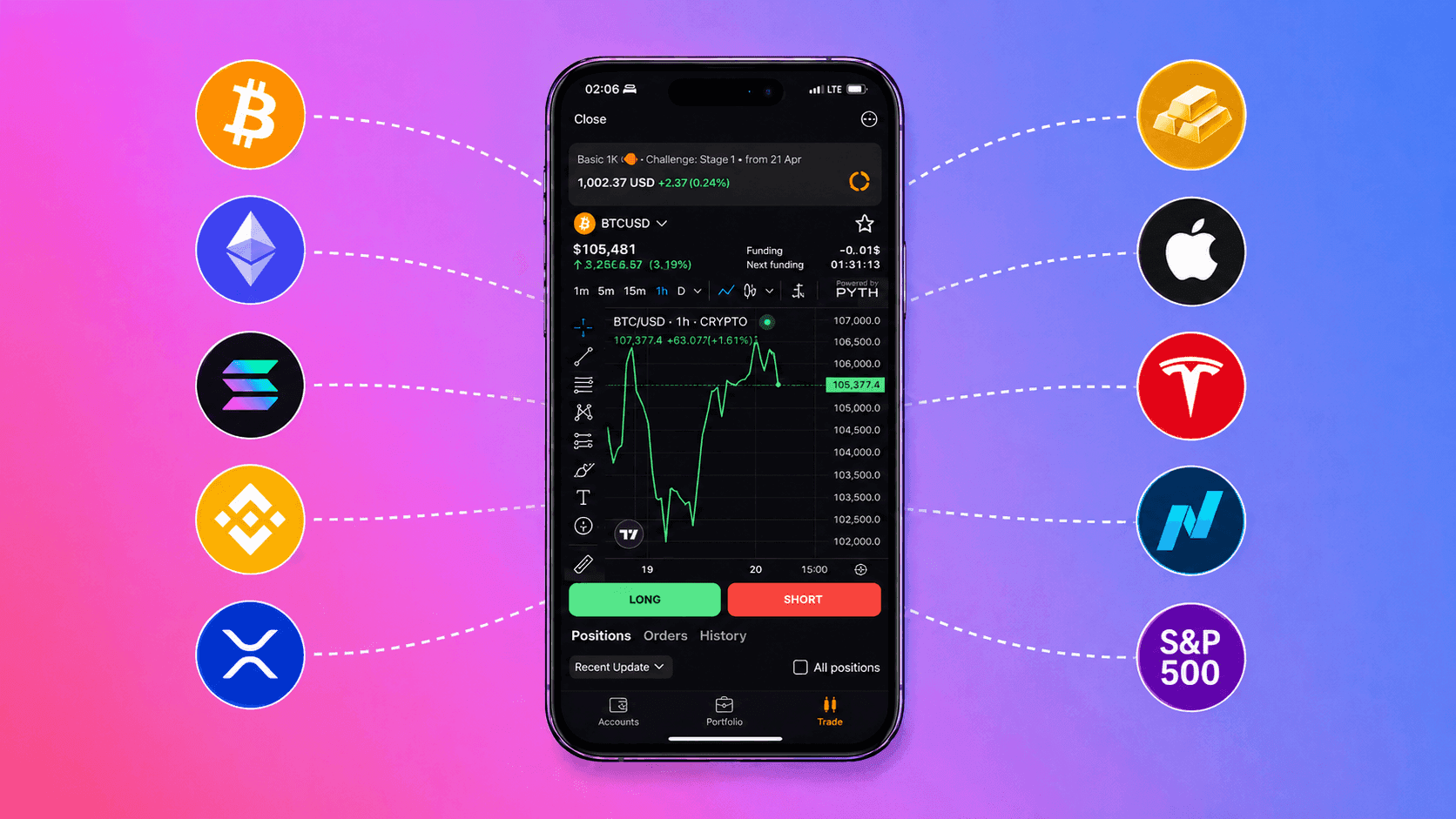
Can you trade a prop account from your phone? Comparing Upscale, Breakout, HyroTrader, FTMO mobile capabilities — from buying challenges to monitoring drawdown.
Our community is where insights are born, partners are found, and people move forward to new goals. And also interesting competitions
Newbies, pros, and enthusiasts — be part of this wave
Earn and win together with the best
Live broadcasts with experts and community members

 Telegram
 Discord
