Intraday Trading: Strategies, Risk Management & Common Mistakes
Intraday trading — buying and selling financial assets within the same trading day — attracts millions of traders worldwide, but the failure rate is stark. According to a study by Barber, Lee, Liu, and Odean analyzing all day traders in Taiwan over a 15-year period, fewer than 1% of day traders are consistently profitable after fees. A separate analysis by FPFX Tech of 300,000 prop firm accounts found that only 7% of traders ever receive a payout. Below is a breakdown of strategies that work, risk management frameworks that protect capital, and the psychological mistakes that separate the profitable minority from the rest.
What Is Intraday Trading and How It Differs from Other Styles
Intraday trading means all positions are opened and closed within the same trading session — nothing stays open overnight. This distinguishes it from swing trading (days to weeks), position trading (weeks to months), and investing (months to years).
The core appeal is speed of feedback: a day trader knows within hours whether a decision was correct. Research by Locke and Mann (2005) at the Chicago Mercantile Exchange found that traders who cut losses faster earned on average 65% more per year — and intraday trading, by its nature, forces faster decisions on every position.
| Aspect | Intraday Trading | Swing Trading | Investing |
|---|---|---|---|
| Holding period | Minutes to hours | Days to weeks | Months to years |
| Analysis type | Technical, price action | Technical + macro | Fundamental |
| Decision speed | Seconds | Hours to days | Weeks |
| Profit target per trade | 0.5–3% | 5–15% | 10–30% annually |
| Risk management | Stop-loss essential | Stop-loss + time stops | Portfolio diversification |
| Overnight risk | None | Present | Present |
The trade-off: intraday trading demands more screen time, faster execution, and stronger emotional control than longer-term approaches. It's not inherently "better" — it's a different set of skills applied to a different time horizon.
Proven Intraday Strategies
No single strategy works in all market conditions. Successful intraday traders typically master one approach before adding others.
Momentum Trading
Momentum trading captures strong directional moves. Price breaks a key level, volume surges, and the trader enters in the direction of the breakout.
Key confirmation signals: volume exceeding the 20-day average, price closing above (not just wicking through) resistance, and the ADX reading above 25 indicating trend strength. Without these confirmations, most breakouts fail — a PipFarm survey of 2,777 prop traders (2025) found that 37.8% cite lack of discipline as their primary cause of failure, often from entering momentum trades without proper confirmation.
Reversal Trading
Reversal trading captures rebounds from overextended moves. The market pushes too far, too fast, and snaps back. This is higher-risk than momentum trading because you're entering against the prevailing direction.
The process: identify oversold RSI readings (below 30), confirm with bullish divergence on at least one indicator, wait for a reversal candlestick pattern (pin bar, engulfing), and enter with a tight stop below the recent low. Position sizes should be 50–75% of standard because you're trading against momentum.
Breakout Trading
Breakout trading profits from the explosive moves that follow consolidation periods. Price compresses in a range (triangle, rectangle, wedge), energy builds, and eventually price breaks out.
The critical filter: volume. Genuine breakouts show volume spikes of 50% or more above the 20-day average. Without volume confirmation, the probability of a false breakout increases dramatically. Wait for the retest of the broken level before entering — this filters out roughly half of false signals.
Scalping
Scalping means taking small profits repeatedly on trades lasting seconds to minutes. Targets are 5–10 pips or $0.10–0.20 per share. The edge comes from volume of trades, not size of individual wins.
Requirements: direct market access, sub-second execution, and a platform that supports hot keys for instant orders. Scalping on a mobile phone or slow platform is not viable — execution speed is the strategy itself.
Range Trading
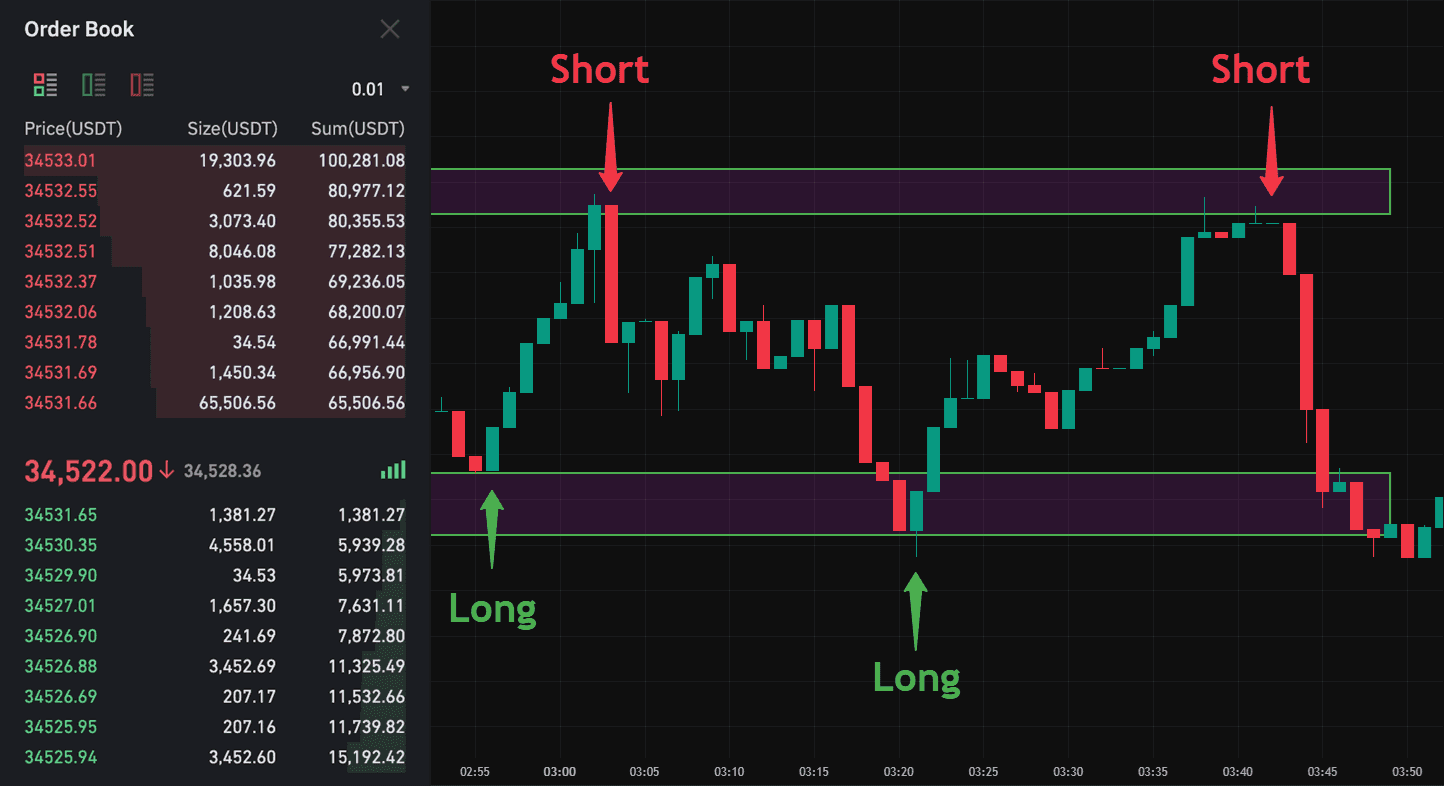
Range trading works when markets move sideways between defined support and resistance levels. Buy at support, sell at resistance, repeat until the range breaks.
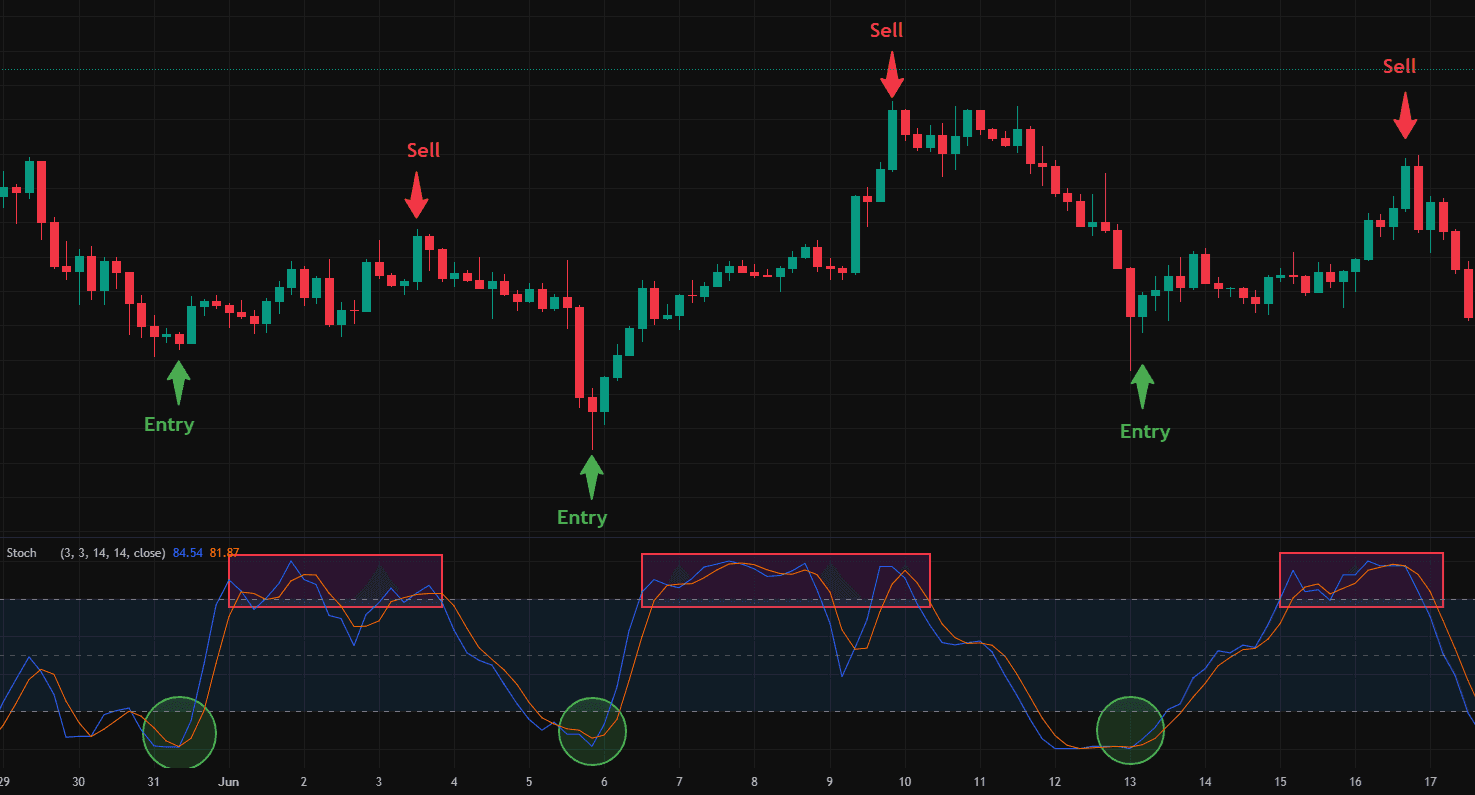
Stochastic oscillator and RSI work well here: readings below 20–30 signal buys near support, above 70–80 signal sells near resistance. The key risk: the range eventually breaks, and if you're positioned for a bounce when the breakout happens, losses can be sudden.
Asset Selection for Intraday Trading
The instrument you trade matters as much as the strategy you use.
Liquidity is non-negotiable. You need easy entries and exits without significant slippage. For stocks, this means average daily volume above 1–2 million shares. For crypto, stick to majors: BTC, ETH, SOL, and top-20 altcoins by market cap.
Volatility creates opportunity but also risk. The sweet spot is instruments with 2–4% average daily range (ATR). Below 2%, there's not enough movement to profit after fees. Above 4%, the risk of sudden adverse moves increases disproportionately.
Spread directly impacts profitability. For scalpers especially, tight spreads are essential. Bitcoin typically offers the tightest spreads in crypto; forex majors (EUR/USD, GBP/USD) offer the tightest in currencies. Platforms using oracle-based pricing like Pyth Network eliminate traditional bid-ask spreads entirely.
Risk Management: The 2% Rule and Beyond
Research consistently shows that risk management — not strategy selection — is the primary determinant of long-term trading survival. According to Barber and Odean (2000), the average individual investor underperforms the market by 2–5% annually, largely due to poor risk control and emotional decision-making.
The 2% Rule
Never risk more than 2% of your account on a single trade. For a $10,000 account, maximum risk per trade is $200.
Position sizing calculation:
- Account: $10,000
- Risk per trade: $200 (2%)
- Stop-loss distance: $0.50
- Position size: 400 shares ($200 ÷ $0.50)
This math should be automatic before every entry. No exceptions.
Layered Risk Limits
Professional traders use multiple layers of protection:
- Per-trade risk: maximum 1–2%
- Daily loss limit: maximum 4–6% (2–3 losing trades, then stop)
- Weekly loss limit: maximum 8–10%
- Correlation risk: avoid multiple positions in the same direction on correlated instruments
A PipFarm survey of 2,777 prop traders found that 45.1% of successful traders make only 1–2 trades per day. Fewer trades with proper risk management consistently outperforms higher volume with loose controls.
Stop-Loss Discipline
According to FPFX Tech data, 73% of failed prop accounts violated their own stop-losses in more than 30% of cases. This single metric explains more account failures than any strategy flaw.
Rules: set your stop-loss before entering. Never move it further from your entry. If stopped out, the trade is over — no re-entering the same idea without a new setup.
Technical Analysis Essentials
The most effective intraday traders use fewer indicators, not more. Three maximum: one for trend direction, one for momentum/overbought-oversold conditions, and volume for confirmation.
VWAP (Volume Weighted Average Price) dominates institutional intraday trading. Price above VWAP is bullish; below is bearish. Most intraday reversals happen at VWAP. It's the single most useful indicator for day trading.
Moving averages (20 EMA for intraday, 50 EMA for context) show trend direction. Trade in the direction of the moving average slope — fighting it reduces win rates significantly.
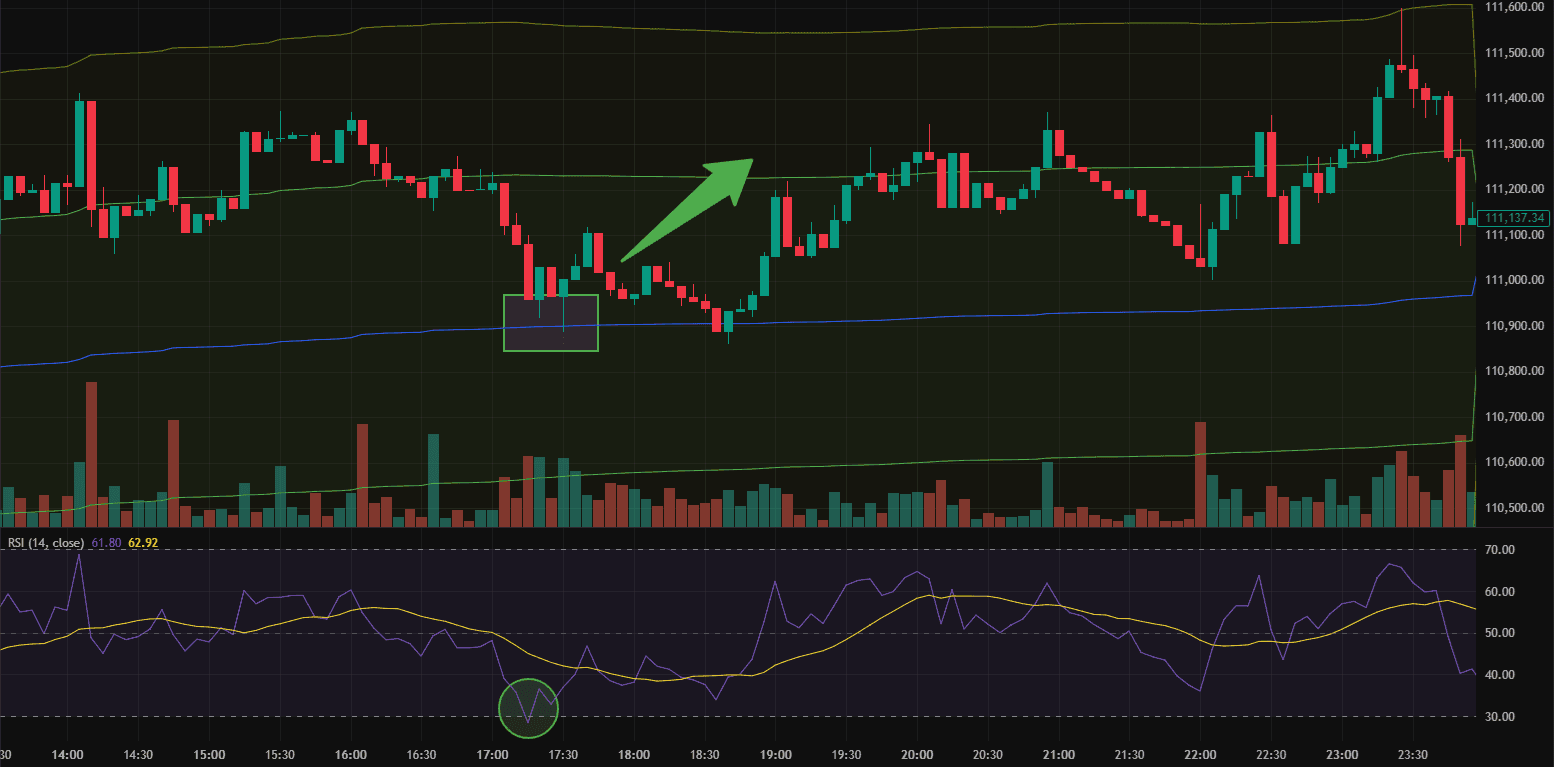
RSI on the 14-period setting identifies overbought (above 70) and oversold (below 30) conditions. Most useful in range-bound markets; less reliable in strong trends.
Price action — candlestick patterns, support/resistance levels, and market structure — remains the foundation. Indicators confirm what price action suggests, not the other way around.
The Daily Framework: Before, During, and After
Pre-Market (30–60 minutes before open)
Review the economic calendar for scheduled events. Identify overnight market movements and gap levels. Mark key support and resistance on your primary instruments. Set alerts at your zones of interest. Define your maximum trades for the day (2–3 for most traders).
During the Session
The first 30–60 minutes offer maximum volatility — and maximum risk. Many professionals wait 15–30 minutes after the open for the initial noise to settle before taking their first trade.
Midday (11:00 AM – 1:00 PM in US markets) typically sees reduced volume and choppy price action. Experienced traders often avoid this window entirely.
The final hour sees institutional position squaring and renewed volume. Setups tend to be cleaner, but time pressure increases.
Post-Market (15–30 minutes after close)
Review every trade taken. Screenshot setups for your trading journal. Rate each decision on a 1–5 quality scale independent of outcome. Track your plan adherence percentage — this metric matters more than daily P&L for long-term improvement.
Psychology: Why Most Day Traders Fail
The failure rate in day trading is well-documented. A study of Brazilian day traders (Chague, De-Losso, Giovannetti, 2020) found that 97% of those who persisted for more than 300 days lost money. The primary causes are psychological, not strategic.
Revenge trading — attempting to recover losses immediately after a losing trade — is the single most destructive behavioral pattern. Jared Tendler, author of "The Mental Game of Trading," classifies this as "desperation tilt" and recommends a hard rule: after 2–3 consecutive losses, take a mandatory 30-minute break from the screen.
Overtrading destroys accounts through accumulated fees and poor-quality entries. The PipFarm data is clear: 45.1% of successful prop traders make just 1–2 trades per day. Quality over quantity.
FOMO (Fear of Missing Out) causes entries without proper setups. The market offers hundreds of opportunities daily — missing one is irrelevant. Entering one bad trade costs real money.
Post-win overconfidence is equally dangerous. Barber and Odean (2000) found that traders who traded most actively earned 6.5% less annually than the market average — often because winning streaks created false confidence leading to oversized positions.
Intraday Trading in Prop Firms
Prop trading addresses two of the biggest barriers to successful day trading: insufficient capital and lack of external discipline.
A trader with a proven intraday strategy on a $1,000 personal account can apply the same edge to a $50,000–$200,000 funded account. The same 2% daily return yields $20 on personal capital versus $1,000–$4,000 on a prop account — with risk limited to the challenge fee rather than the entire balance.
Built-in drawdown limits (5% daily, 10% total on Basic accounts) enforce the exact discipline that most traders fail to maintain on their own. According to Locke and Mann (2005), this kind of structural constraint directly correlates with higher earnings.
For intraday traders specifically, key platform features to evaluate: execution speed, available instruments and their spreads, and whether the platform imposes restrictions on scalping or news trading (some prop firms do; others don't).
Getting Started: A Realistic Timeline
Month 1–3: Education. Read at minimum "Trading in the Zone" (Mark Douglas) and "The Mental Game of Trading" (Jared Tendler). Study one strategy in depth. Watch markets daily without trading.
Month 4–6: Demo trading. Apply your strategy on a demo account. Track every trade in a journal. Aim for 100+ demo trades before risking real money.
Month 7–9: Small live trading. Start with minimum position sizes. Focus on execution quality, not P&L. Your goal is plan adherence above 70%.
Month 10–12: Gradual scaling. If demo results are consistently positive and plan adherence is stable, begin increasing position sizes or consider a prop challenge to access larger capital.
This timeline is optimistic. Most consistently profitable traders took 1–3 years to reach that point. Rushing the process is itself a form of poor risk management.
Challenge details and current pricing: Upscale | Telegram bot | YouTube
Intraday trading offers the fastest feedback loop in financial markets — but that speed amplifies both profits and mistakes. Research across multiple studies consistently identifies the same pattern: strategy selection accounts for a small fraction of long-term results, while risk management and psychological discipline determine whether a trader survives. According to FPFX Tech data from 300,000 prop firm accounts, only 7% receive a payout, and the primary causes of failure — emotional trading (37.5%) and lack of discipline (37.8%) according to PipFarm — are behavioral, not strategic. The traders who succeed treat intraday trading as a structured business with defined operating costs, not a series of individual bets.
What is intraday trading and how does it work?
Intraday trading means buying and selling financial assets within the same trading day — all positions close before the session ends, eliminating overnight risk. Traders use technical analysis, price action, and indicators to capture short-term price movements lasting minutes to hours. Common strategies include momentum trading, breakout trading, scalping, reversal trading, and range trading.
How much money do you need to start day trading?
Minimum capital depends on the market. US stock markets require $25,000 to bypass pattern day trader rules. Forex can be started with $500–$1,000. Crypto has no regulatory minimum. Prop trading offers an alternative: for a challenge fee of $59–$999, traders can access funded accounts from $5,000 to $200,000 — risking only the fee rather than personal capital.
Why do most day traders lose money?
According to a study by Barber, Lee, Liu, and Odean analyzing all day traders in Taiwan over 15 years, fewer than 1% are consistently profitable after fees. A PipFarm survey of 2,777 prop traders (2025) identified the top causes: emotional trading after losses (37.5%) and lack of discipline (37.8%). The problem is behavioral — 73% of failed prop accounts violated their own stop-losses in more than 30% of cases.
What is the best intraday trading strategy for beginners?
No single strategy is universally "best." For beginners, breakout trading offers the clearest rules: identify consolidation, wait for a volume-confirmed breakout, enter on the retest, set a stop below the breakout level. It's mechanical enough to follow while learning, and the volume filter reduces false signals. Master one strategy completely before adding others.
How important is risk management in day trading?
It's the primary determinant of survival. Research by Locke and Mann (2005) at the Chicago Mercantile Exchange found that traders who cut losses faster earned 65% more per year. The standard framework: never risk more than 1–2% per trade, set a daily loss limit of 4–6%, and stop trading after 2–3 consecutive losses. PipFarm data shows that 45.1% of successful prop traders make just 1–2 trades per day.
Can you combine intraday trading with a full-time job?
Yes, but with limitations. The most active trading periods (first and last hour of the session) may conflict with work schedules. Strategies based on longer intraday timeframes (15-minute, 1-hour) require less constant monitoring than scalping. Some traders focus exclusively on the pre-market or after-hours session. Prop trading platforms that support mobile execution and Telegram integration can help manage positions during breaks.
What is the difference between intraday trading and scalping?
Scalping is a subset of intraday trading. All scalpers are intraday traders, but not all intraday traders are scalpers. Scalping targets very small moves (5–10 pips, $0.10–0.20 per share) on trades lasting seconds to minutes. Standard intraday trading targets larger moves (0.5–3%) on trades lasting minutes to hours. Scalping requires faster execution, tighter spreads, and higher trade volume to be profitable.