Trading is a job: Nick's story from Vietnam | Upscale


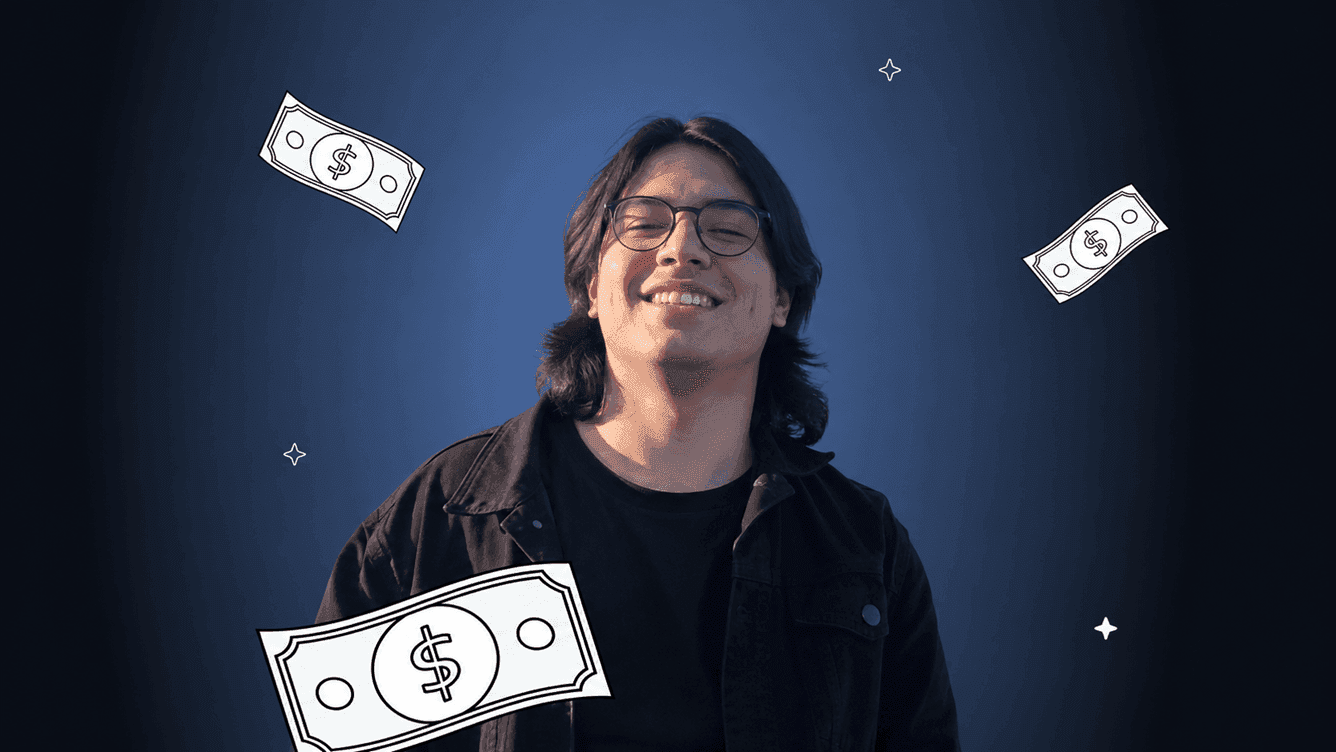
Nick is 26, lives in Da Nang, Vietnam, and earns a living from trading wherever he wants to be. He's been in the market for almost 8 years — and the first five were unprofitable, until the "fairy tale of the rich trader" shattered against reality. From a $10,000 funded account on Upscale he withdrew $863 in two payouts, and then honestly blew the account when he slipped into gambling mode. His main takeaway after years of trial and error is simple: trading is a job, not a casino and not a way to escape being broke. This is a story about discipline, being honest with yourself, and approaching the market without illusions.
The trader who ran off to Asia
Nick lives the life of a digital nomad: he's based in Vietnam and works from a house with an open yard — into which, one afternoon mid-workday, a porcupine wandered. For him, trading is a way to exist where he wants and how he wants.
But he long ago outgrew the romantic image of the rich trader who "works whenever he feels like it."
"The deeper I got into it, the more I realized the fairy tale is just a fairy tale. A trader is a workhorse who gets just as tired as someone on a factory floor."
By his account, the skills came exactly as the illusions broke: the harder reality hit him in the face, the more results appeared.
Eight years, five of them in the red

Nick's path began back in 2018, and for the first five years he chased the "holy grail" — a strategy that would make money on its own.
"The first five years were one endless mistake: any moment now I'll get it and everything will be great. But no, it doesn't work that way."
He drew charts, studied Elliott waves and indicators, tried automation with AI — overlaying each tool on the chart to see whether it matched his view. In the end he arrived at an extremely simple approach: minimal markup and trading only on clear setups.
"No setup, no trade. There's a setup, there's a trade."
Strategy: minimal charts, maximum discipline
Nick jokingly describes his system with a line from a Soviet cartoon: "my papers are lines, support levels, and the general news background." His chart is almost empty: a few key levels and reading the impulse. He deliberately uses no leverage.
The core of his trading isn't the entry but risk management. He keeps risk per trade at 0.5% of the account (1% max for longer positions), and aims for a risk/reward ratio of at least 1:3. If a trade goes into profit but he isn't sure about the market, he moves the stop to breakeven.
"I trade at roughly a one-to-one win rate — and I'm still in profit, simply because I stick to risk management."
A separate rule is his loss limit, which he counts not in percentages but in trades.
"More than two losing trades a day is off-limits for me. If I open a third, it means I've already stepped outside the contract with my own system."
An honest blow-up: when gambling kicks in
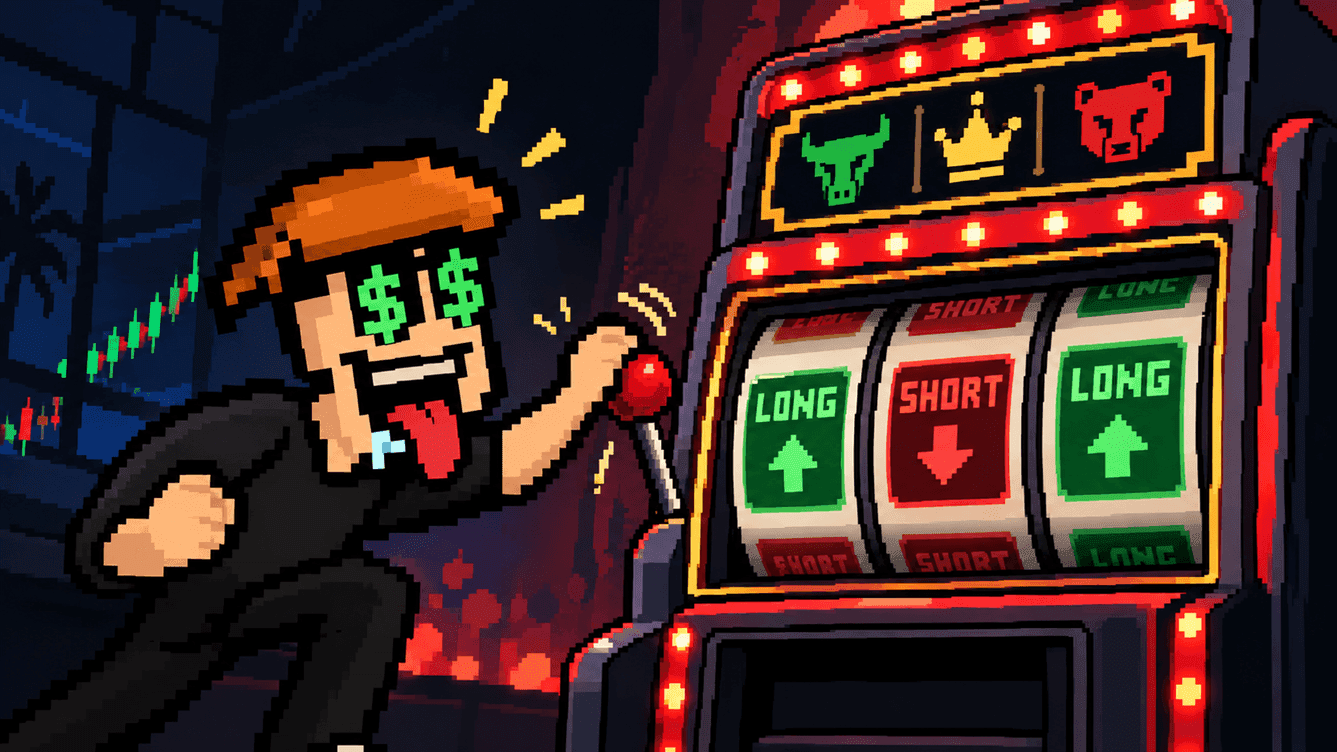
Nick doesn't dress up his story. After two payouts he lost the account — and he names the reason plainly.
"My lucky streak left me, and gambling took away my ability to earn."
The classic mistake was sitting in the market and trying to "win it back." He shows it on a concrete example: he made money on a short, took the profit — and then decided to re-enter "on the impulse," got a stop, re-entered again, another stop, and turned a plus into a minus. He eventually finished off that account on high-volatility memecoins.
"If I ignored my trading strategy, then I'm no longer earning money — I'm doing something else."
At moments like that he takes a couple of days off — sport, walks, tea — so his "head goes cold again."
What the AI report showed
After the challenge, Nick reviewed his trading through the platform's AI report — and treated it with humor, but admitted its accuracy.
Its top 3 mistakes were stops too tight relative to volatility, taking profit too early (asymmetric trade management), and overtrading: about 76% of his losses came from microcaps — BONK and FARTCOIN. Among the strengths were scaling out of positions, trading with no leverage at all, and working in moments of high volatility.
"As long as I'm in profit, I'm calm. The main thing is that tomorrow there's a bit more money than today."
How this review works, we covered separately — Upscale's AI challenge review.
Why Upscale, not the industry veterans
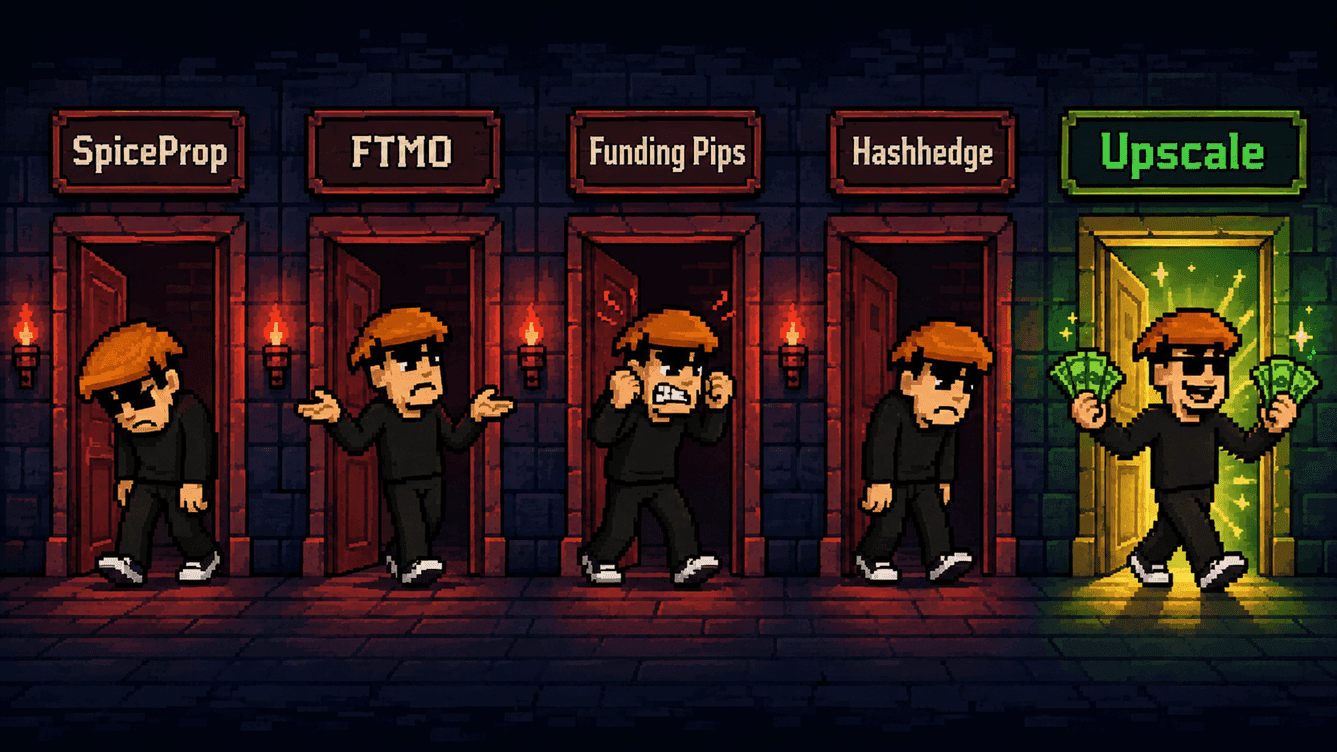
Before Upscale, Nick traded on many platforms — SpiceProp, FTMO, Funding Pips, Hashhedge. And with some of them he ran into things he didn't like.
His most painful case was on FTMO: he lost a profitable account for trading on a news day, even though he wasn't specifically following the news.
"I made money on your platform, and you tell me the challenge is failed. Why not just close trading during that window with a single button?"
His complaint isn't with the rule itself, but with the fact that it was only announced by an email — an inbox he "checks once a year." Another off-putting point with some veterans is the ability to void even a profitable account if they don't like the trader's strategy (for example, overly active scalping).
Against that backdrop, Nick highlights three things about Upscale: you can trade on volatile and news days, you can trade with any strategy, and the terminal is built right into Telegram, which he uses all day anyway.
"I came to a place where I need capital and the chance to earn the way I want, so all of us make money. They give me both."
Payout certificates
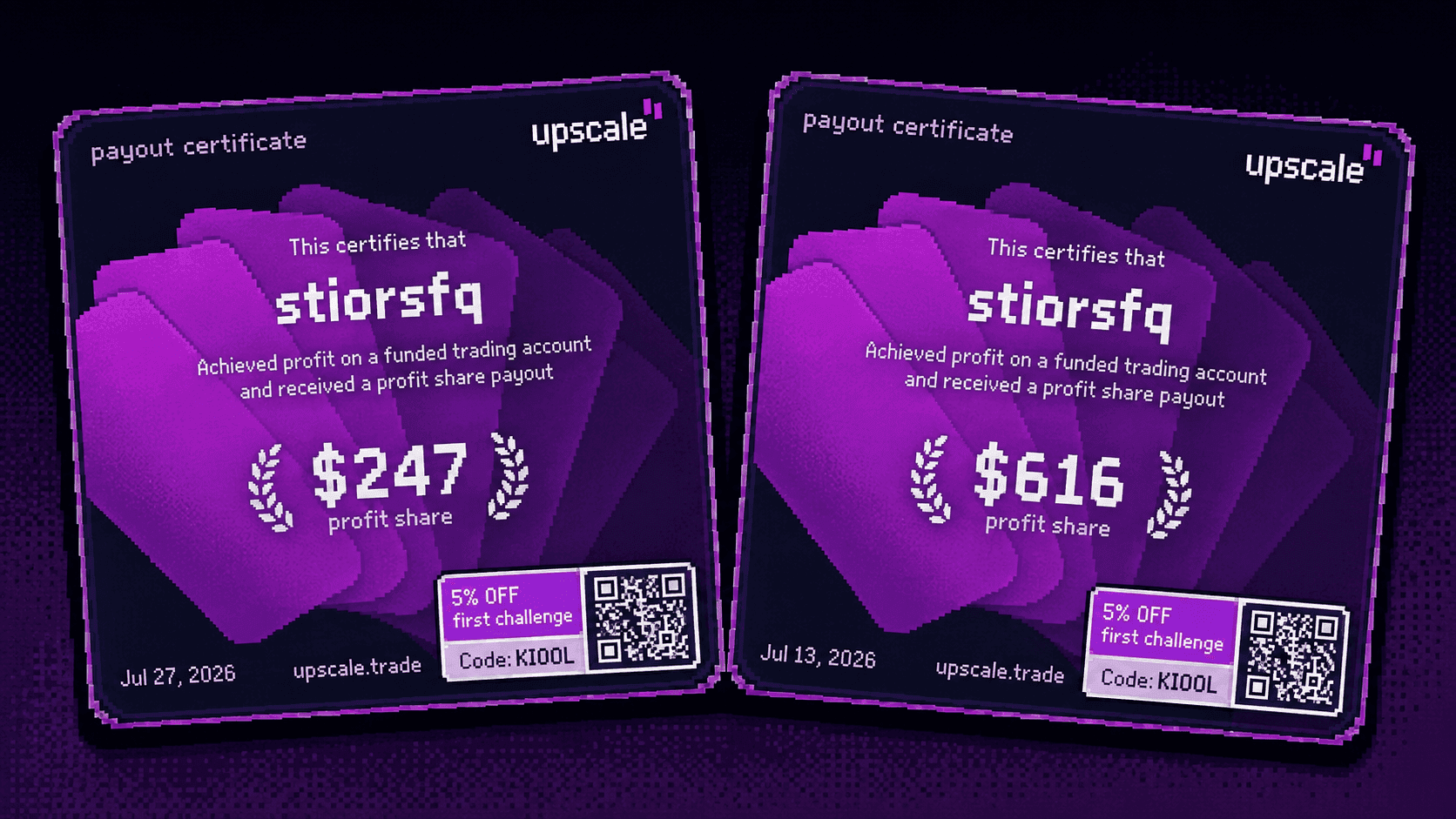
Nick's payouts from a $10,000 funded account: $616 (July 13) and $247 (July 27). Total: $863.
Verified results
Nick's results are verified by:
- An interview on the Upscale YouTube channel, with the account, statistics, and strategy shown on screen
- Two Upscale payout certificates from a $10,000 funded account
- An AI challenge report with trading metrics (win rate, R:R, mistakes) in the platform interface
All Upscale payouts are made on-chain and can be independently verified on the blockchain.
Key Takeaways
Nick's story isn't about pretty profits, but about a sober relationship with the market after eight years of trial and error. He repeats his main principle in different ways: treat trading as a job, not a casino, and don't try to use it to cover burning bills — that's the same gambling, just under a different name.
From all his experience he draws a few simple things. A stop-loss is mandatory on every trade, no exceptions — "life without a stop is sad," as he jokes. He counts his loss limit not in percentages but in trades: more than two losing trades in a day is a signal to stop, because after that it's not trading but emotion. And above all, don't sit the market out: take a risk/reward of 1:3 or better, close, and walk away, because there will always be opportunities on the market, while "sitting out the whole market" is something no one has ever managed.
Nick is honest about slipping up too: it was gambling on volatile memecoins that blew his account after the payouts. But he draws his conclusions from the numbers, not by feel — he checks his trading against the AI report, which showed him exactly where he loses. And from prop firms he picks the one that doesn't tie his hands: one that lets him trade on volatile days and with any strategy. For him, that's the sign a platform actually wants him to earn.
Start now: 👉 Upscale.trade | Telegram Bot
Follow us: 📺 YouTube | 𝕏 Twitter
Community: 💬 Telegram Chat | 🎮 Discord
Frequently Asked Questions
Who is Nick and how much did he earn on Upscale?
Nick is a 26-year-old trader who lives in Vietnam (Da Nang) and makes a living from trading. From a $10,000 funded account he withdrew $863 in two payouts — $616 and $247. He's been in the market for about eight years, the first five of which were unprofitable.
What strategy does Nick trade?
A minimalist one: an almost empty chart, support and resistance levels, and the general news background. He enters only on a clear setup and uses no leverage. The key is risk management: 0.5% risk per trade (1% max), a risk/reward ratio of at least 1:3, and moving the stop to breakeven when unsure.
How does Nick manage risk?
Through two strict rules. First, a stop-loss is mandatory on every trade: he always knows in advance how much he's willing to lose. Second, a daily loss limit that he counts not in percentages but in trades: more than two losing trades in a day is a reason to stop.
What helped Nick understand his mistakes?
The AI challenge report. It showed his top 3 mistakes — stops too tight, taking profit too early, and overtrading, with about 76% of his losses coming from high-volatility memecoins. Nick admits these mistakes and honestly calls his blown account the result of gambling.
Why did Nick choose Upscale?
For the freedom to trade: you can work on volatile and news days and use any strategy, whereas on some veteran platforms he lost even profitable accounts to such restrictions. Plus the trading terminal is built right into Telegram, which he uses every day.
What does Nick advise beginners?
Ease into the market and take a challenge of no more than $10,000 to get a feel for the process. Always set a stop-loss and calculate risk and reward in advance. And, above all, treat trading as a job and life as life — don't turn trading into a casino.