Failed a challenge? What's next: Upscale's AI review

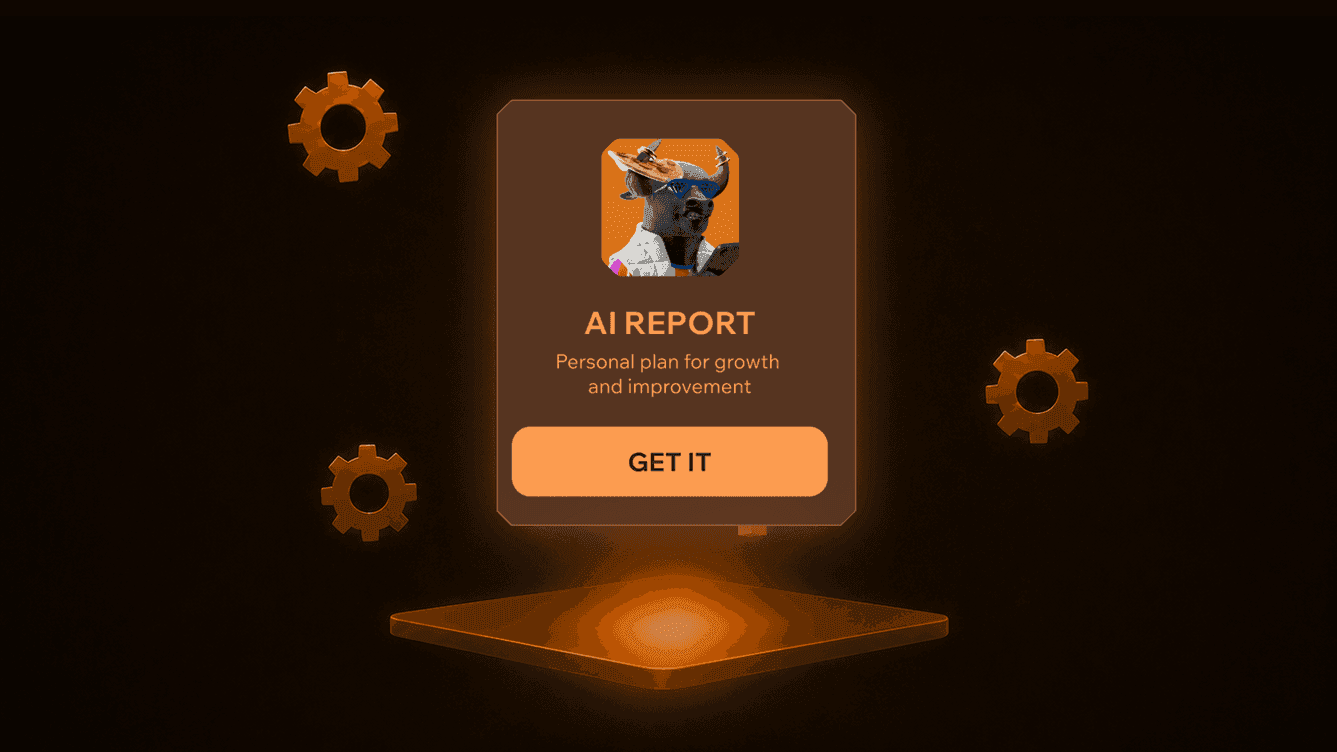
Failing a challenge isn't a dead end — it's the point where it matters most to understand what went wrong. Upscale has added an AI review: after a challenge closes, the trader gets full statistics on every trade on the account plus a neural-network breakdown of the main mistakes and a plan for the next attempt. The key idea is not to grade the result but to prepare you for the next run. The model works like a prop-trading mentor and a performance coach, focused on capital preservation, consistency, and trading for the long term. The review is built only on your own account's data — it's a tool for self-reflection, not a market forecast.
What the AI challenge review is
The AI review is a detailed analysis of your trading on a closed challenge. It has two parts: full statistics on every trade on the account, and a neural-network breakdown of your main mistakes with a direction for improving your trading strategy.
The point of the review isn't to hand out a grade but to help you prepare for the next attempt: to see the recurring patterns in your own trading and get concrete steps to fix them. The feature arrived as part of Upscale's summer update and is live now.
When and where it appears
The review is generated after a challenge fails, and only on real accounts — it isn't available on demo.
You can request it from three places:
- the "Account closed" window that appears right after the failure;
- the dashboard of a previously closed challenge;
- a dedicated AI analysis page.
The request is manual: you press the button yourself when you're ready. Generation takes under a minute, and once the report is ready, you get a push notification.
Trade statistics
The statistics are calculated across every closed position — over all challenge phases at once. Moving between phases doesn't reset the data or distort it through a technical change in balance; the maximum drawdown is also collected across the whole period.
The interface shows the key metrics:
- Strategy efficiency — how smooth your returns were relative to the swings in your results;
- Winning trades — win rate as a percentage and as a count of the total;
- Average profit and average loss — separately for winning and losing trades;
- Maximum drawdown — the largest drop in the account over the whole period;
- Risk/reward ratio — the ratio of risk to reward;
- Average hold time — overall and separately for longs and shorts;
- Most-traded instrument — the pair with the largest share of trades.
That's only what's shown on screen: the backend calculates noticeably more — from commissions and funding paid to average leverage on winning versus losing positions. The card surfaces what matters most, to keep the review readable.
Two metrics worth understanding
Most of the metrics in the review are intuitive, but two are worth explaining — the interface has tooltips for them.
Strategy efficiency. This metric compares your average return with the swings in your results: the more evenly you earn and the smaller the spread, the higher it is. Sharp back-and-forth swings lower it, even if the bottom line is positive. It isn't calculated if fewer than two trading days are closed on the account — there isn't enough data yet to assess consistency.
Risk/reward ratio. This is the ratio of potential loss to potential reward. At 1:1 the reward equals the risk; at 1:2 the potential reward is twice the risk — you can make a few mistakes and still stay in profit; at 1:3 the strategy stays profitable even if half your trades lose.
How the AI report is structured
The neural network's conclusion follows a fixed five-block layout:
- Top 3 mistakes — the three most critical problems that threaten passing or holding a funded account;
- Improvements and action plan — concrete steps for each of these problems;
- Overall analysis — a summary of your trading profile;
- Good news — three strengths that show your potential;
- Motivational conclusion — tying the improvements to the next attempt.
For example, the review might flag revenge trading — a new trade right after a loss — a skew in risk management where a trade's risk exceeds its potential reward, or frequent jumping between instruments. For each problem the AI gives a concrete step: keep a minimum risk/reward ratio, take a break after a run of losses, or focus on a single instrument for a while.
The tone deserves special mention. The report reads like a breakdown from a mentor, not a verdict: the emphasis is on growth, not criticism. The wording deliberately avoids labels like "undisciplined" or "gambling" — instead the neural network describes high-variance behavior and working with impulses. References to specific trades are given by date and asset, numbers are rounded for readability, and there are no direct sales pitches in the report. It's generated in the language of the user's interface.
What the AI review doesn't do
It's important to understand the tool's limits. The review is built solely on your own account's statistics. It is not investment advice and not a market forecast.
It also doesn't promise to help you pass a challenge — it's a tool for reviewing your own mistakes, not a guarantee of results. And it's available only for real challenges: it isn't generated on demo accounts.
Key Takeaways
The AI review turns a failed challenge from a dead end into a set of data to work on yourself with.
A failure is statistics, not the end. Instead of guessing what went wrong, you get a summary of all your trades and a breakdown with concrete mistakes.
Statistics and a plan in one place. Metrics like strategy efficiency, win rate, risk/reward, and hold time come with an action plan for each problem identified.
A mentor's tone, not criticism. The report focuses on growth and preparing for the next attempt: no labels, with empathetic, constructive wording.
It's a tool for self-review, not a guarantee. The AI review helps you see your own mistakes, but it doesn't promise you'll pass the challenge and doesn't replace your trading discipline.
Start now: 👉 Upscale.trade | Telegram Bot
Follow us: 📺 YouTube | 𝕏 Twitter
Community: 💬 Telegram Chat | 🎮 Discord
Frequently Asked Questions
What is Upscale's AI challenge review?
It's an analysis of your trading on a closed challenge: full statistics on every trade on the account plus a neural-network breakdown of your main mistakes with an improvement plan. The point is to prepare the trader for the next attempt, not to grade the result.
When does the AI review appear?
After a challenge fails. Generation is started manually, takes under a minute, and a push notification arrives when it's ready. You can request the review from the account-closed window, the dashboard of a closed challenge, or the AI analysis page.
Which accounts is it available on?
Only on real challenges. It isn't generated on demo accounts.
What's included in the report?
Five blocks: the top 3 mistakes, improvements and an action plan, an overall analysis of your trading profile, three strengths, and a motivational conclusion. Trade statistics are shown separately — strategy efficiency, win rate, average profit and loss, maximum drawdown, risk/reward ratio, hold time, and your most-traded instrument.
Does the AI review help you pass a challenge?
No, it doesn't offer that guarantee. It's a tool for reviewing your own mistakes based on your account's statistics — not investment advice and not a market forecast.
What language does the report come in?
The report is generated in the language of the user's interface.