From $50K in Dubai to Discipline: Artem's Story | Upscale

Artem once bought Terra Luna at $6, sold at $99 — almost 17x — and flew to Dubai for three months with $50,000 in hand: hotels, a rented yacht, "the best life." Then the money ran out, and he lost what was left trading other people's calls. Earlier this year he lost 70% of his balance revenge-trading every dip — and closed the terminal for a week.
This story is about the comeback. About how, over nine years, his trading evolved from pure gambling into a liquidity-based system, why he believed in the industry again on Upscale after being banned by his first prop firm, and how $1,018 in payouts became less about the number and more about discipline.
A crypto "pensioner" with nine years in
Artem is 27 and has traded since roughly 2016 — a self-described "crypto pensioner." He won't say where he's from: in his region this kind of activity isn't welcome and could cause him problems. With a cost of living of about $300–400 a month there, trading became his way to avoid depending on an employer and stay "in the shadows" while still earning.
He started long before he understood the mechanics: buying crypto on platforms that no longer exist, trading on an exchange without knowing what long or short meant. "I see the chart moving, I press a button." Nine years have passed since — and almost all of them went into turning randomness into a system.
17× on Luna and three months in Dubai
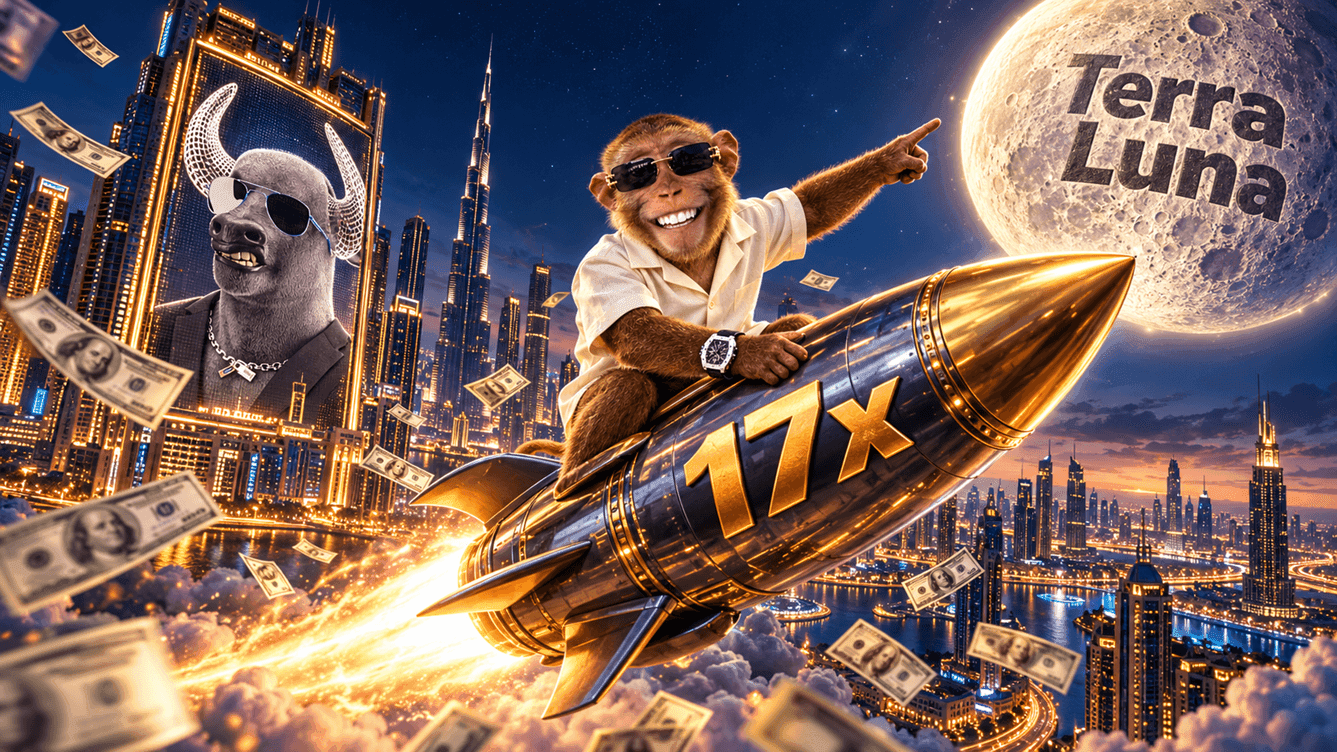
Artem's first genuinely large result came on Terra Luna: he put in his last $3,000, buying the coin at $6–7, and sold around $99 — almost 17×. That left him with roughly $50,000 — an enormous sum in a region where you can live on $300 a month.
"A guy who had never really seen the luxury life took that money and went partying in Dubai."
Three months in hotels, a yacht rented for a day — and the money was gone. He lost the rest following the calls of a then-popular YouTuber: the next calls turned out to be losing ones, one after another. Starting over was very painful — and it's exactly from that experience that he drew his main lessons about money.
A year of blowups and the turn to prop
Earlier this year it repeated in miniature: Artem tried to long every drop, his "mental RAM was full," and he lost about 70% of his balance. Here he put into words what many learn the hard way: after losing half your account, getting back requires not +50% but +100% — twice as hard.
He dropped everything and shut down for a week. Coming back, he ran into a prop-trading ad in his feed: a small entry cost, a $10,000 account for around fifty dollars. Before paying, Artem dug into Reddit and prop-firm comparison sites to weigh payouts and reputation. That's how he first entered prop.
The comeback through Upscale
His first prop firm did pay out — about $1,000 to a crypto wallet, in roughly a day. But the very next trading day the account was deactivated, citing a rule Artem couldn't find in the documentation (he'd even run their terms through an AI to hunt for hidden clauses). His trust in the industry took a hit — but after reading other people's cases, he decided to try once more, this time on Upscale.
He bought a $10,000 account on June 30 — with a promo code, as he always does. Switching back to an exchange model after a lot-based system took some adjustment, but he passed the challenge, reached funded, and received two payouts: $470 (July 28, 2026) and $548 (August 12, 2026) — $1,018 in total. The first payout came with a refund of the challenge fee (around $130). The money arrived fast.
"This is my second-ever withdrawal with a prop firm. A very meaningful payout — I believed in the industry again."
Ironically, both payouts could have been larger — around $1,200: Artem deliberately tried to push the bar higher, but, in his words, "greed got the better of me," and he banked what he had.
Strategy: from gambling to liquidity

Over nine years, Artem's strategy went "from complete nothing to something that works." At first it was gambling: levels, trendlines, parallel channels, Fibonacci grids — "and I didn't understand why any of it mattered." Then he took on the ICT and Smart Money concepts, but the original source had "a lot of noise and long-winded explanations." The breakthrough came in a small Western Discord community: with other traders he ran backtests on historical data and separated the tools that worked from the ones that didn't.
Now his approach has simplified to a single idea:
"Price always moves from liquidity to liquidity."
He looks for where liquidity might sit, maps out pools and imbalances, and on crypto deliberately avoids order blocks, rejection blocks, and classic support levels — in his experience they often don't hold there. His analysis always runs top-down: daily chart, then 4-hour, 1-hour, 30-minute, and 15-minute.
Risk: the one limit he never breaks
Artem has no stone tablet of rules — he calls himself freedom-loving and often acts on intuition. When he forced himself to keep a checklist and risk "1% of the deposit," it always ended in a blowup and inflated risk. So his rules are few, and unconventional.
The main one is not to fill the daily loss limit. On a $10,000 account that's about $500 a day; he sets his stop around $400–450, leaving himself roughly two stops per session. The second rule is to enter only trades he's "rock-solid" sure of, and to skip anything with open questions. He trades mostly intraday and rarely holds positions overnight.
Artem is also candid about the risky side of his approach: he passes the early challenge phases aggressively, without respecting small per-trade risk. It works precisely because Upscale's built-in drawdown limits — daily and total — hard-cap the possible loss: the account closes before a loss becomes a catastrophe. It's this structural boundary, not willpower, that keeps an aggressive style contained — and it's exactly what's missing when trading your own deposit.
Why only props
Artem no longer trades his own deposit. It's small, and earning a meaningful sum on it would require inflated leverage — a direct path to losing it again. The prop model is calmer psychologically: knowing you can buy another account if one closes removes the pressure that pushes traders into revenge trading in the first place.
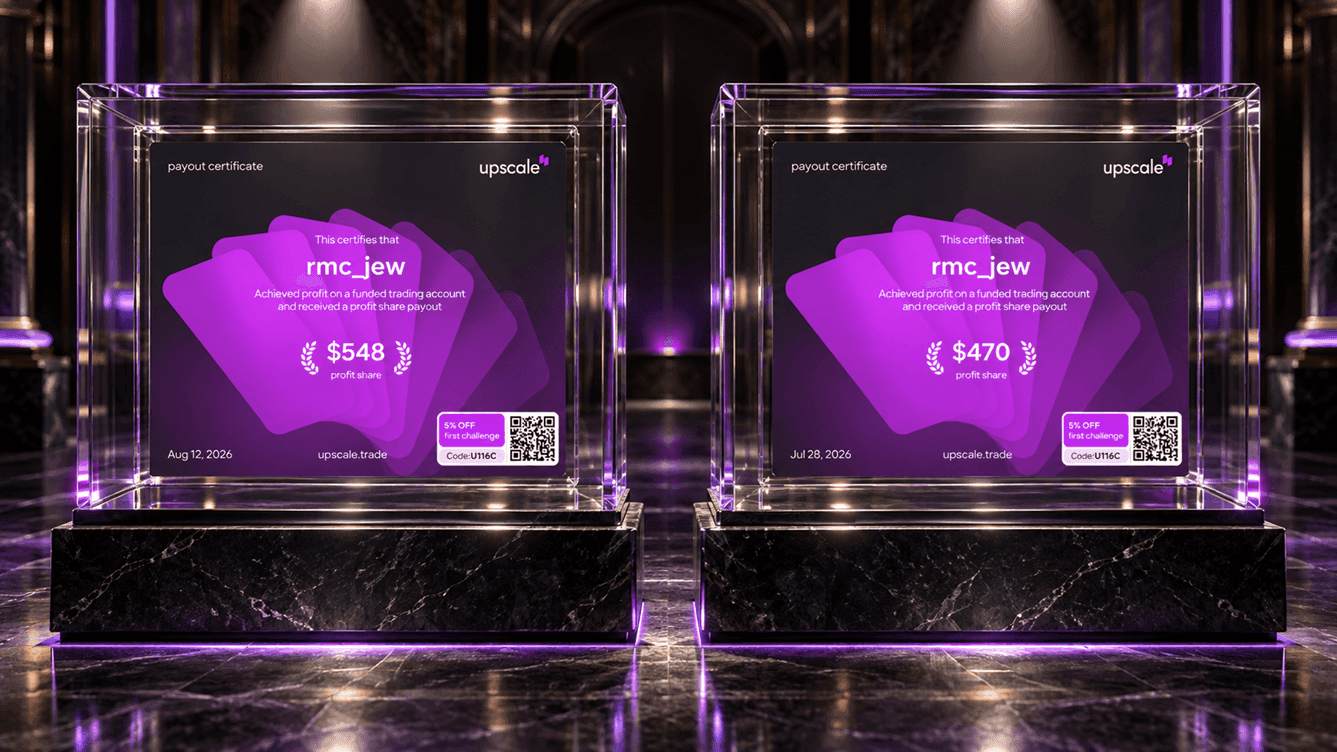
Artem's payouts from a $10,000 funded account: $470 (July 28) and $548 (August 12, 2026). Total: $1,018.
Verification
Artem's results are verified by:
- A YouTube interview on the Upscale channel
- Two Upscale payout certificates from a $10,000 funded account
- The challenge analytics dashboard in the platform interface
All Upscale payouts settle on-chain and can be independently verified on the blockchain.
Key takeaways
Artem's main lessons came not from the payouts but from the fall. After Luna and Dubai, he distilled three things he recommends to everyone: always rely on your own analysis rather than someone else's calls; don't let your first big money go to your head; and distribute profits wisely — part into a safety cushion, part toward housing and health, and only the remaining 30–40% for what you want. And make the savings hard to reach, so you don't "top up" at a bad moment.
The second takeaway is about discipline within freedom. Artem has no rulebook, and rigid checklists never stuck for him. But there's one rule he doesn't break: don't fill the daily loss limit. Together with "I only enter trades I'm sure of" and intraday trading, that forms his system. And the boundary that keeps his aggressive style contained is not willpower but the platform's built-in drawdown limits — being honest about that matters more than romanticizing the aggression.
The third takeaway is about second chances. After the ban at his first firm, Artem could have left the industry entirely. What brought him back were transparent rules, on-chain payouts, and fast withdrawals — and the very ability to start again, buying a new challenge if an account closes, removed the psychological pressure that had pushed him toward revenge trading for years. His advice to beginners is simple: don't wait for the perfect moment — act, buy on a promo, pass, save, and never stop learning.
Start now: 👉 Upscale.trade | Telegram Bot
Follow us: 📺 YouTube | 𝕏 Twitter
Community: 💬 Telegram chat | 🎮 Discord
Frequently Asked Questions
How much did Artem earn on Upscale?
$1,018 in two payouts from a $10,000 funded account: $470 (July 28, 2026) and $548 (August 12, 2026). The first payout came with a refund of the challenge fee (around $130). For Artem, this was his second-ever successful withdrawal from a prop firm — and a reason to believe in the industry again after a ban at another company.
What is Artem's trading strategy?
Over nine years his approach evolved from chaotic levels and trendlines to Smart Money concepts and liquidity-based trading. He now looks for liquidity and imbalances on the chart, working from the principle that "price moves from liquidity to liquidity." His analysis runs top-down: daily, 4-hour, 1-hour, 30-minute, and 15-minute. On crypto he deliberately avoids order blocks and classic support levels — he finds they often don't hold there.
How does Artem manage risk?
He has no rigid rulebook — he trades on intuition. But there's one rule he never breaks: don't fill the daily loss limit (on a $10,000 account that's about $500; his stop sits around $400–450, roughly two stops per session). His second principle is to enter only trades he's fully confident in. The boundary for his aggressive phase-passing is Upscale's built-in drawdown limits, which cap the maximum loss.
Why does Artem trade only on props?
His own deposit is too small to earn a meaningful sum without inflated leverage — a risk of losing it again. The prop model is calmer for him psychologically: if an account closes, he can buy another, which removes the pressure that drives revenge trading. He trades mostly intraday.
What does Artem advise about managing money?
Three lessons from his own Luna-and-Dubai experience: always do your own analysis rather than follow others' calls; don't let your first big money go to your head; and distribute any profit in advance — part into a safety cushion, part toward housing and health, and only the remaining 30–40% for free spending. He suggests making the savings hard to access so you don't return them to the market on emotion.
What does Artem advise beginners?
Act rather than wait for the "perfect moment": challenge promos aren't always available, so it's worth buying on a promo, passing, and earning while you can. You can also start with no investment at all — on a free demo account — and Upscale regularly gives away accounts in Telegram and on YouTube streams.