$1,424 From a $10K Prop Account: Olaide's Story | Upscale


Olaide is from Nigeria, living and working in the UK. Day job from 9 to 5, charts in the evening. He started with spot trading in 2020 — buying coins and holding. In 2025, he moved to futures and turned $500 into $1,500 on Binance using 100× leverage in his first month. Then he added $3,500 and lost the entire $5,000 deposit to a single liquidation. In March 2026, a friend told him about Upscale. Olaide passed both challenge phases in 12 days — 7 for Phase 1, 5 for Phase 2. It was his first prop account ever. From a $10K account, he withdrew $1,424 across two payouts. He used the money from his first payout to buy a $25K challenge — and had already passed Phase 1 by the time of this interview. His strategy is Smart Money Concept with a position trading approach. He's not a scalper or day trader: he enters a trade and holds it for two days to a week. His story is about the transition from 100× leverage on an exchange to disciplined prop trading, and about how trading with someone else's capital removes the emotional pressure that destroys personal deposits.
📺 Full interview with Olaide — on the Upscale YouTube channel.
From Spot to Futures: How the Journey Started
Olaide's trading journey began in 2020 with the simplest approach: buying coins and holding. Classic spot trading — buy on a dip, wait, sell on a rise. It worked while the market was going up and required neither technical analysis nor risk management.
"I was buying main coins and holding for a while. Then selling after the market was moving. That's how I started trading."
But eventually spot trading stopped working — Olaide started losing money and stepped away from trading for a while. The turning point came after he moved to the UK: a friend introduced him to futures trading in early 2025.
From $500 to $1,500 — and Back to Zero: The 100× Leverage Lesson
The first month on futures felt like magic. Olaide funded his futures wallet with $500 and turned it into $1,500 on Binance within a month. A 3× return. The feeling of "I can do this" was powerful.
"I was firing the leverage — like 100×, 50×. On Binance. Just firing the leverage."
The problem was that Olaide understood the technical side of analysis but not the psychological side. 100× leverage turns every 1% market move into a 100% account move. With $1,500 in the account, that's a full liquidation on a routine price swing. But when your account triples in a month, the risk feels justified.
Emboldened by the result, Olaide added $3,500, bringing his deposit to $5,000. What happened next, he remembers clearly:
"I blew up that $5,000. To zero. Liquidation hit."
When asked "why no stop-loss?" he answered honestly — the market kept hitting his stops and then going in his predicted direction. This made him abandon stop-losses entirely. A decision that ultimately cost him his entire deposit.
The math of the loss: with 100× leverage and a full position on a $5,000 account ($500,000 notional), a 1% price move against the position = $5,000 loss = complete liquidation. On Upscale with 5× crypto leverage, the same position as a percentage of the account would create $25,000 notional — and a 1% move would cost $250, not $5,000. A 20× difference. Leverage isn't "more = better." Leverage is a multiplier of both profit and loss.
The Reset: From Loss to Self-Education

After losing $5,000, Olaide didn't quit trading. Instead, he started learning — and this is arguably the most important part of his story.
"I started learning on YouTube — watching different videos, joining Telegram live streams. Especially the Smart Money Concept channels. I didn't join paid courses — I just watched channels and learned on my own."
Months of self-education through free resources — YouTube channels on SMC, Telegram streams with market analysis, live trading sessions — transformed his approach. Olaide went from "max out the leverage and hope" to systematic level-based trading with limit orders.
He still doesn't consider himself an expert who can teach others:
"Honestly, I don't know how to teach people how to trade. That's my problem. But I know how to do it myself."
That honesty is rare in a world where every other trader sells courses. Olaide doesn't sell knowledge — he applies it.
First Prop Account Ever: 12 Days for Both Phases
In March 2026, a friend told Olaide about Upscale. He had never heard of prop trading before and had never bought a challenge on any platform.
The result:
- Phase 1: passed in 7 days
- Phase 2: passed in 5 days
- Total: 12 days from purchase to funded account
"This is my first prop account ever. First in my life. And I passed on the first try."
For context: according to Finance Magnates data, only 14% of traders pass the challenge, and just 7% ever reach a payout. Olaide is in that 7%.
Two Payouts — $1,424 Total
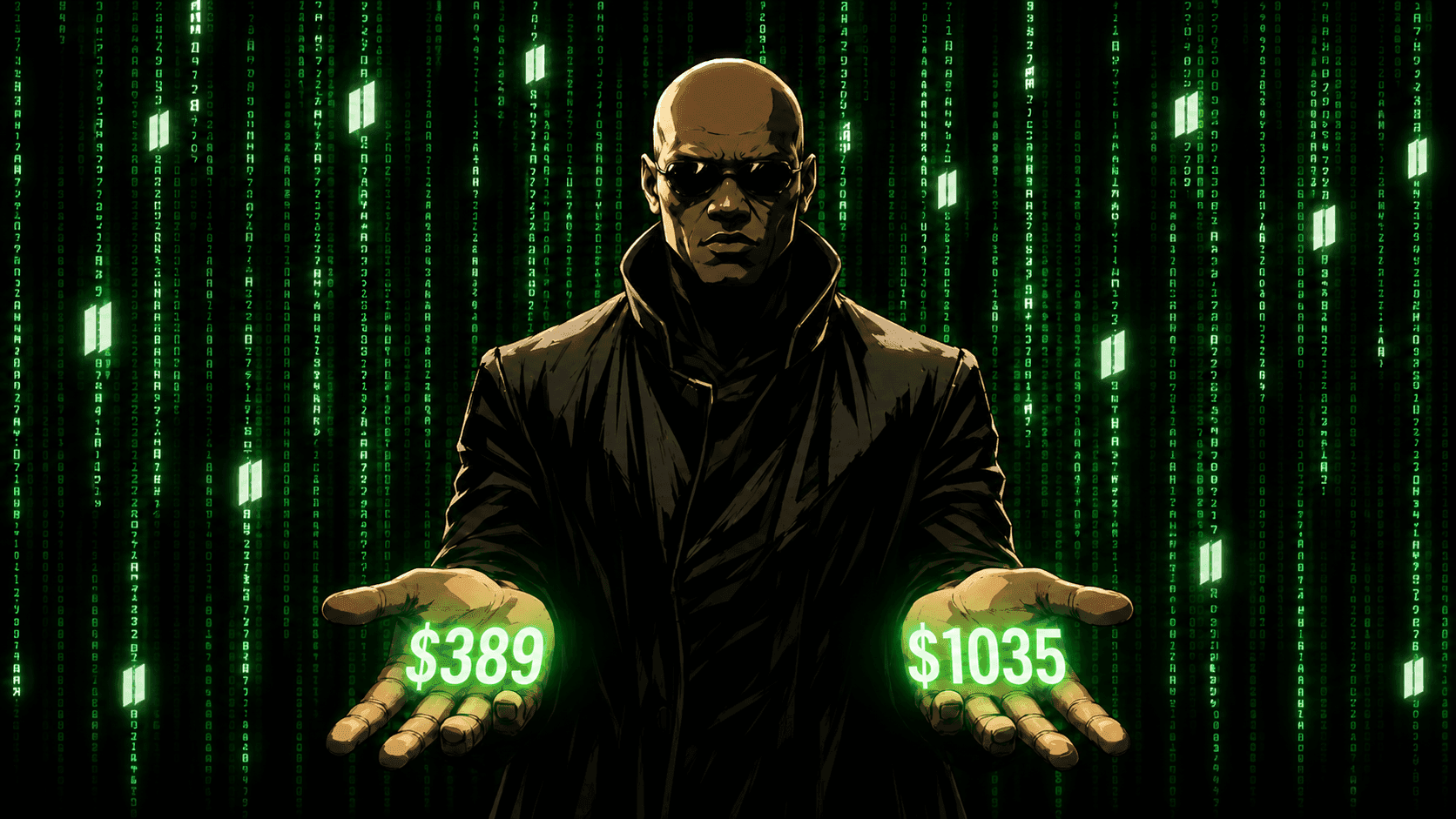
From his $10K account, Olaide received two payouts:
- April 10: profit ~$490, payout $389 (80% profit share)
- April 28: payout $1,035
Total payouts: $1,424 from a $10K account — a 14% return on the firm's capital in a few weeks.
His reaction to the first payout:
"You see I smile when you say how do I feel? I actually feel unbelievable. Is this real? Because when you go to social media, a lot of people complain about prop firms — that when they get to payout, they start bringing different stories, violating this rule, violating that rule. When I requested a payout, Upscale told me to wait 48 hours. But the money was deposited in my wallet within 4 hours."
Olaide's Strategy: SMC + Position Trading
Olaide is not a day trader. He calls himself a "seasonal trader" — he doesn't trade every day, but when he enters a trade, he holds it for two days to a week. Patience is central to his approach.
Top-down analysis:
- Daily chart — determines trend direction, marks previous highs (green line) and lows (red line)
- 4-hour — refines direction, finds additional levels and zones of interest
- 1-hour — locates specific entry points using SMC: order blocks, liquidity zones
Entries: exclusively limit orders. Olaide places a limit order at his zone of interest and waits. No market entries. If the market doesn't reach his level within a day, the order gets cancelled.
"If I set a limit order and the trade didn't hit it that same day, I will cancel the trade."
Holding positions: once a trade opens, Olaide holds it to the previous high (for longs) or low (for shorts). He also uses dollar cost averaging — adding to a profitable position on pullbacks.
Pre-entry monitoring: before trading altcoins, Olaide checks the data — trading volumes, buyer/seller activity, money flow. He can monitor a coin for two days before entering. For Bitcoin, the process is simpler — he just waits for his level.
"If I want to minimize my risk, I go for Bitcoin. I don't actually do much on Bitcoin — I just wait."
A Day in Olaide's Life: 9-to-5 Job + Trading
Olaide balances full-time employment in the UK with trading. Here's how his day works:
When not on shift: wakes up around 7:00, does his morning routine, then checks the charts. Often does nothing — just watches how the market moves. If he sees a setup, he starts monitoring. If not, he closes the charts and goes about his day.
"The market in London normally moves during the night. When I wake up in the morning, I check the charts — sometimes I just close and leave everything for that day."
When there's a setup: checks top gainers and top losers. If he sees a coin that interests him, he adds it to TradingView and starts monitoring. He can watch it for one to two days before entering.
This approach — not trading every day, waiting for the right setup — is critically important for prop trading. Most traders fail challenges not because of bad trades, but because of too many trades. Olaide trades rarely, but precisely.
How Olaide Manages Risk on a Prop Account
Olaide formulated a rule that every prop trader should remember:
"If you have a $10,000 account with a 10% maximum drawdown — you should see it as a $1,000 account. Because 10% of $10,000 is $1,000. That's your real capital."
This reframes the perception: on a $10K funded account, you're not managing ten thousand — you're managing one thousand. Everything above $9,000 isn't yours. This allows you to calibrate risk correctly.
His limit: no more than $450 in losses on any single trade. Not a $450 position size, but a $450 maximum allowable loss. If losses approach that number, the trade gets closed — no exceptions.
At the time of the interview, his account was in a $550 drawdown after two losing trades ($280 + $260). He was already in a new position but fully in control:
"There's never been a day on my prop account where I was close to liquidation. Because I actually monitor it very well. Even if I risk high, I stay with the system to look out how the trade is playing out. If I see that I'm not interested in the way the market is moving anymore, I close the trade."
Why Prop Removes Emotional Pressure
One of Olaide's most valuable observations is the difference between trading your own money and trading someone else's. It's the same theme raised by Saul, Ernest, and other Upscale traders — but Olaide articulates it with particular clarity:
"I didn't add emotional attachment to the trading. I just trade like I'm trading a demo account. If I'm trading with my money, even if I want to leave the trade to play out, whenever I have a drawdown, my emotion will be on my money — oh, I'm still going to lose this money. But if I'm trading with prop, I'm like, okay, let's see how it plays out."
This is the paradox of prop trading: strict rules (5% daily drawdown, 10% maximum) don't restrict — they liberate. When the trader knows the maximum loss is capped, the fear that causes premature exits and revenge trading disappears.
When asked "what would you do differently if you started over?" Olaide answered:
"I wouldn't add emotional attachment to the trading. Trade like it's a demo. Because on prop, the emotional attachment should be lower than when you're trading with your money. Prop gives you the opportunity to double, to triple your money easier than using your capital — with little or no risk."
What Olaide Values About Upscale — and Why He Couldn't Find an Alternative
When asked about comparing other prop firms, Olaide answered from personal experience. When Upscale went down for maintenance for a few days (due to a DDoS attack), he started checking competitors — and couldn't find a suitable replacement:
"I started checking other prop firms. Some of them tell you that you should not hold a trade overnight. One of the things I ever hate when I'm trading — you can never tell me not to hold a trade overnight. Some tell you that you should not use more than 2% of your account. If you want me to make profit, you need to free the chain for me to explore the market. Upscale gives you space to breathe. Gives you space to explore the market on your own way."
For a position trader like Olaide who holds trades for days, an overnight holding ban isn't just an inconvenience — it's a complete ban on his strategy. FTMO, for example, requires closing all crypto positions by Friday on non-Swing accounts. For Olaide, that would be unacceptable.
His overall assessment:
"If I'm going to compare Upscale's rules to other prop firms' rules, I will say Upscale actually has 100% free chain to rules. All their rules is like they're not even having any rules. They free you to explore the market."
Scaling: First Payout → Next Level
Olaide didn't just withdraw and stop. He used his first payout to buy a $25K challenge — and by the time of the interview, he had already passed Phase 1.
This is the same systematic scaling approach demonstrated by other successful Upscale traders:
- Ernest started at $10K, confirmed payouts work, moved to $200K
- Saul passed four funded accounts and won a $50K account in the Panda Tournament
- Olaide started at $10K, withdrew $1,424, reinvested into $25K
The common principle: don't invest personal money into large challenges. Start with the minimum, confirm the cycle works (pass → funded → payout), then reinvest payouts into larger accounts. This turns prop trading from a one-time experiment into a scalable income system.
Olaide's status at the time of the interview:
- $10K funded account — active, still trading
- $25K challenge — Phase 1 passed, Phase 2 in progress
- Goal: $10,000 monthly income from trading to quit the 9-to-5
"Life is one step after the other. First I need to stop working for anybody. If I can make $10,000 every month on trading, I'm going to stop working 9 to 5. Then after that I'll start dreaming bigger."
Payout Certificates
Olaide's payout certificates confirm two payouts from his $10K funded account:

Two payouts: $389 (April 10, 2026) and $1,035 (April 28, 2026). Total: $1,424 from a $10K account.
Verification
Olaide's results are verified through:
- Video interview showing the funded account screen, payout history, and live positions on TradingView
- Upscale payout certificates
- On-screen drawdown data ($550 drawdown at the time of interview) confirming active trading on the funded account
All Upscale payouts are processed on-chain and available for independent verification on the blockchain.
Key Takeaways
Olaide's story demonstrates several principles that repeat across every successful prop trader.
Leverage is not an advantage — it's a multiplier. Olaide lost $5,000 on Binance with 100× leverage — the typical outcome for exchange futures trading. He switched to prop with 5× crypto leverage, and the same strategy (SMC, position trading from levels) became profitable. Not because the strategy changed, but because the leverage stopped killing the account on the first bad move. More on leverage-drawdown compatibility in the challenge passing guide.
Prop removes emotional pressure. Olaide's observation — "I trade like it's a demo" — matches what other Upscale traders say: Ernest, Saul, Wade. Strict drawdown rules don't restrict — they protect against your own mistakes. When the maximum loss is capped, the fear that drives bad decisions disappears.
Patience is a strategy. Olaide doesn't trade every day. He can monitor a coin for two days before entering. He can wake up, look at the chart, and close the terminal for the entire day. Most traders fail challenges because of overtrading, not bad trades. The ability to not trade is as important as the ability to trade.
Scaling through reinvestment. First payout → buying a larger challenge → next level. Without investing additional personal funds. This systematic approach turns prop from an experiment into income.
And as Olaide said: "The sky is for everybody to fly."
Start now: 👉 Upscale.trade | Telegram Bot
Follow us: 📺 YouTube | 𝕏 Twitter
Community: 💬 Telegram Chat | 🎮 Discord
Frequently Asked Questions
How much did Olaide earn on Upscale?
$1,424 from two payouts on a $10K funded account: $389 (April 10, 2026) and $1,035 (April 28, 2026). At the time of the interview, Olaide had already bought a $25K challenge with money from his first payout and passed Phase 1.
What is Olaide's trading strategy?
Smart Money Concept (SMC) with a position trading style. Top-down analysis: daily chart for trend direction, 4-hour for levels, 1-hour for entry points. He enters only with limit orders, with Bitcoin as his primary instrument. He holds trades from two days to a week.
How fast did Olaide pass the challenge?
12 days — 7 days for Phase 1 and 5 days for Phase 2. This was his first prop account ever, and he passed on the first try.
Why did Olaide lose $5,000 on Binance?
Excessive leverage — 100× on futures. After initial success ($500 → $1,500), Olaide added $3,500 and continued trading with maximum leverage without stop-losses. A single liquidation wiped out the entire deposit. On Upscale with 5× crypto leverage, the same strategy became profitable because the leverage is compatible with the drawdown rules.
How fast did Upscale process Olaide's payout?
Olaide expected up to 48 hours (the platform's stated timeframe). The money arrived in his wallet within 4 hours.