$27,000 in Payouts at 18: Saul's Story | Upscale


Saul is 18 years old, still in high school — and in a month and a half withdrew over $27,000 from funded accounts on Upscale. No courses, no mentor, no formal training of any kind — entirely self-taught, trading since age 12 with lunch money. His strategy looks unconventional: short stop-losses and large take-profits with an average risk-reward ratio of 8–9:1, built on Fibonacci levels, structure breaks, and confirmed closes. This exact strategy is why FTMO and The5ers denied him a funded account — "too much risk, we don't take traders like this." On Upscale, the same strategy produced four funded accounts, third place in the Upscale Tournament with a free $50,000 account as prize, and total payouts of $27,054. His approach is counterintuitive: 15–20 trades may close at breakeven, another 10 at a loss, and one trade covers everything and goes into profit. Does it work? Payout certificates say yes. Is it for everyone? Definitely not. But Saul's story shows that a platform which doesn't reject unconventional strategies gives a chance to traders that traditional prop firms filter out at the "risk review" stage.
Watch the full interview with Saul on Upscale's YouTube channel:
Age 12, Lunch Money, and a 5-Minute Liquidation
Saul is 18. Still in high school. Apart from trading, he does nothing else. His dream is to open his own restaurant. He started trading at roughly 12–13 years old — more than five years ago.
"I wanted to earn money, but I didn't want to work somewhere. Went into trading, realized they don't always earn here either, but over time everything got better."
First capital: money saved from school lunches. First trade: bought Bitcoin on spot. Realized holding takes too long. Moved to futures — watched YouTube videos on how to open positions, what leverage means. First futures trade: 50% of deposit, maximum leverage, liquidated in 5 minutes.
"First trade was 50% of the deposit. Leverage — I still didn't understand what it was. Set it to maximum, 5 minutes — liquidated."
That experience became the first lesson: "Need less risk." From that point on, he became more careful.
Self-Taught Without a Single Course
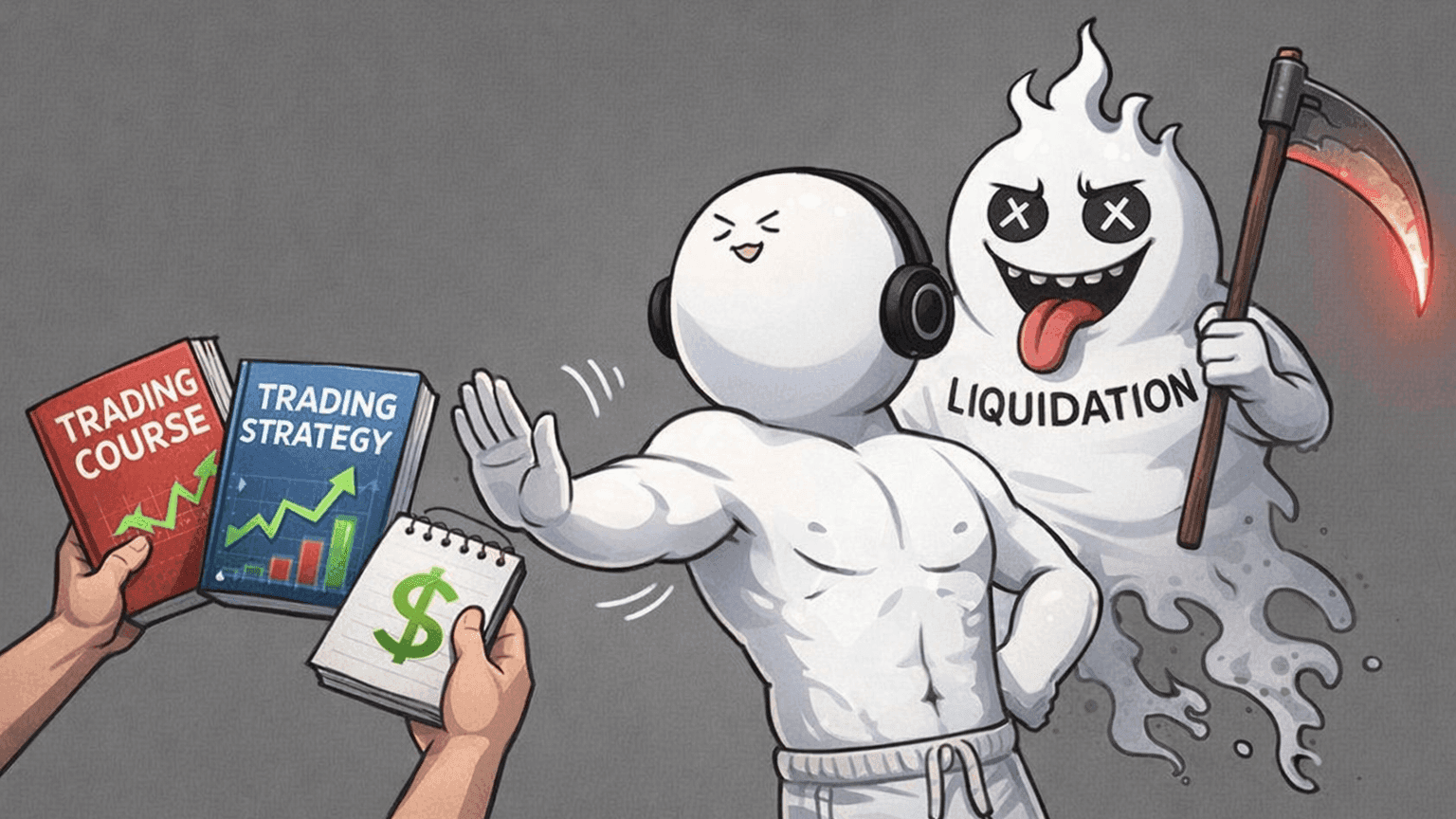
No courses. No academies. No books. No mentors. The strategy formed gradually through years of daily practice.
"There was no moment where I went somewhere and said 'Oh, Fibonacci retracement — that's what I need.' Everything built up gradually. Started with basic trend lines, then structure breaks, confirmed closes — it all grew piece by piece."
This parallels Ernest's story, who needed 5 years and two training programs to reach consistency. The difference is that Saul traveled the same path without any training at all — just a screen, a chart, and thousands of trades.
Prop Trading Before Upscale: Rejected by FTMO and The5ers
Saul is not a prop trading newcomer. Before Upscale, he traded at several major prop firms, and his experience illustrates a problem that traders with unconventional strategies face.
FTMO: Purchased a $10,000–$25,000 account (before sanctions against Russian residents were introduced). Passed to Phase 2. After that — "risk review": the firm analyzes trading behavior across the entire period. Result: denied.
"How they explained it: 'Too much risk. We don't take traders like this.' And the money, obviously, wasn't returned."
The5ers: Same situation. Purchased $10,000 and $25,000 accounts. No funded account issued. Same reason — trading style didn't fit their standard risk parameters.
"There were plenty of attempts. When you're used to trading on an exchange and then go somewhere with specific conditions you absolutely cannot violate — otherwise you lose the account — it's harder. The first three accounts clearly flew off."
The reason for the rejections is Saul's strategy. His average R:R per position is 8–9:1. This means very short stop-losses and very distant take-profits. For FTMO's and The5ers' risk review systems, this looks like "too risky a trader" because the win rate is low. But the strategy's essence is that one profitable trade covers 15–20 losing ones.
"I might have 15–20 trades hit breakeven, another 10 hit stops. And one trade covers everything — all those stops — and still goes into profit."
The contrastive pair: FTMO and The5ers evaluate traders against standardized risk parameters optimized for high win rates and moderate R:R. Upscale evaluates by outcome: passed the challenge within the rules → funded account issued. Trading style is not grounds for rejection.
Upscale: 6–7 Challenges, 4 Funded Accounts, $27,054 in Payouts
On Upscale, Saul purchased approximately 6–7 challenges — on $25,000 and $5,000 accounts. Four of them resulted in funded accounts. Two accounts are actively being traded at the time of the interview.
Key account — $25,000 from January 26, 2026:
This account delivered the primary result. Three payouts:
- First: $3,767 (March 3)
- Second: $6,112 (March 17)
- Third: $7,495 (April 1)
- Subtotal from one account: $17,374
"I made more than 70% in a month and a half on the initial deposit with 5x leverage on isolated margin. Not everyone can do that."
Upscale Tournament — third place:
From the same $25,000 account, Saul participated in the Upscale Tournament and placed third with $4,700 in profit. At peak account values, he was in first place.
"At peak account values I was first, and nobody seemed to reach the values I did."
For third place, he received a free account one tier up — $50,000. From this prize account, he withdrew another $7,879 (April 6).
Second account (different profile):
Payout of $1,801 (February 28). The second funded account on this profile didn't reach payout.
Combined result:
| Source | Amount |
|---|---|
| $25K main account (3 payouts) | $17,374 |
| $50K prize account | $7,879 |
| $25K second account | $1,801 |
| Total | $27,054 |
Strategy: Fibonacci, Structure Breaks, R:R 8–9:1
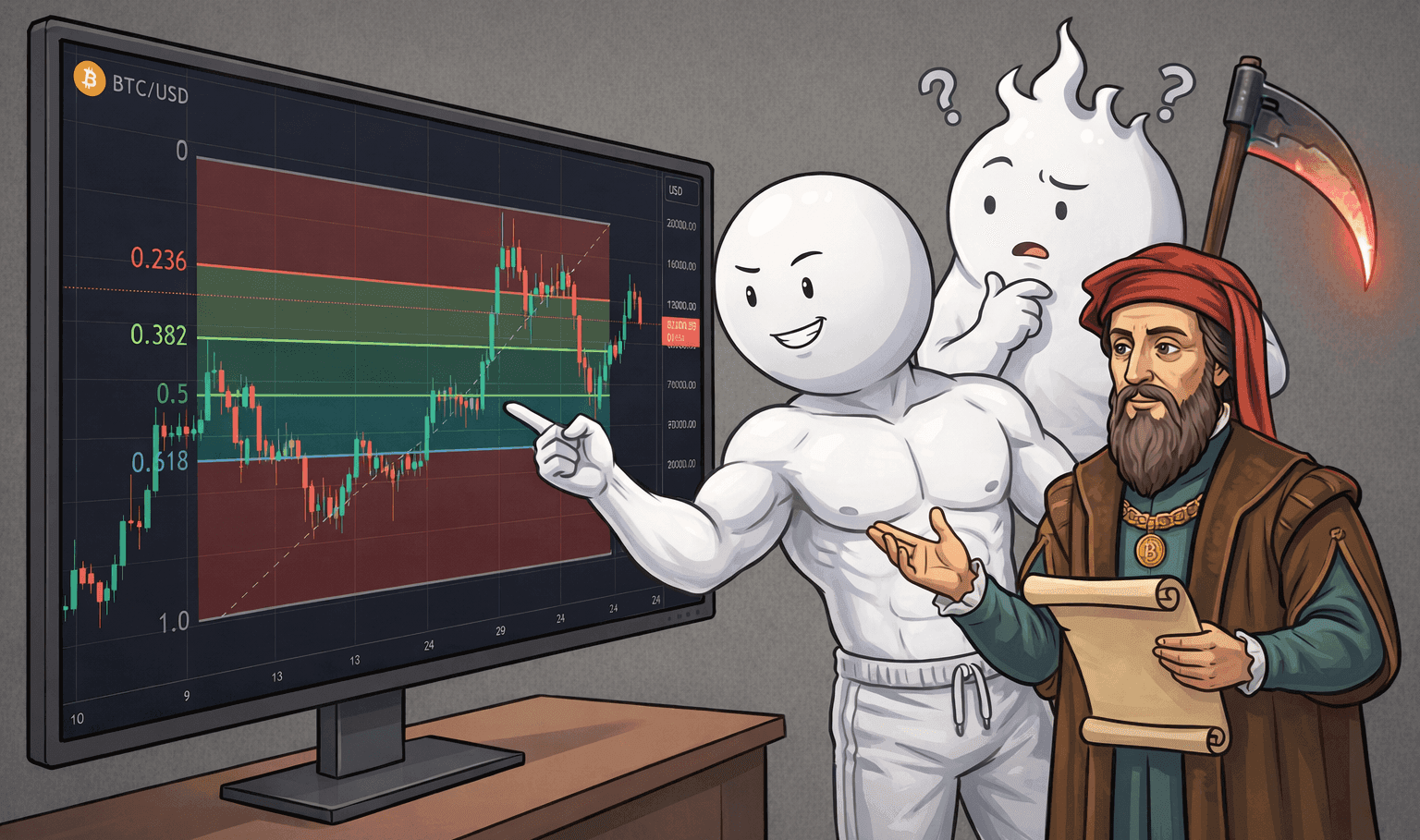
Saul's trading style is counterintuitive. Most traders aim for a high win rate (60–70%) with moderate risk-reward (2–3:1). Saul does the opposite: win rate is low, but each winning trade covers all losses many times over.
Instruments
Bitcoin — primary instrument. Calls it "one of the most readable pairs."
"If you take some altcoin — very large wicks knock me out constantly. They don't give me a chance to move to breakeven or take any profit. Bitcoin is much safer in that regard."
Ethereum — secondary instrument, but "questionable" compared to Bitcoin.
Does not trade altcoins on prop accounts — too unpredictable wicks.
Analysis
Multi-timeframe approach, top to bottom:
- Daily / 4-hour / Weekly — determines direction. Looks at recent confirmed closes (sustained closes above or below key levels)
- Lower timeframes (15M, 5M) — finding the entry point after direction is established
Core analysis tools:
- Fibonacci levels — primary tool. Works mainly from the 161.8% level
- Structure breaks — breakouts of key highs/lows confirming a direction change
- Confirmed closes — sustained candle closes above/below a level (confirming the breakout is real)
- Trend lines — supplementary
"I know about 80% of how Fibonacci works, and that's enough for me. I'll only work from it. I don't see the point in drawing a million imbalances and marking up more things."
No additional indicators. No oscillators, no moving averages, no volume. Pure price action plus Fibonacci.
Risk Management
Position size: 25–75% of deposit with 5x leverage on isolated margin.
Stop-loss: Approximately 0.13% of pure market movement. This is a critically tight stop — behind the nearest wick or structural element.
"If someone says this is gambling — just calculate what happens with 100x leverage. This is 5x leverage. Calculate what percentage of deposit that is at 100x, 150x, 200x leverage on an exchange."
The logic: on an exchange with 100x leverage, the same position as a percentage of deposit would mean colossal risk. With 5x leverage on a prop firm and a 0.13% movement stop — the actual risk percentage of deposit is significantly lower.
Average R:R: 8–9:1. This means take-profit is 8–9 times further than stop-loss. With a 0.13% movement stop, the take-profit targets roughly 1–1.2% of movement.
Profit-taking: In parts. Doesn't wait for full target — closes the position in stages.
Breakeven: Actively moves positions to breakeven. Most trades close at breakeven — not at stop and not at take-profit.
Trading Schedule
Does not trade on Wednesdays and Saturdays — a personal rule based on statistics.
"On Tuesday I can close plus 10% on deposit for the day, and on Wednesday minus 5%. And it's always like that. Just not my days."
Trade hold time: 10 to 30 minutes for scalps.
Approach to News
Completely ignores news flow.
"All news has been written on the chart for a long time. News came out — okay. Hit the stop — well, it hit the stop. If you chose the right side, you won't have problems, even if any news comes out."
Psychology: 18 Years Old and No Fear
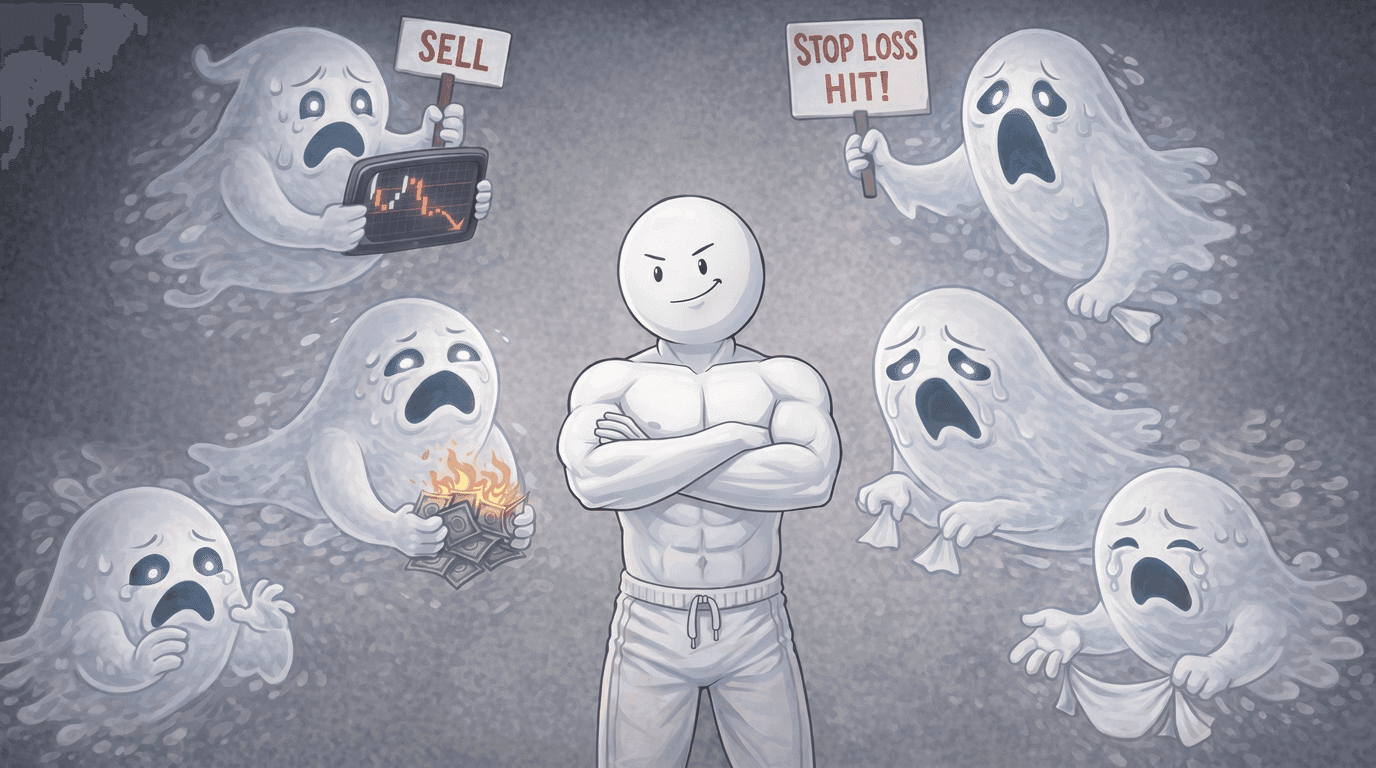
The interviewer notes that Saul has "absolutely no fear of the market" and "calmly handles large sums." When asked how he arrived at this:
"What could be better or worse? I'll sit and think about this position, constantly look at it — or I'll just turn off the computer and go about my business. Same thing. Just move to breakeven at some point, take partial profits somewhere."
Youthful maximalism — an honest admission of his weakness:
"My accounts — I always try to push them to maximum withdrawal, and end up with $200–300 left, going minus $1,500. It's because of age. Youthful maximalism — that's the thing."
Hardest moment: Buying altcoins on spot expecting altseason. Minus 98–99% on alts.
"I sat there, waited, kept buying more, genuinely believed. Ethereum I sold in time. But this... well, 20 years to wait. I'll still be passing it to my grandkids: 'At least when it gets out of the red — sell.'"
What separates a successful trader: In Saul's view — knowing when to stop.
"A successful trader will calmly understand that right now these are the circumstances — meaning for the next couple of days you won't be able to trade your prop account. That's it."
Advice for those feeling addicted: Take at least a month off.
"A month without any accounts, without any trades — on exchanges, Forex, nothing at all. Just live your life. Maybe afterward you won't want to come back at all. Or maybe you'll return having reconsidered something in your head."
Prop Trading vs Exchange: Saul's Position
When asked what's better — $1,000 on an exchange or a prop account for $1,000 but with $100,000 in deposit:
"Less risk — definitely on the prop firm. More risk — on the exchange. If you've passed at least one or two accounts on a prop firm, then you should take a prop account. Sitting and trading on an exchange won't make sense anymore."
This is the position of a trader who has traveled from exchange trading with 100x leverage to a prop firm with 5x — and understands the structural difference in risk. For more on why crypto-native prop architecture differs structurally from exchange trading, see the crypto prop trading guide.
Results and Certificates
Five verified payouts:
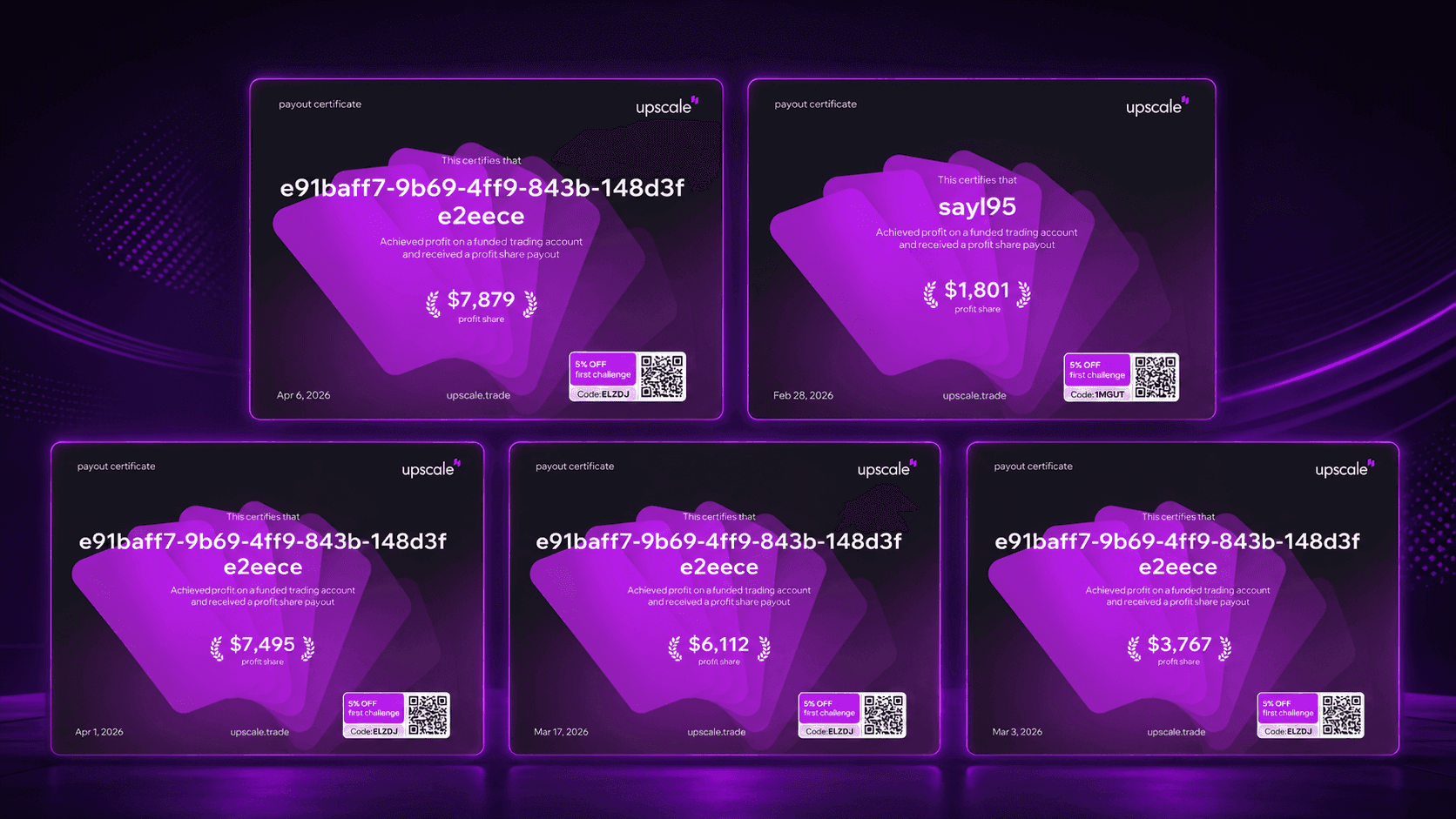
Payout certificates: $1,801 (February 28), $3,767 (March 3), $6,112 (March 17), $7,495 (April 1), $7,879 (April 6, 2026)
| # | Source | Amount | Date |
|---|---|---|---|
| 1 | $25K second account | $1,801 | February 28, 2026 |
| 2 | $25K main account | $3,767 | March 3, 2026 |
| 3 | $25K main account | $6,112 | March 17, 2026 |
| 4 | $25K main account | $7,495 | April 1, 2026 |
| 5 | $50K prize account | $7,879 | April 6, 2026 |
| Total | $27,054 |
Return: Over 70% on initial deposit in approximately 1.5 months
What was $27,000 spent on: "Nothing. I bought myself a T-shirt."
All payout figures are confirmed by certificates issued by Upscale and the platform interface shown on camera during the video interview.
Upscale Tournament: From $25K to a Free $50K
The mechanism through which Saul received a free $50,000 account deserves special attention.
Upscale runs trading tournaments where funded traders compete on returns over a defined period. Prizes: funded accounts one tier above the current level. Saul placed third with $4,700 in profit on a $25K account and received a free $50,000 account — from which he then withdrew another $7,879.
"At peak account values I was first, and nobody seemed to reach the values I did."
Tournaments are announced in the Telegram channel and Discord server — subscribing to these channels opens access to opportunities like this.
Key Takeaways
Saul's story is not a typical success story and not a template to copy. It's a demonstration of what happens when a platform doesn't filter traders by formal criteria of "acceptable" trading style. FTMO and The5ers denied him after he passed their challenges — his 8–9:1 R:R strategy didn't fit standardized "risk review" parameters. On Upscale, the same strategy produced $27,054 in payouts, four funded accounts, and third place in a trading tournament. The difference isn't in the trader — it's in how the platform defines "acceptable risk."
Saul's strategy isn't for everyone. An average R:R of 8–9:1 means the vast majority of trades close at breakeven or at a loss, and only rare ones close in significant profit. This demands psychological resilience that most traders don't have: willingness to accept 20 consecutive breakevens, knowing the next trade will cover everything. PipFarm data shows that 37.8% of traders cite lack of discipline as their primary failure cause — and with 8–9:1 R:R, discipline isn't a recommendation, it's the only condition for survival.
Two takeaways from this case. First: age and formal education don't determine trading results. An 18-year-old self-taught trader without a single course withdrew more than many traders with years of training. Second — and more important for choosing a platform: a prop firm that denies a profitable trader because of a "non-standard" risk profile is protecting its model, not the trader. FTMO and The5ers denied Saul after he passed their challenges — his strategy didn't fit their parameters. Upscale does not reject traders based on trading style. If the challenge is passed within the rules, a funded account is issued regardless of whether the trader operates at 2:1 or 9:1 R:R, uses SMC or Fibonacci, makes 1 trade per day or 10. This isn't leniency — it's a principled position: evaluate the trader by results, not by conformity to a template. Saul is concrete proof of where this leads: $27,054 in payouts from a platform that gave him a chance when others refused.
Start now: 👉 Upscale.trade | Telegram Bot
Follow us: 📺 YouTube | 𝕏 Twitter
Community: 💬 Telegram Chat | 🎮 Discord
Frequently Asked Questions
What strategy does Saul use?
The strategy is built on Fibonacci levels (primarily 161.8%), structure breaks, and confirmed closes — sustained candle closes above or below key levels. Top-down analysis: daily/4-hour/weekly determines direction, 15-minute and 5-minute charts find the entry point. No additional indicators: no oscillators, no moving averages, no volume. The key characteristic is an average risk-reward ratio of 8–9:1: very short stop-losses (0.13% of market movement) and distant take-profits. Most trades close at breakeven, but profitable trades cover all losses many times over.
How much has Saul earned on Upscale?
$27,054 in total payouts from four funded accounts. The primary result came from a $25K account starting January 26: three payouts of $3,767, $6,112, and $7,495 (subtotal $17,374). Additionally $7,879 from a prize $50K account received free for third place in the Upscale Tournament. And $1,801 from a second $25K account. Overall return: more than 70% on initial deposit in approximately 1.5 months with 5x leverage on isolated margin.
Why did FTMO and The5ers deny Saul?
Both firms denied him after he passed the challenge, at the "risk review" stage — analysis of trading behavior. Saul's strategy with 8–9:1 R:R creates a low win rate with high-size winners: 15–20 trades at breakeven, 10 at stop-loss, one trade covers everything and goes into profit. For FTMO's and The5ers' standardized evaluation systems, this registers as "too much risk." On Upscale, the same strategy produced four funded accounts and $27,054 in payouts, because Upscale evaluates by challenge completion results, not by "acceptability" of trading style.
How did Saul get a free $50,000 account?
Through the Upscale Trading Tournament. Upscale runs competitions among funded traders where participants compete on returns. Saul placed third with $4,700 in profit on a $25K account (was first at peak values). For third place, he received a free account one tier up — $50,000. From this prize account, he withdrew $7,879. Tournaments are announced in Upscale's Telegram channel and Discord server.
Is Saul's strategy suitable for beginners?
A strategy with 8–9:1 R:R demands psychological resilience that most beginners don't have. Willingness to accept 20 consecutive breakevens knowing the next trade will cover everything is a skill developed over years. Saul has been trading for more than 5 years and has gone through liquidations, spot losses, and numerous failed challenges. For beginners, he recommends taking a medium account ($25K–$100K), not the smallest or largest, and not pressuring yourself with the obligation to "pass the first account."
What instruments does Saul trade?
Primarily Bitcoin — considers it "one of the most readable pairs." Ethereum is secondary. Does not trade altcoins on prop accounts: "Very large wicks knock me out constantly, don't give me a chance to move to breakeven or take any profit." This aligns with recommendations from the crypto prop trading guide: for prop accounts with strict drawdown limits, liquid instruments (BTC, ETH) are structurally safer than altcoins.
What advice does Saul give beginners?
Three pieces of advice. First: start on prop firms, not exchanges — "less risk on a prop firm, more risk on the exchange." Second: take a medium account ($25K–$100K) — too small doesn't teach scaling, too large creates excessive pressure. Third: if you feel addicted, take at least a month off: "Just live your life for a month. Maybe afterward you won't want to come back at all, or maybe you'll return having reconsidered something in your head."