Blew a funded account? Don't start from zero | Upscale

Blowing a funded account that's been earning for weeks is one of the most painful moments in prop trading. It feels like all your progress is wiped out: trade history, payouts, phases you passed — as if it all came to nothing. This is exactly the moment Upscale's funded account restoration answers. It brings the trader back to trading on the same account — with saved history, certificates, and statistics — without having to pass the challenge again. But it's not just about mechanics: restoration changes the very psychology of failure. And it doesn't work alone — paired with the AI challenge review, it turns failure into a point of growth: first you understand what went wrong, then you come back and apply the lessons. Let's look at why losing a funded account hurts so much, how it pushes traders into tilt — and how a second chance turns failure from a verdict into just another attempt.
Why blowing a funded account hurts so much
It's not a matter of weak character, but of how the mind works. The classic work of Kahneman and Tversky (1979) described a phenomenon known as loss aversion: losses are felt more strongly than the joy of an equal-sized gain — by various estimates, roughly twice as much.
A blown funded account hits on two fronts at once: it's both the loss of what you earned and the devaluation of the effort you put in — weeks of discipline and the challenge phases you passed. The mind reads it not as "minus one attempt" but as "back to square one." That's why failure so often throws you off balance more than the dry numbers of the loss.
The "win it back" trap
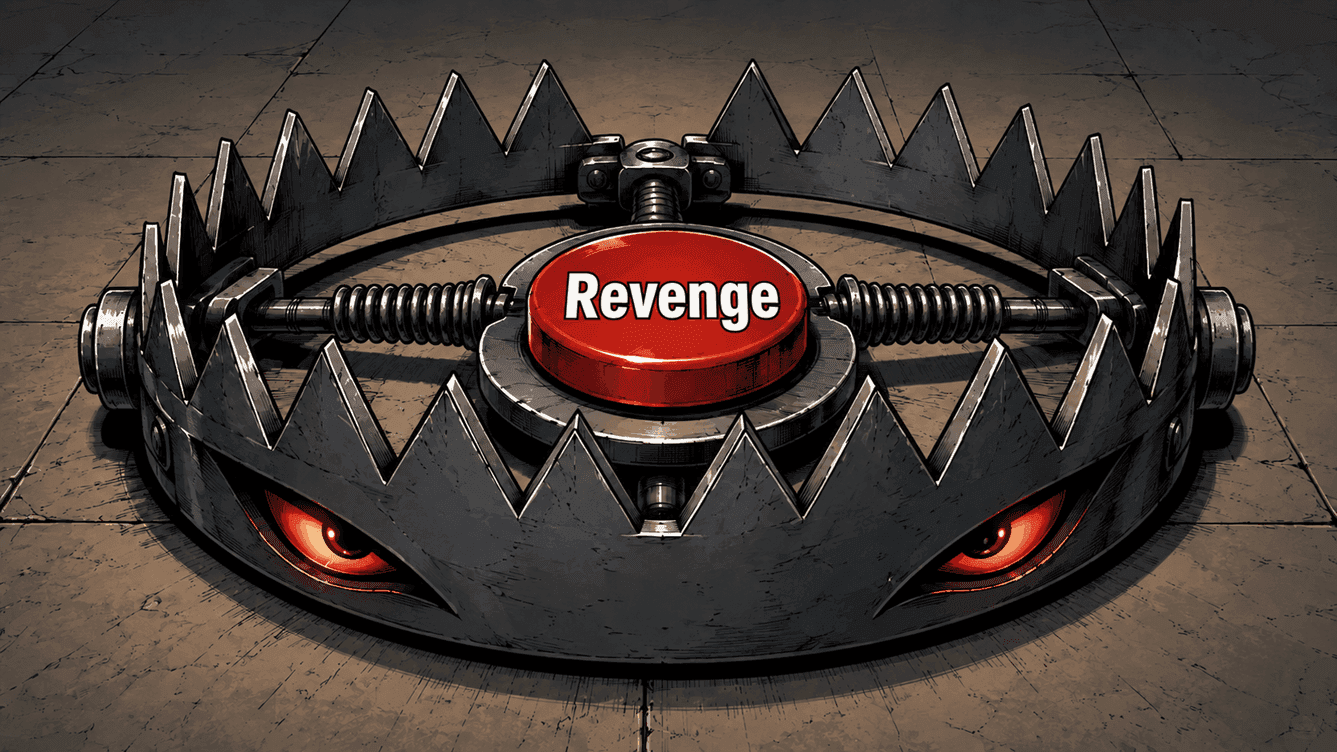
This is where the main danger lies. Fear of a final loss triggers impulsive actions — the urge to win it back immediately. In behavioral finance this is described as the disposition effect: traders tend to hold losing positions too long and close winning ones too soon. Odean (1998) confirmed this on data from 10,000 accounts.
Over time, such behavior is costly. A study by Locke and Mann (2005) on Chicago Mercantile Exchange data showed that traders who cut losses faster earn more on average. And trying to "win it back" right after a failure is a direct road to tilt and new losses.
One important caveat here: you can't count on restoration in advance — it isn't guaranteed and is determined automatically only after the failure. So it doesn't remove the need for discipline in the moment of a trade. Its value is different: once the slip has already happened, restoration shows that even a blown funded account doesn't necessarily mean going back to the very start. Failure stops being a final verdict, and that helps you not compound the situation with revenge trading.
What restoration changes
Restoration brings the trader back to the funded stage of the same account — without passing the challenge again. The key points:
- The same account, not a new one. Trade history, past payouts, certificates, and overall statistics are fully preserved.
- A limited window. The offer is valid for no more than 48 hours from the moment the limit was breached.
- Choice of balance. The trader chooses the balance to return to the funded stage with, within the limits set by the challenge type.
- Nothing to request. If the account meets the conditions, the offer appears on its card automatically.
Psychologically, this shifts the reference point: failure stops being a "stop, back to the start" signal and becomes a checkpoint you can return to.
Who restoration is available to
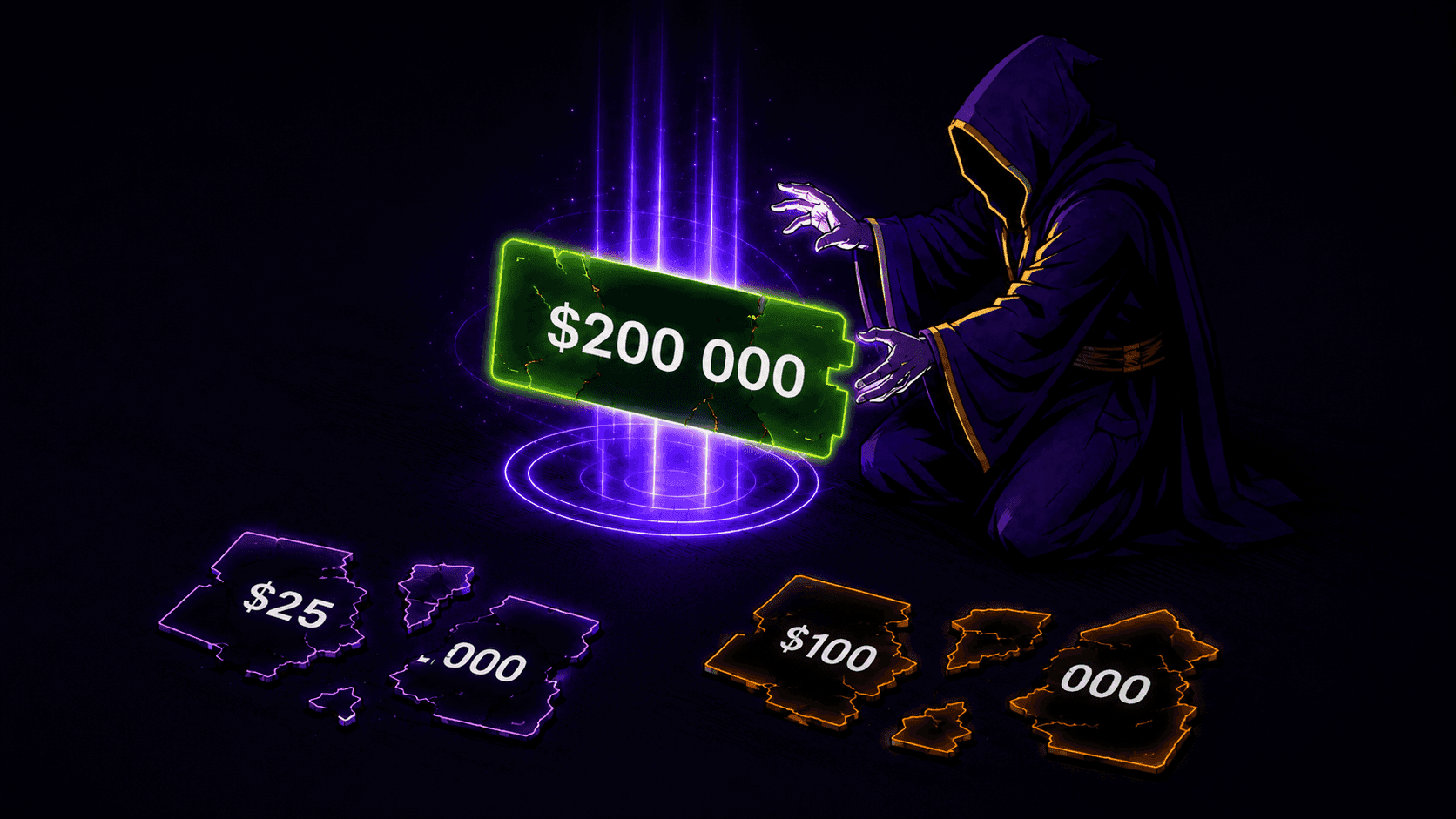
Here it's important to be honest: restoration is an additional option, not a guaranteed part of the challenge. It doesn't appear for everyone, and that's built into the very logic of the feature.
For restoration to become available, several conditions must all be met at once:
- the account is of the Basic or Accelerated type (demo accounts and Turbo aren't restored);
- the breach occurred specifically at the funded stage;
- no more than 48 hours have passed since the breach;
- the account passed an automatic algorithmic check;
- there were no gross violations of the platform's rules in the trading.
If even one condition isn't met, the offer won't appear — and no application or message to support will change that. So if restoration didn't appear for you, it's not a glitch or an injustice: the specific situation simply didn't match the program's conditions.
The system evaluates the attempt, not you
This is perhaps the most important psychological shift. When restoration isn't offered, it's easy to read it as a verdict: "you're a bad trader." But the algorithm works differently.
The decision is based on analyzing how the trading went over the completed attempt — not on the final financial result, and not as a judgment of the person. It factors in a combination of parameters: consistency of results, the distribution of profits and losses across trades, the character and speed of the drawdown, behavior after winning and losing trades, the leverage used, and rule compliance.
Tellingly, the presence or absence of past payouts decides nothing on its own. A payout can come from a steady strategy or from a few large risky trades — so the absence of a payout doesn't mean the trading was poor, and its presence doesn't guarantee restoration.
The decision doesn't evaluate the trader. The algorithm only determines whether a specific completed attempt meets the conditions of the program for renewed access to the funded stage.
This approach removes shame: failure stops being a label and becomes simply data for the next attempt.
A second chance is about lessons, not risk
Restoration comes with an important caveat worth stating plainly. A second chance is an opportunity to come back and apply your conclusions — not a license to risk, along the lines of "I can go all in and then just restore it."
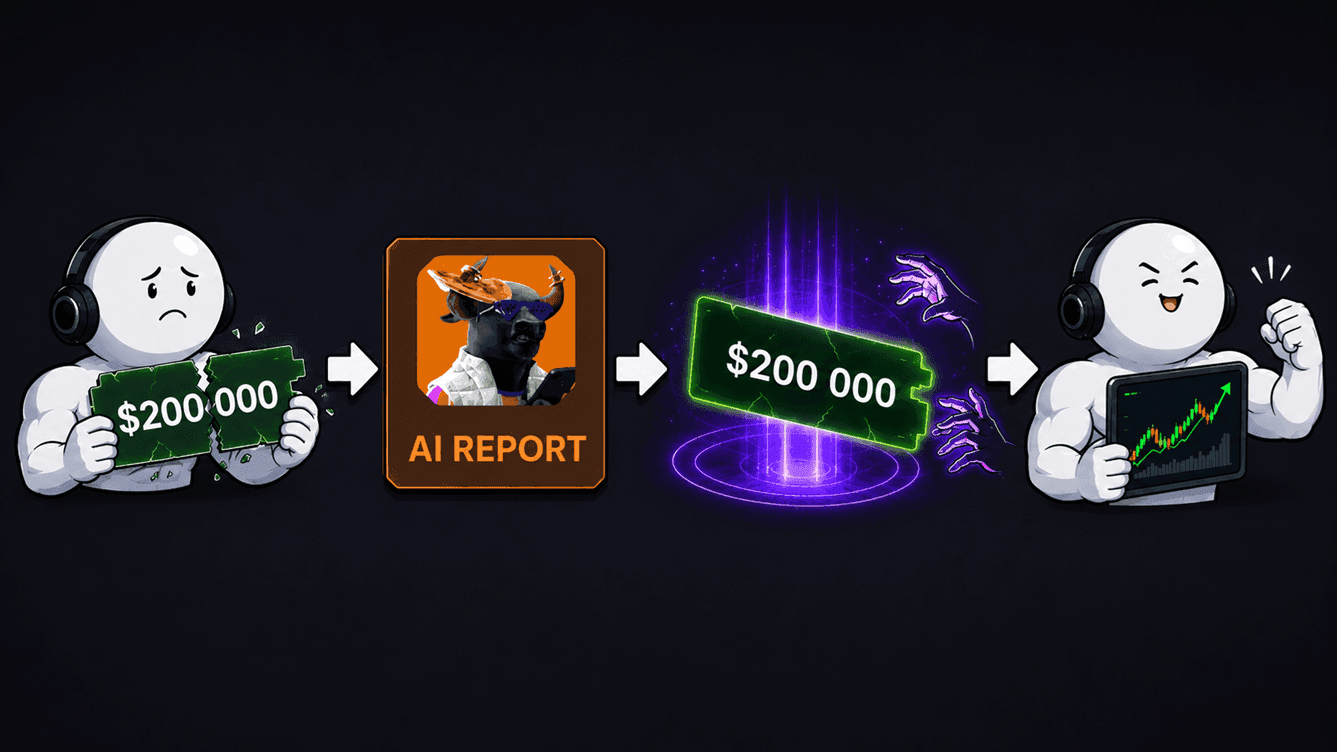
And here the feature works together with analytics. Your account history and the AI challenge review aren't reset on restoration: statistics are counted over the account's entire life, including past attempts. So the trader comes back not blindly, but knowing exactly what went wrong.
Together, the two features add up to a simple cycle: failure → AI review (what went wrong) → restoration (the same account) → return with corrections. That's what separates growth from a mere second chance: the trader gets better from attempt to attempt, rather than just getting another shot. In essence, both features are made for one thing — so the trader trades better.
This is a growth mindset applied to trading — the idea studied by psychologist Carol Dweck: failure isn't a verdict but a stage of learning. Restoration simply gives that mindset practical grounding — the same account, saved lessons, and the chance to run the stretch again, now with corrections.
Key Takeaways
Funded account restoration is less about money than about the psychology of failure and the ability to keep going. Its main value is that failure stops being a reset to zero: the account returns to the funded stage with saved history, payouts, and certificates, without passing the challenge again.
But the mechanics are secondary here. What matters more is that the very possibility of restoration changes your relationship with failure: a blown account is no longer a final verdict, which means it's easier — after a slip — not to give in to tilt or compound the situation by trying to "win it back." At the same time, restoration isn't available to everyone, and that's built into the logic of the feature: availability is determined automatically by analyzing the completed attempt, and its absence isn't a verdict on the trader but a mismatch between a specific situation and the program's conditions.
The main thing is to remember what it's all made for. Restoration makes sense not as a license to risk, but together with a review of your mistakes: to come back and apply your conclusions, not to risk blindly. That's exactly why restoration and the AI review work as a pair — the review shows what to fix, and restoration lets you apply it on the same account. Together they turn failure into a cycle of growth, and both features are made for one thing: so the trader trades better.
Start now: 👉 Upscale.trade | Telegram Bot
Follow us: 📺 YouTube | 𝕏 Twitter
Community: 💬 Telegram Chat | 🎮 Discord
Frequently Asked Questions
What is funded account restoration on Upscale?
It's the option to return to trading at the funded stage of the same account after a limit breach — without passing the challenge again. Trade history, past payouts, certificates, and overall statistics are preserved. Restoration is paid and available for a limited time.
Why didn't restoration appear for me?
Because at least one of the conditions wasn't met. The account must be Basic or Accelerated (not demo and not Turbo), the breach must have happened at the funded stage, no more than 48 hours must have passed since the breach, and the account must pass an automatic check with no gross rule violations. If even one condition isn't met, the offer doesn't appear, and contacting support won't change that.
Is restoration a judgment of me as a trader?
No. The algorithm analyzes how the trading went over a specific completed attempt, rather than passing a verdict on the trader. The presence or absence of past payouts decides nothing on its own: the absence of a payout doesn't mean the trading was poor.
What's saved and what starts over after restoration?
Saved: your full trade history, past payouts, certificates, and overall account statistics. Reset: daily profit, the profitable-days counter, and the trading period. At the same time, drawdown limits continue to be calculated from the account's original starting balance, not from the chosen restoration balance.
Do you have to pass the challenge again after restoration?
No. Restoration returns the account straight to the funded stage — the challenge phases don't need to be passed again. That's the whole point: to continue with your progress saved, rather than starting from zero.
How does restoration work together with the AI report?
The AI review explains what went wrong on the previous attempt, and restoration lets you return to the same account and apply those conclusions. One without the other works less well: a review without a return is just knowledge, and a return without a review is a risk of repeating the same mistake. Together they form the cycle of growth that both features are made for.