From Scammers to $6,000+ Payouts: Anton's Prop Trading Story | Upscale


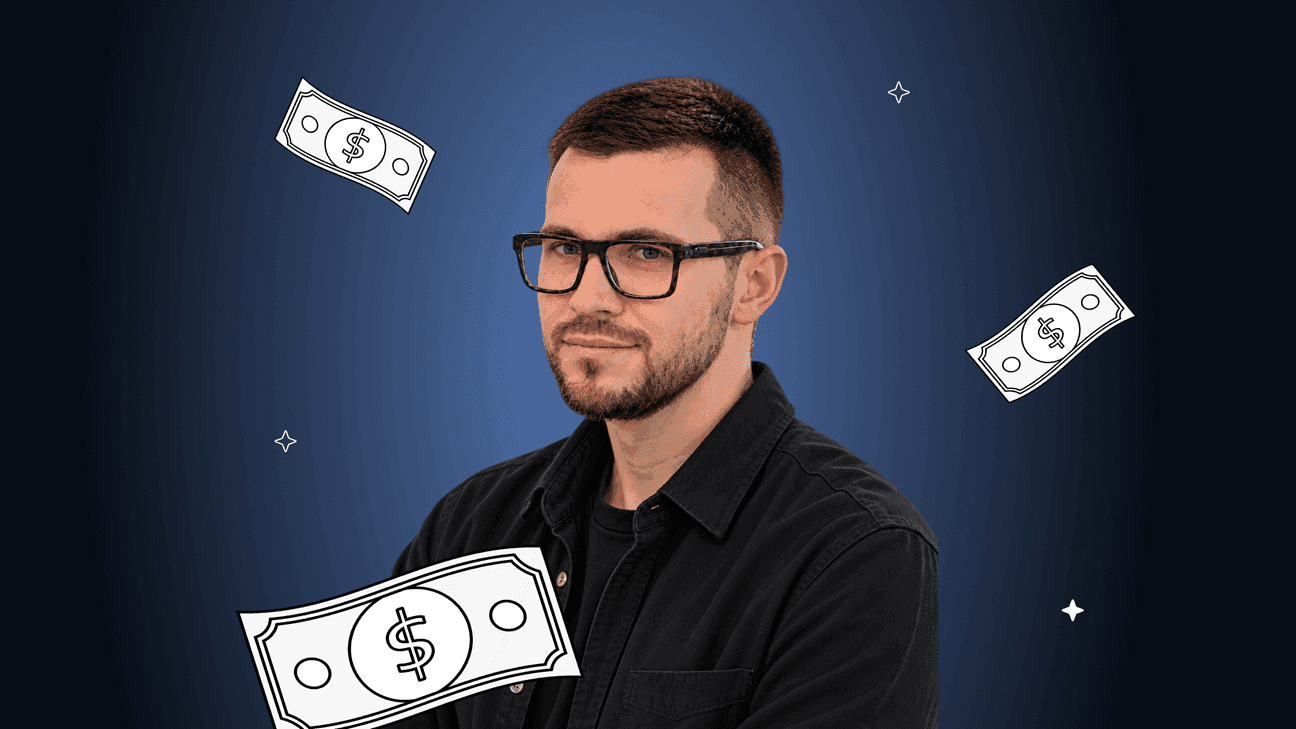
Anton is a 38-year-old mechanical engineer from Kazakhstan earning $500 a month who lost his apartment to scammers, scraped together $18 for his first prop trading challenge, and has since withdrawn over $6,000 from a $50,000 funded account on Upscale. He trades from his phone — no personal computer — analyzing charts at work and opening positions on the bus. His approach: daily and 4-hour timeframes for trend, 15-minute for entries, support/resistance with price action, and a conviction that psychology accounts for 70% of trading success. According to FPFX Tech data from 300,000 prop firm accounts, only 7% of traders ever receive a payout — Anton has received three.
Watch the full interview with Anton on the Upscale YouTube channel:
18 Years of Experience, Zero Capital, and One Last Shot
Anton is 38. Lives in Kazakhstan, works as a mechanical engineer at a factory. Salary — around $500 a month. 80% goes to food and bills.
Behind him — 17-18 years in trading. Binary options, forex, crypto. Thousands of hours staring at charts. Hundreds of strategies tested. And one big problem: despite all this experience, he had no capital to trade with.
"I've seen every mistake there is. All the FOMO, FUD, strategies — hundreds, thousands of them. I can tell you exactly what NOT to do."
BNB at $3 and a Lesson That Cost a Fortune
In 2018-2019, Anton joined Binance when Bitcoin was at $3,500. Bought $200 worth — that's all he had. Then he started researching altcoins and found BNB.
He wrote down 12 reasons why this coin should grow: used for fees, partnerships, launchpads, decreasing supply. Everything made sense. Everything was right.
He bought at $20. Then at $18 when the exchange got hacked. Then at $9. At $6. At $3.
And sold.
Two months later, BNB started pumping. $30, $100, $150, $300...
"99% of my decisions were correct. That 1% — I didn't hold. Didn't have the patience because I couldn't believe it was possible."
This knocked him out of the game for a whole year. Research by Barber and Odean (2000), studying 66,465 households with brokerage accounts, found that individual investors who traded most actively earned 6.5% less annually than the market average — often because they sold winners too early and held losers too long. Anton's BNB story is a textbook example of this disposition effect.
When Rock Bottom Has a Basement
After the break, Anton returned to trading. Sold his apartment, put the money in a bank deposit — interest rates were high in Kazakhstan at the time.
Then the unthinkable happened.
A scammer. Six months of building trust, a "test" withdrawal of a small amount. Classic scheme. Anton deposited a large sum — and lost everything.
Apartment. Savings. Future.
"I'm smiling now because I found a way out. Back then, I would have been crying in a corner somewhere. Or maybe not crying anymore."
Loans. Debts. Banks calling ten times a day. Friends couldn't help — everyone had their own mortgages.
$18 and the Last Chance
Anton discovered prop trading by accident — saw it mentioned by a blogger he trusted. Read through the platform's documentation. Hesitated for a long time.
"People are naturally afraid of anything new. But I was like a cornered dog — had nothing left to lose."
He scraped together $18. Took the minimum $1,000 challenge.
Made it to the funded phase. Just $24 left to withdraw. Then everything fell apart again: bank calls, nerves, couldn't focus. Entered a trade with too much risk — and blew the account.
At the same time, he blew another account he'd received free for completing a demo.
Two accounts. Simultaneously. Gone.
Why He Didn't Quit
Most people would have stopped. Anton didn't.
"Losing a thousand wasn't that big of a deal for me, honestly. I'd had personal accounts with much larger sums. I understood what my mistake was. I knew how to fix it."
He knew: the problem wasn't the strategy. The problem was psychology. The bank calls. The inability to think clearly. A PipFarm survey of 2,777 prop traders (2025) confirms this pattern: 37.5% identified emotional trading after losses or personal stress as their primary cause of failure — ahead of strategy issues, market conditions, or platform rules.
When he partially resolved his debt situation, when the daily calls stopped — he took a new account. $50,000.
First Payout: "Did This Actually Work?"
14 days of trading. Over $3,200 in profit. Moment of truth.
"First emotion: did this actually work? Second: I won't believe it until I withdraw it and hold it in my hands. Too many fairy tales in my life."
Anton even asked a friend to help with the withdrawal — that's how much he doubted it was real.
The money came through. To his wallet. Then to his card.
"When I saw the money in my wallet — I realized it was real. When I withdrew to my card — I knew it wasn't going anywhere. Immediately paid off two problem loans."
The Numbers Speak for Themselves
- First payout: $3,222
- Second payout: $1,719
- Third payout: $1,220
- Total earnings: over $6,000
- Current account: $50,000
All this on a $500/month salary. Without his own computer — he analyzes charts at work, writes notes on paper, and opens trades from his phone.
How He Trades: Discipline, No Magic
Anton's strategy is simple:
Timeframes: daily for trend analysis, 4-hour for confirmation, 15-minute for entries.
Tools: support/resistance, price action, volume. Minimal indicators — they just get in the way.
Rule #1: Bitcoin first, then alts. BTC leads the market — no analysis starts without it.
Rule #2: don't fight the market. If the trend reverses — close the position, even at a loss. Research by Locke and Mann (2005), studying futures traders at the Chicago Mercantile Exchange, found that traders who cut losses faster earned on average 65% more per year. Anton's Rule #2 is this principle in practice.
"Psychology is 70% of success. Then 15% is trend. 10% is risk management. And only 5% is strategy. Strategy barely matters."
The Routine That Works
Anton wakes up at 4:50 AM — 10 minutes before the platform's daily reset. Recalculates his risks. Every single day.
"This experience cost me too much. I'd rather double-check — measure twice, cut once."
At work — chart analysis before his shift starts. On the bus — opening trades if everything confirms. At home — monitoring positions from his phone.
Uncomfortable? Yes. But this pause between analysis and action saves him from impulsive decisions. Jared Tendler, author of "The Mental Game of Trading," calls this deliberate friction between analysis and execution one of the most effective tools against tilt — forcing a gap between impulse and action.
Why Prop Trading Changed Everything
Before, Anton traded his own money. $100, $200, max $1,000. Every dollar counted. Every trade was stress.
Now he manages $50,000 (planning to scale to $100,000). Same 1% risk, completely different numbers:
- 1% of $1,000 = $10
- 1% of $50,000 = $500
"My time became so much more valuable. In one hour I earn what I couldn't save in a month before. And psychologically — no pressure. It's not my last money."
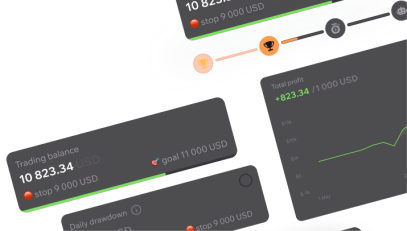
Built-in drawdown limits — 5% daily and 10% total — provide the guardrails that personal accounts never had. For someone who lost an apartment trading without limits, this structure is the difference between survival and another catastrophe.
Anton's Certificates
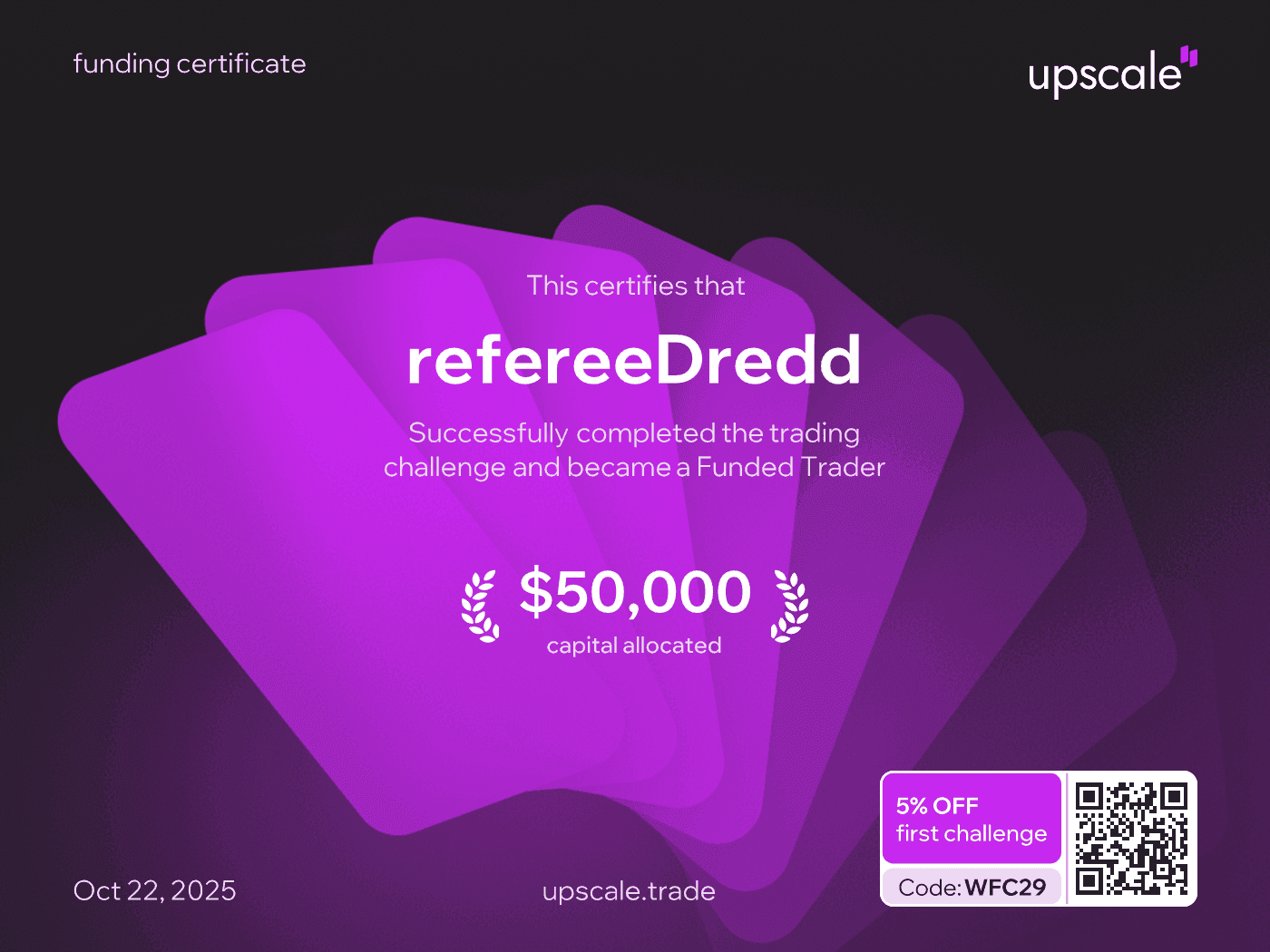 $50,000 Challenge Completion Certificate
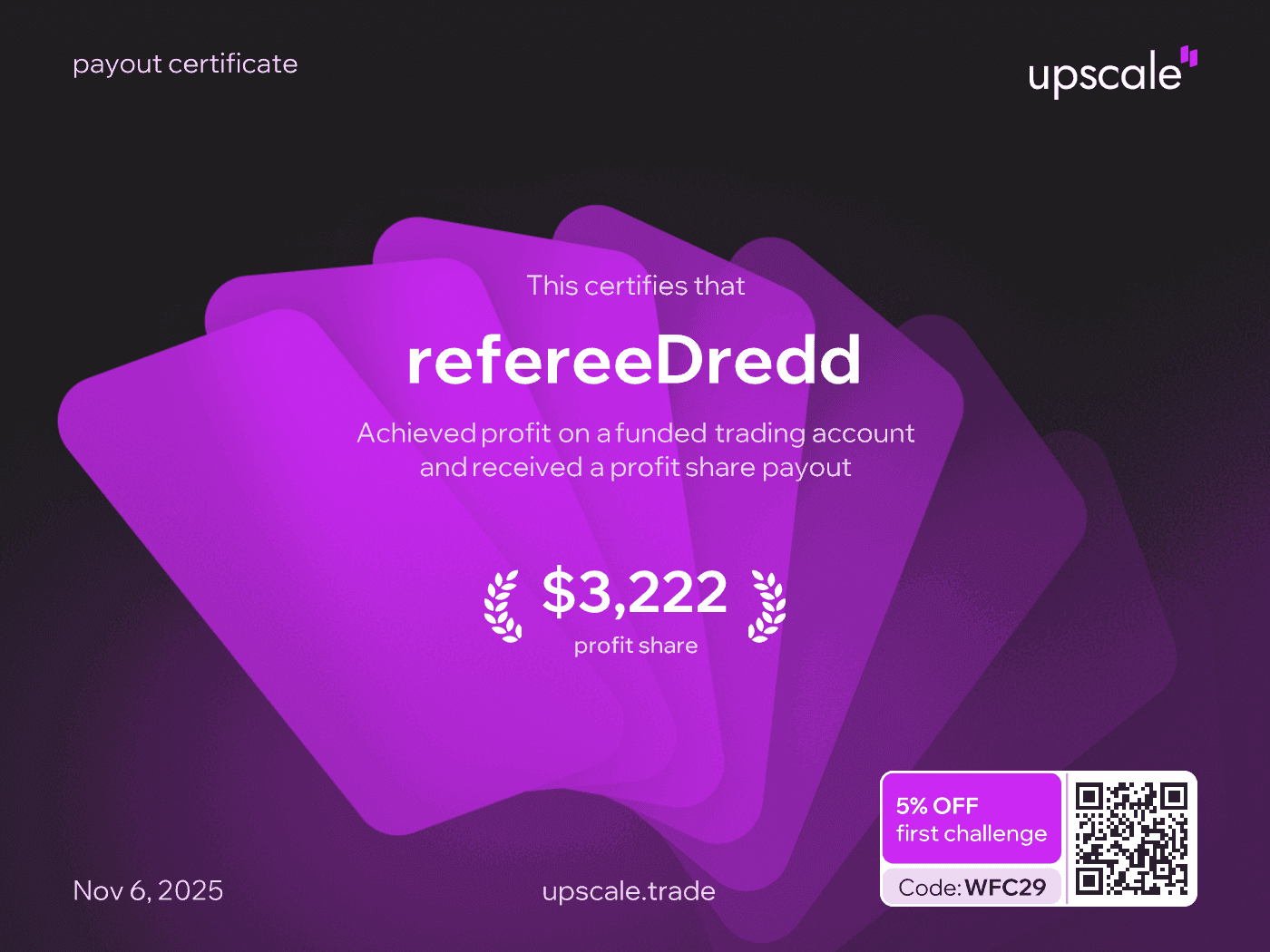 $3,222 Payout Certificate
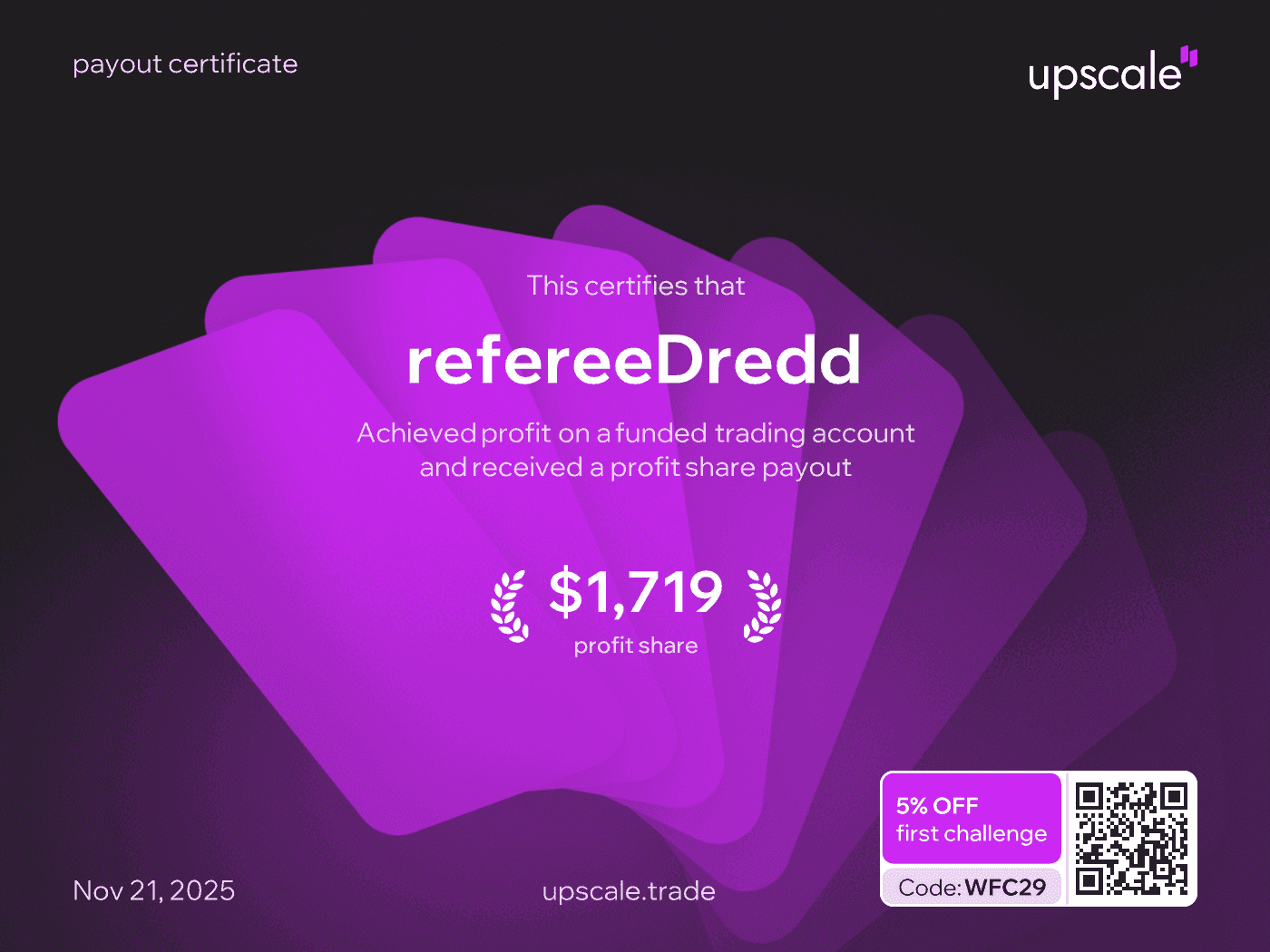 $1,719 Payout Certificate
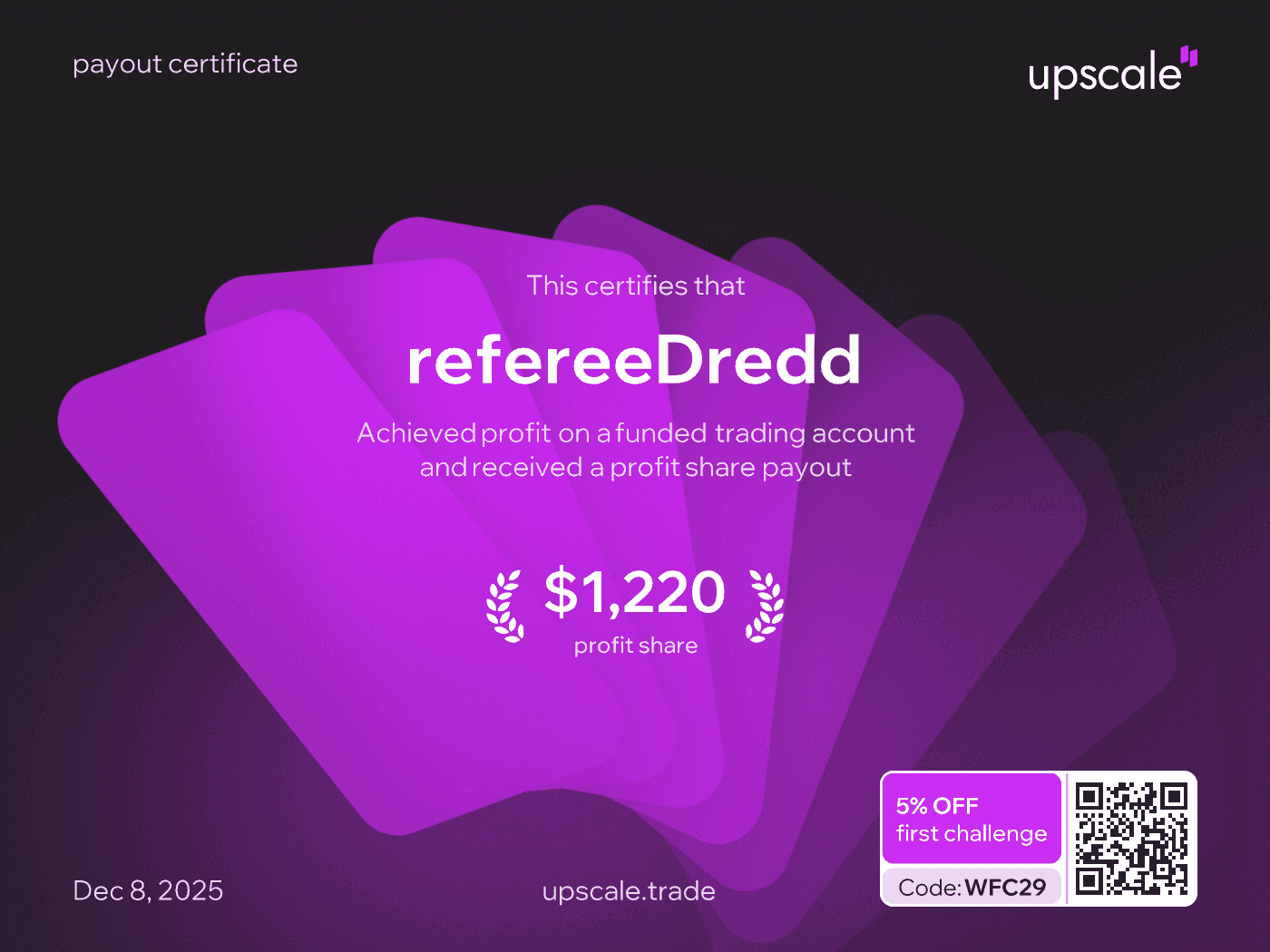 $1,220 Payout Certificate
Anton's Tips for Beginners
1. Don't rush. The market was here before you and will be here after. A missed trade isn't a tragedy. A blown account is.
2. Start with demo. Make your mistakes for free. Once you have a winning streak of 10 trades — go live.
3. Take the smallest account. Don't jump straight to $200,000. Start with $5,000. Prove to yourself you can do it.
4. Calculate risks beforehand. Plan A and Plan B before entering any trade. How much can you lose? Is that acceptable? Then enter.
5. Withdraw your first profit immediately. Don't build a cushion, don't wait for "just a bit more." Once money is in your hands — the urge to gamble disappears.
"This is a marathon, not a sprint. Long-term game."
What Would He Tell His Past Self?
"I wouldn't scold myself. Experience has to happen. If that moment hadn't happened — I wouldn't be here. It's okay, Anton. This was your first step. More to come."
Key Takeaways
Anton's $6,000+ in payouts didn't come from a fresh start — they came from 17 years of accumulated mistakes, a lost apartment, and an $18 bet on himself when there was nothing left. His formula — psychology 70%, trend 15%, risk management 10%, strategy 5% — isn't a motivational poster. It's a hierarchy built from blowing accounts on personal stress, selling BNB at $3, and losing everything to scammers. The prop model gave him what his own capital never could: $50,000 to trade with, drawdown limits that prevent catastrophic losses, and a structure where 17 years of hard-won knowledge finally converts into income.
Three payouts, two loans paid off, and a plan to scale to $100,000 — all from a phone, on a bus, earning $500 a month. The next chapter is already in progress.
Ready to start your prop trading journey?
Start now: 👉 Upscale.trade | Telegram Bot
Follow us: 📺 YouTube | 𝕏 Twitter
Story recorded in January 2025. All figures verified by payout certificates and platform records.
Frequently Asked Questions
Can you start prop trading with almost no money?
Yes. Anton started with $18 — the cost of a $1,000 challenge during Upscale's launch period. Current minimum entry is $59 for a $5,000 Basic account. The prop model is specifically designed for traders who have skill but lack capital: personal risk is limited to the challenge fee, while funded accounts range from $5,000 to $200,000.
How much can you earn from a $50,000 prop account?
Anton earned over $6,000 in three payouts from a $50,000 account, trading from his phone without a personal computer. Results depend entirely on strategy and discipline. According to FPFX Tech data from 300,000 prop firm accounts, only 7% of traders ever receive a payout — but those who do often earn multiples of their challenge cost.
Is psychology really more important than strategy in trading?
Anton believes psychology accounts for 70% of trading success, with trend (15%), risk management (10%), and strategy (5%) making up the rest. Research supports this weighting: a PipFarm survey of 2,777 prop traders (2025) found that 37.8% cite lack of discipline and 37.5% cite emotional trading as their primary causes of failure — both psychological factors, not strategic ones.
Can you trade on a prop account from your phone?
Yes. Anton has no personal computer. He analyzes charts at work, writes notes on paper, and opens trades from his phone during commutes. His strategy — daily and 4-hour timeframes for analysis, 15-minute for entries — doesn't require constant screen monitoring, making mobile trading practical.
What happens if you blow your first prop challenge?
According to industry data, only 5–10% of traders pass the evaluation on their first attempt. Anton blew his first two accounts (including one received free for completing a demo) due to emotional trading during a period of personal financial stress. He returned after resolving his debt situation, passed a $50,000 challenge, and has since withdrawn over $6,000. A blown challenge is a learning opportunity, not a career-ending event.
Is it worth trying prop trading with 17 years of trading experience but no savings?
Anton's case suggests yes — if the experience includes genuine market knowledge and risk management skills. His 17 years of trading gave him the technical foundation; prop trading gave him the capital and structure he lacked. The key difference from trading personal funds: built-in drawdown limits prevent the kind of catastrophic losses that cost Anton his apartment.