Maru Joshua Sugon: $3,296 in Two Payouts From $25K | Upscale


Maru Joshua Sugon, a 31-year-old trader from the Philippines, passed his $25,000 challenge in 9 days — from February 19 to February 28, 2026 — and received two consecutive payouts from that account totaling $3,296: the first $1,228 on March 18, processed within hours of his request, and the second $2,068 on April 2. This is his fourth funded account at Upscale. The first three he blew: a $1,000 challenge in August, another $1,000 (Accelerated) in September, and $5,000 in October 2025. The fourth attempt — a $10,000 challenge in November — finally worked and produced a first payout of $730 after Christmas. Then came a January drawdown of −9.1%, a recovery to breakeven in February, and a blowup two days before Valentine's Day. The current $25,000 account is the result of a complete approach reset: only Bitcoin instead of a scattered altcoin watchlist, scalping on 15-minute timeframes instead of intraday on hourlies, 1% risk per trade, 1–3 trades per day maximum, and a +10% profit split add-on (90% total). According to FPFX Tech data covering 300,000 prop firm accounts, only 7% of traders ever receive a payout. Joshua's story is about how those 7% aren't the luckiest — they're the ones who survived three blown accounts and didn't quit.
Watch the full interview with Maru Joshua Sugon on Upscale's YouTube channel:
From Play-to-Earn to Prop Trading
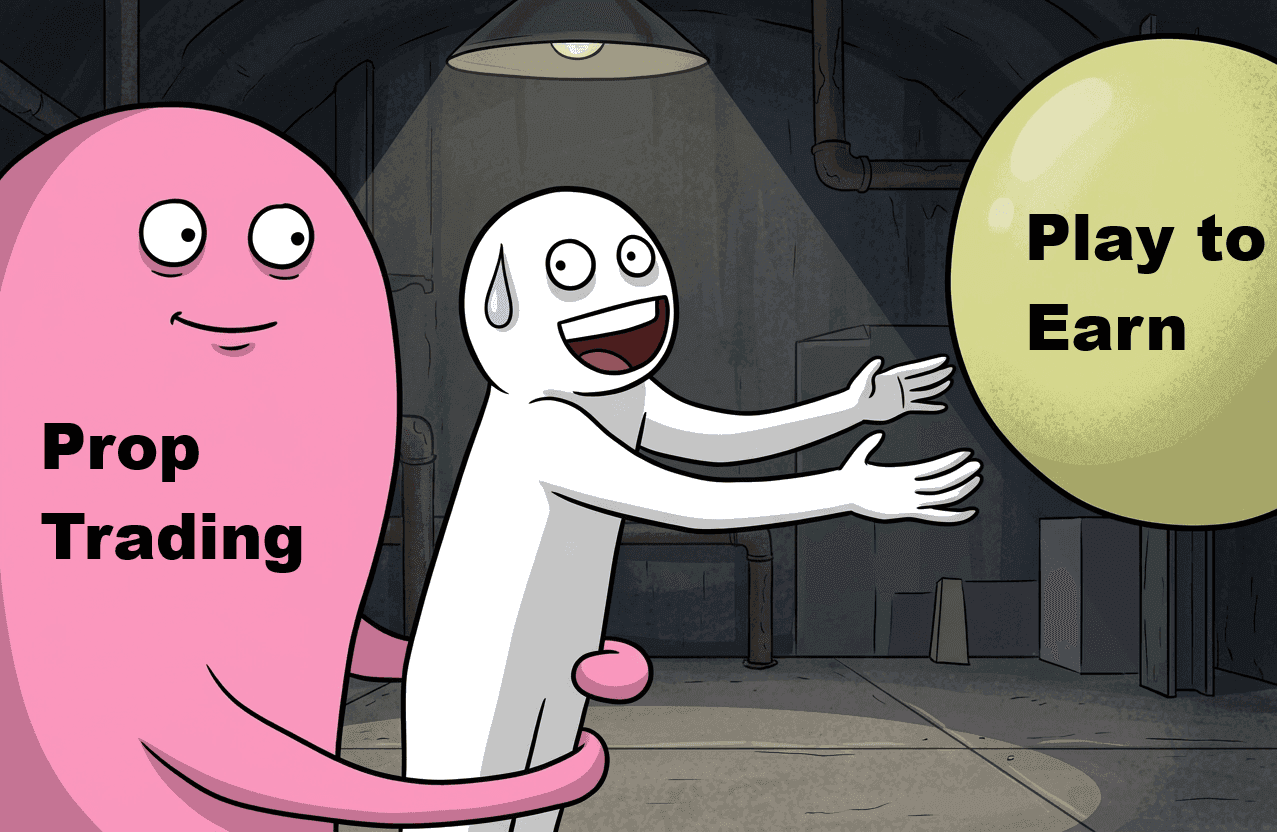
Maru Joshua's path into trading didn't start with financial markets — it started with games. Axie Infinity and Mir 4 were especially popular in the Philippines, and that's how he first encountered cryptocurrencies. By the end of 2023, his interest had shifted from play-to-earn to futures trading. In January 2024, Joshua decided to move from curiosity to systematic learning and enrolled in March in a course taught by Coach Miranda Minor (GMMG Dubai).
At the time of enrollment, he had been working at a BPO/outsourcing company for about four years. The original goal of trading was simple and practical: earn extra income alongside his day job to prepare for his wedding, planned for October 2024.
"At first it's just the goal is just to earn extra income while preparing for our wedding. It's just an additional budget actually. But instead of incurring or profiting from the market, I thought it's just easy to study and then earn from the market — I incurred losses just like any other trader experienced too."
Joshua's transition to full-time trading happened in stages rather than in a single leap. In April 2025 — more than a year after enrolling in the course and roughly six months after the wedding — he resigned from the BPO and moved to freelance work in social media management starting May 2025. This gave him more flexibility to trade while still maintaining income. The SMM contract ran through February 2026, and on March 1, 2026, Joshua became a full-time trader — the same day the funded $25,000 account he had just passed went live. By that time his first child had been born the previous September, which made the stakes of going full-time very real.
Discovering Upscale and Taking the Leap
Joshua first heard about Upscale in July 2025 through his mentor Coach Miranda Minor — who had a partnership with the platform and was interviewed on its YouTube channel.
"I didn't really research that much about Upscale. When I got the knowledge of it, during that time you have a contest where you pass a demo and then you receive a $1,000 challenge. But me, I think I'm the first from the community who bought an actual challenge."
Upscale was his first prop firm. He had nothing to compare it against — not on conditions, not on rules, not on payout speed.
"If I would describe that moment or experience, I just took that leap of faith to Upscale. Even though there's doubts if it's legit or not, I just bought a challenge because I really wanted to have access to a bigger capital. As a trader here in the Philippines with not much income potential, I can only risk little. But trading prop firms gave me the platform to really excel because of the funding."
Three Blown Accounts in a Row
What followed almost reads like a textbook case of failed prop trading statistics. According to a PipFarm survey of 2,777 prop traders (2025), 37.5% cite emotional trading after losses as their primary failure mode, and 73% of failed accounts violated their own stop-losses in more than 30% of cases.
August 2025: Joshua bought a $1,000 Basic challenge. Blew it.
September 2025: $1,000 Accelerated. Blew it.
October 2025: $5,000 challenge. Blew it.
Three accounts in three months. After the third blowup he took a week off — the only moment in this story where he actually paused before deciding what to do next. That pause likely saved him from a fourth consecutive failure, because when he came back he came back with a different approach.

The Fourth Attempt and the First Payout
In November 2025, Joshua bought a $10,000 challenge. It was the most expensive challenge he'd attempted, and the psychological stakes were higher — after three blowups, he either had to finally pass or admit the approach didn't work. He passed the challenge during November and got a funded account in December.
The first payout came after Christmas — $730.
"When I received that $700, it was my first payout back in December. It was surreal. I was genuinely happy that I was able to pay out, because when I was trading my own account, I wasn't able to really cash out from trading my own account. But with Upscale, when I received the payout, it arrived on my TON wallet. I'm just really happy and beyond grateful. I can say to myself: this is real. This is real money."
The money went to family gifts and groceries for the Christmas table. Not a new phone, not a laptop, not a desk or chair. Family.
The January −9.1% Drawdown and the Valentine's Day Blowup
January 2026 became the most dangerous moment in the history of his $10,000 account. Drawdown reached −9.1% — a near-violation of the prop firm's 10% limit.
"Can you imagine? 9.1."
Less than a tenth of a percent away from a blowup. But Joshua had been through deep drawdowns before on his previous three accounts.
"For me it is not a rare moment, because I've experienced it not once, not twice, but thrice — three moments where I'm in a deep, deep drawdown in the past three accounts, but I was able to manage to put it in a breakeven."
In February he actually did recover the $10,000 account back to breakeven. And then — on February 12 — he blew it.
"After I made it breakeven, my emotions get in the way, and before Valentine's Day I blew up that same $10,000 account."
Recovering from a −9.1% drawdown turned out to be more emotionally dangerous than the drawdown itself. Once he'd recovered, he felt entitled to trade more aggressively — and lost everything. This is the pattern Jared Tendler categorizes as "entitlement tilt" in his framework on trading psychology — the feeling that after suffering, the market "owes" the trader profit. Recovery from drawdown is often more dangerous than the drawdown itself precisely because it grants permission to relax discipline.
After the blowup, Joshua took another week off. He practiced on demo to keep his skills sharp. On February 19, he bought a $25,000 challenge.
The $25,000 Challenge in 9 Days
Joshua passed the $25,000 challenge from February 19 to February 28, 2026 — 9 days for both phases.
"I know the fastest is 8 days. I'm eyeing to finish it in 8 days, but I fall short. But you know."
After passing the challenge, he added a +10% profit split add-on, bringing his total to 90%.
"It's actually worth it, guys. If you're planning to buy a challenge, you should invest in adding a profit split to your account so you can take advantage of it."
The funded account went live on March 1. The first payout of $1,228 arrived on March 18 — Joshua requested it around lunchtime and received it before the afternoon was over.
"I think I requested around lunch and then I received it before the afternoon. So it was fast. But in my first payout in my $10K account, the maximum was two days — Upscale is really committed to delivering payouts within two days. This one I received it within the day."
He used that first payout from the $25,000 account to buy a standing desk and an ergonomic chair. He reinvested the profit into his trading workstation. The second payout from the same account arrived on April 2 — $2,068. Two consecutive payouts from a single $25K account totaling $3,296 in just under one month of trading.
Project Bitcoin: One Coin Instead of a Watchlist

The biggest change in Joshua's approach on the funded account was abandoning a broad watchlist in favor of a single asset.
"On my evaluation for phase one and phase two, I traded a lot of coins — Bitcoin, Ethereum, and some other alts and meme coins. What I've experienced there is having too much watchlist. When I got funded, I came to a plan: what if I only trade one asset? That's where the idea came from."
From March 15, 2026, Joshua has been trading only Bitcoin. Project Bitcoin is his experiment: one month, one coin, with results to be reviewed on April 15.
"It gives me much more clarity having one to two coins to monitor. And I appreciate more of the market structure, the behavior of the price and the coin."
This concentration on a single instrument aligns with PipFarm data: 45.1% of successful prop traders make only 1–2 trades per day. Less attention dispersion means fewer emotional decisions. A similar approach is used by Maxim from the verified prop trading success stories compilation, who applies Smart Money Concept to crypto markets with the same 1–2 trades per day discipline.
Strategy: 15-Minute Scalping with Multi-Timeframe Indicator Analysis
Joshua used to trade intraday on hourlies — opening positions on the 1H chart. Now he's a scalper: working on 15-minute timeframes and below, catching minor swings within the day. The system from Coach Miranda Minor uses MACD, RSI, Bollinger Bands, and Fibonacci — a combination of classic indicators rather than the purely structural analysis of SMC.
The multi-timeframe workflow runs like this:
- Daily: mark key support and resistance levels, check Bollinger Bands for the overall regime. If Bollinger is in bear territory, Joshua only takes short setups.
- 4H: check market structure (higher high / lower low), determine trend direction.
- Intraday: look for obvious patterns — double top, double bottom.
- 15M: wait for an impulse, plot Fibonacci (236 and 382 retracement levels), wait for a confirming pattern — double top, head and shoulders, Adam & Eve. Entry on the neckline.
- MACD: used on lower timeframes for confirmation. Zero-line crossover from bull to bear (or vice versa) serves as the signal.
Minimum risk-reward ratio: 1:2.
"If I'm risking 1%, I should gain 2% from that trade."
Risk Management Rules
Joshua's rules are strict and simple:
- Maximum 1% risk per trade of initial balance.
- 1–3 trades per day maximum. Five or more trades is overtrading.
- Stop trading on a breakeven day. If the day closes flat, no more entries.
- Maximum leverage 5x (this is Upscale's platform limit).
- Each trade is a bullet in the magazine — saved for grade-A setups.
In his own words:
"I will never ever break that rule [1% risk]. Even though I came from a losing streak. I consider my trades, my number of trades like bullets or my ammunition. I should save this one bullet for this grade-A setup. I should wait for it before I use that bullet — not to use it without a target or just aimlessly in a trade with low RR, with no clear structure, pure noise."
The 1% risk rule exponentially reduces the probability of catastrophic drawdown. Risking 1% per trade requires 20 consecutive losses to reach −20% drawdown — which is practically impossible with a positive-expectancy system. Research by Locke and Mann (2005) on Chicago Mercantile Exchange futures traders found that those who cut losses faster earned on average 65% more per year.
Experience with Another Prop Firm: Crypto Fund Trader
In late January 2026, Joshua and his mentor and trading buddies tried another prop firm — Crypto Fund Trader (CFT). It had more coins to trade, a Match-Trader web platform, and lower challenge fees. The "ascend challenge" structure was particularly attractive — no minimum trading days, no consistency rule.
"Imagine, in just two to three days you got funded — because they have zero minimum trading days. So there's no consistency rule. You can pass phase one in day one, pass phase two in day two, and the payout on day three."
At first, Joshua received payouts from the ascend challenges. But after some time, CFT flagged him and his community for copy trading — even though they weren't copying each other. Here Joshua quotes a saying that captures his mentor's philosophy:
"Give a man a fish, he lives for a day. Teach him how to fish, he lives for a lifetime. In our community, we don't really do signal trading. We're using the same system, we are in the same community. But we don't do signals."
CFT banned the group anyway. The challenge fees were refunded, but the ban itself was a hit. None of Joshua's friends tried other prop firms after that.
"I still believe in Upscale. So I trade with Upscale up until now."
Psychology: Identity Shift and Fighting Overtrading
The most interesting twist in Joshua's story is how he describes his way out of the revenge-trading pattern.
"In the past, I still have those urges to really revenge trade or do over trading. But it was really that time that I realized that I need some identity shift."
In his case, the shift came through a religious framing. Before each trading day, Joshua says a prayer of gratitude. Before buying the $25K challenge, he formulated a personal commitment: "I want to become a faithful steward" of the capital entrusted to him.
"If God entrusted me with the $25,000 account, I should manage that capital truthfully, honestly, with care. Everything that violates or is not aligned with that identity, I shouldn't be doing. So it includes FOMO, overtrading, revenge trading."
The religious framing isn't the main point. The mechanism is: instead of forcing himself to "not break rules through willpower," Joshua redefined who he was. A "faithful steward" physically cannot revenge-trade — it contradicts his identity. This works where simple self-control doesn't.
"If you want to be successful or ahead of other traders, you should be brutally honest when journaling your trades. Don't just journal your trades or the confluences of that trade. Journal your emotions. Journal your mindset, your thinking, why did you enter that trade. What are you feeling before the trade, during the trade. Are you nervous? If yes, maybe you're risking too much, or maybe you didn't plan well."
"Boredom Is Your Biggest Enemy"
The biggest enemy of a scalper, according to Joshua, is boredom.
"If you're a trader, your biggest enemy is actually boredom. The moment you get bored — for example, you're waiting for a payout, waiting for a trade to materialize, waiting for a setup to show — if you let your boredom win, you'll force trades that are not according to your plan, which results most likely not good. After that you'll revenge trade. After that you'll overtrade, and the loop will start. And then when the setup that you've been waiting for has arrived, you already broke your rules. You don't have enough wiggle room in terms of daily drawdown, because for example you've already reached negative 4.5 for the day."
Joshua's solution is to structure the day around waiting. He wakes up around 7–8 AM, says his prayer, prepares breakfast for his wife, checks charts around 8:30. If he sees a forming setup, he sets an alert in TradingView and walks away. He plays games. Does household chores. Exercises. Spends time with his wife. When the alert fires, he comes back to the chart.
"Do some things — maybe exercise, spend time with your loved ones, if there is no setup yet. That's the purpose of alerts on TradingView. Maximize it."
This structure lets him stay a 15-minute timeframe scalper without sitting in front of the screen for 8 hours straight.
Maru Joshua's Certificates

Funding certificate for the $25,000 account, March 1, 2026
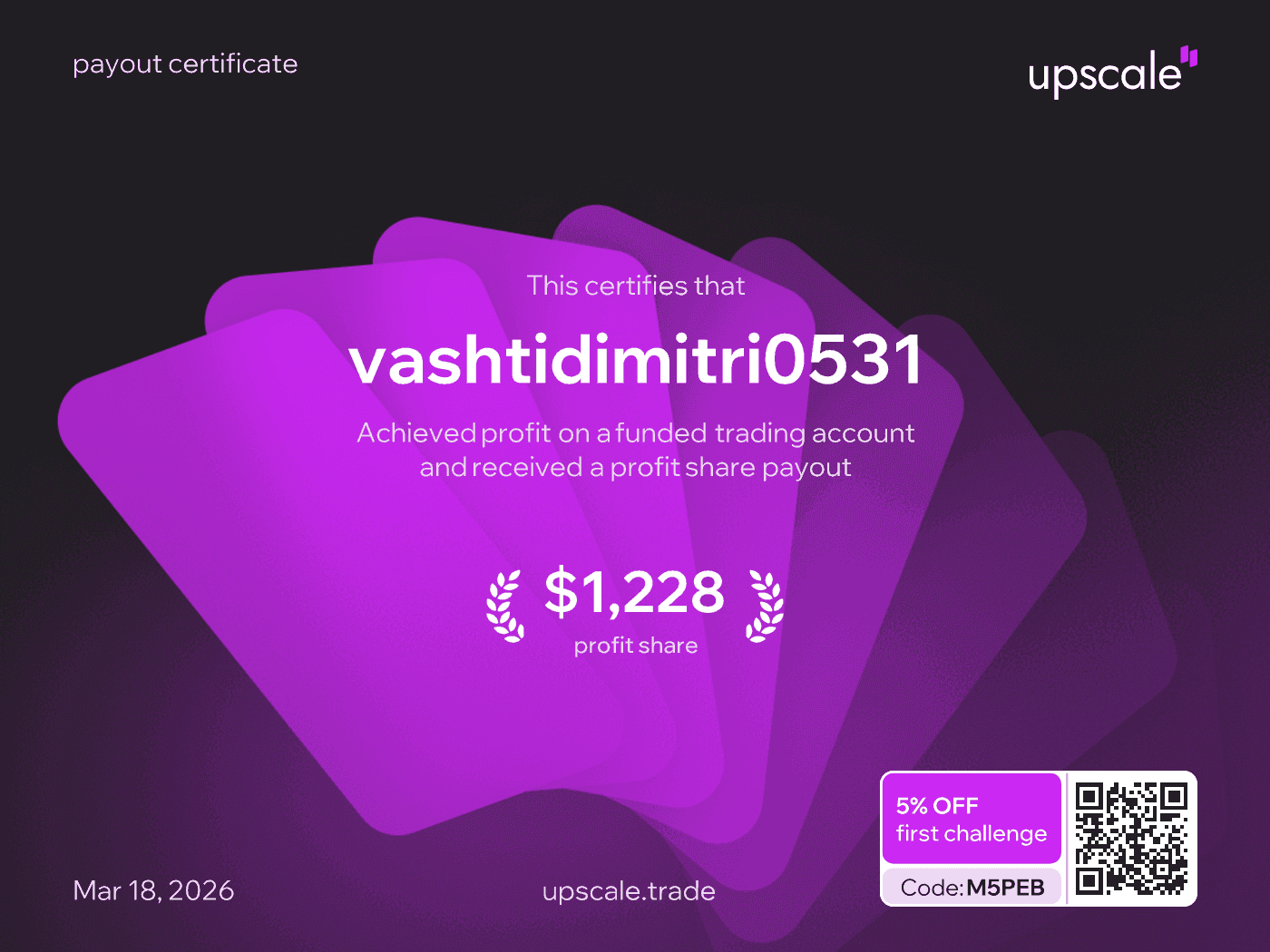
First payout from the $25K account — $1,228, March 18, 2026
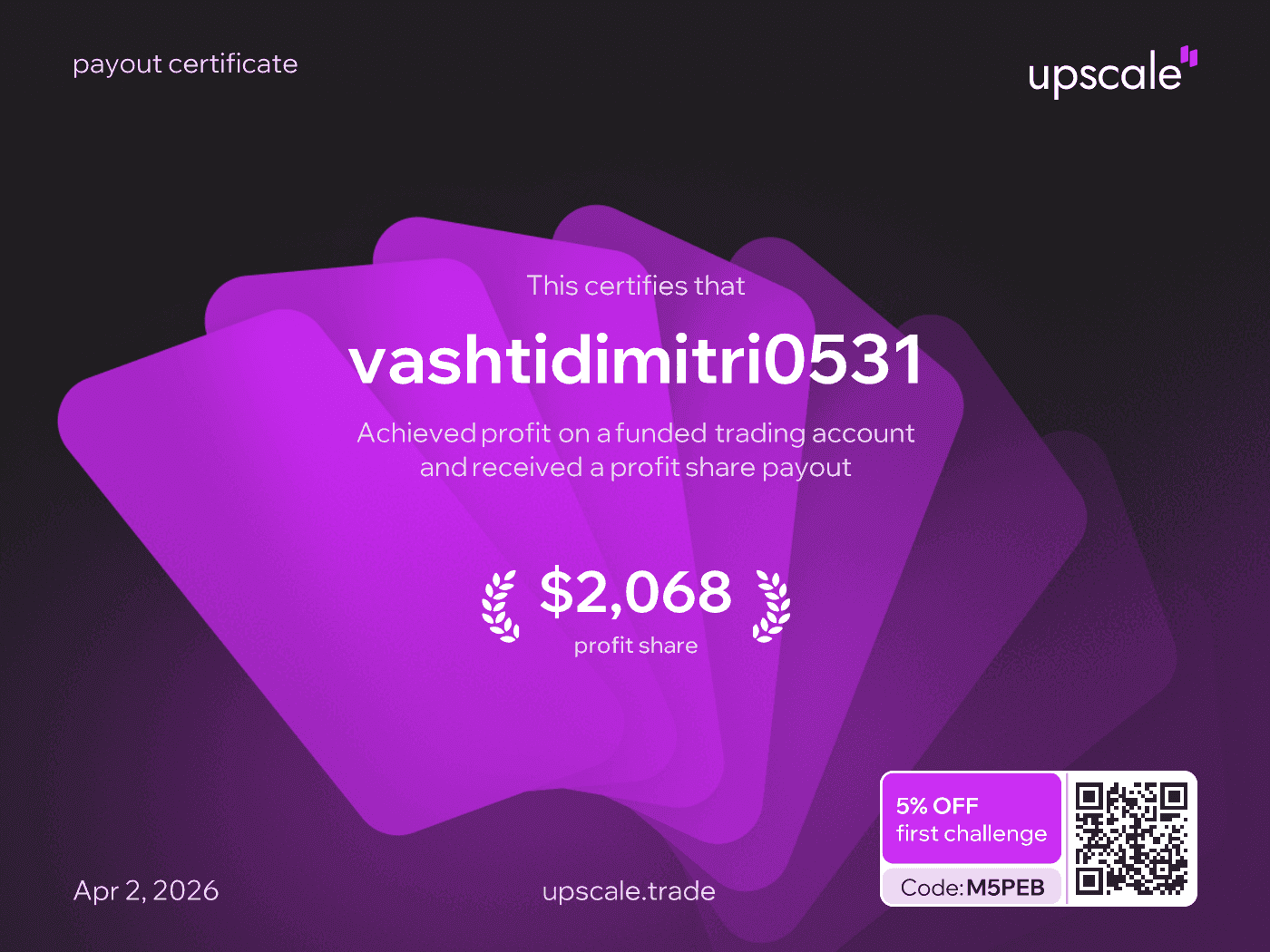
Second payout from the same account — $2,068, April 2, 2026
Two consecutive payouts from a single $25,000 account totaling $3,296 between March 18 and April 2, 2026. Profit split at the time of the payouts: 90% (with the +10% upgrade purchased after passing the challenge).
Key Takeaways
Maru Joshua's story isn't the story of a gifted trader who immediately found his approach. It's the story of someone who blew three accounts in a row over three months, passed the fourth, nearly blew the fifth, actually blew it through emotional trading two days before Valentine's Day — and came back one more time. By the time his $25,000 account produced two consecutive payouts totaling $3,296, he had at least four closed accounts behind him and nearly $10,000 in previous challenge fees. His arrival into the 7% of traders who receive payouts according to FPFX Tech data is the result not of talent but of stubbornness — and not blind stubbornness, but corrective stubbornness: every blown account changed something in the approach.
The biggest changes happened between the third blowup and the fourth attempt, and then again between losing the $10,000 account and buying the $25,000 challenge. The watchlist shrunk to a single asset. The timeframe dropped to 15 minutes. The 1% risk per trade rule stopped being a guideline and became a physical constraint — what Joshua calls "I will never break that rule, even if I want to." Trade count locked in at 1–3 per day. An identity-shift framework appeared, through which the rules stopped feeling like self-coercion and started working as self-definition. And finally, between setups, Joshua walks away to play games, cook, do chores — because the biggest threat to a scalper isn't a bad setup, it's the boredom in its absence.
Joshua's final words, through Denzel Washington:
"Dreams without goals are just dreams, and they lead to disappointment. On the road to achieving your dreams, you must apply discipline and consistency. Without commitment, you'll never start. Without consistency, you'll never finish."
In trading, this translates literally: journaling, execution, backtesting, forward testing, psychology work. Done consistently — not for one day and not until the first loss. Discipline matters more than motivation, because motivation helps you start but discipline helps you endure the process.
Ready to start your prop trading journey?
Start now: 👉 Upscale.trade | Telegram Bot
Follow us: 📺 YouTube | 𝕏 Twitter
This story was recorded in April 2026. All figures and dates are verified by funding and payout certificates on the Upscale platform.
Frequently Asked Questions
How many accounts did Maru Joshua Sugon blow before getting funded?
Before getting his first funded account, Joshua blew three challenges in a row: a $1,000 Basic in August 2025, a $1,000 Accelerated in September, and a $5,000 challenge in October. The fourth attempt — a $10,000 challenge in November — was successful, and Joshua received his first payout of $730 after Christmas 2025. He later blew that $10,000 account too, after recovering it from a −9.1% drawdown — emotional trading on February 12, 2026, ended the account. The current $25,000 account is his fourth funded account in his Upscale history.
How long did it take to pass the $25K challenge?
9 days. Joshua bought the challenge on February 19, 2026, and completed both phases (phase 1 and phase 2) by February 28. The funded account went live on March 1, 2026. The fastest known result is 8 days; Joshua was aiming for that number but fell short by one day.
What strategy does Maru Joshua Sugon trade?
Scalping on the 15-minute timeframe and below, with multi-timeframe analysis from Daily down to 15M. Indicators used: MACD, RSI, Bollinger Bands, and Fibonacci retracements (236 and 382). Entry patterns: double top, head and shoulders, Adam & Eve. Minimum risk-reward 1:2. On the funded account, Joshua trades only Bitcoin — this is his "Project Bitcoin," started on March 15, 2026, as an experiment with a single asset instead of a wide watchlist. The strategy comes from Coach Miranda Minor (GMMG Dubai), Joshua's mentor since March 2024.
What risk management rules does he follow?
Maximum 1% risk per trade of initial balance — a rule Joshua describes as inviolable. Maximum 1–3 trades per day; more than five is overtrading. Stop trading on a breakeven day. Minimum risk-reward 1:2. Maximum leverage 5x (Upscale's platform limit). Stop-losses on every trade without exception.
How does Joshua deal with overtrading and revenge trading?
Through what he calls an identity shift. Instead of forcing himself to "not break rules through willpower," Joshua redefined who he was as a trader: a "faithful steward" of the entrusted capital. The framing came to him through a religious experience before buying the $25K challenge. In parallel, he uses a structural solution to the boredom problem — sets an alert in TradingView, walks away to play games, cook, or do household chores, and only returns to the chart when the alert fires. The biggest enemy of a scalper, in his words, isn't a bad setup — it's the boredom between setups.
How many payouts has Joshua received from Upscale?
Three payouts so far. The first $730 in December 2025 (from the $10,000 funded account that was later blown). The second $1,228 on March 18, 2026 (from the current $25,000 account), processed within hours of his request. The third $2,068 on April 2, 2026 (from the same $25,000 account). The two most recent payouts from the same $25K account total $3,296. Joshua added a +10% profit split add-on, bringing his total to 90%.
What's Joshua's experience with other prop firms?
Upscale was the first prop firm of his career. In late January 2026, he tried Crypto Fund Trader (CFT) along with his community — CFT had more coins to trade, a Match-Trader web platform, and an "ascend challenge" structure with no minimum trading days. After some time, CFT flagged and banned his community for copy trading, even though they weren't sharing signals or copying each other — they were just using the same system from a common mentor. The challenge fees were refunded, but the experience was disappointing. None of his friends tried other prop firms after that. Joshua continues to trade only at Upscale.