From Fashion Modeling to Prop Trading: How Nikita Withdrew $274 From Upscale in 6 Weeks | Upscale


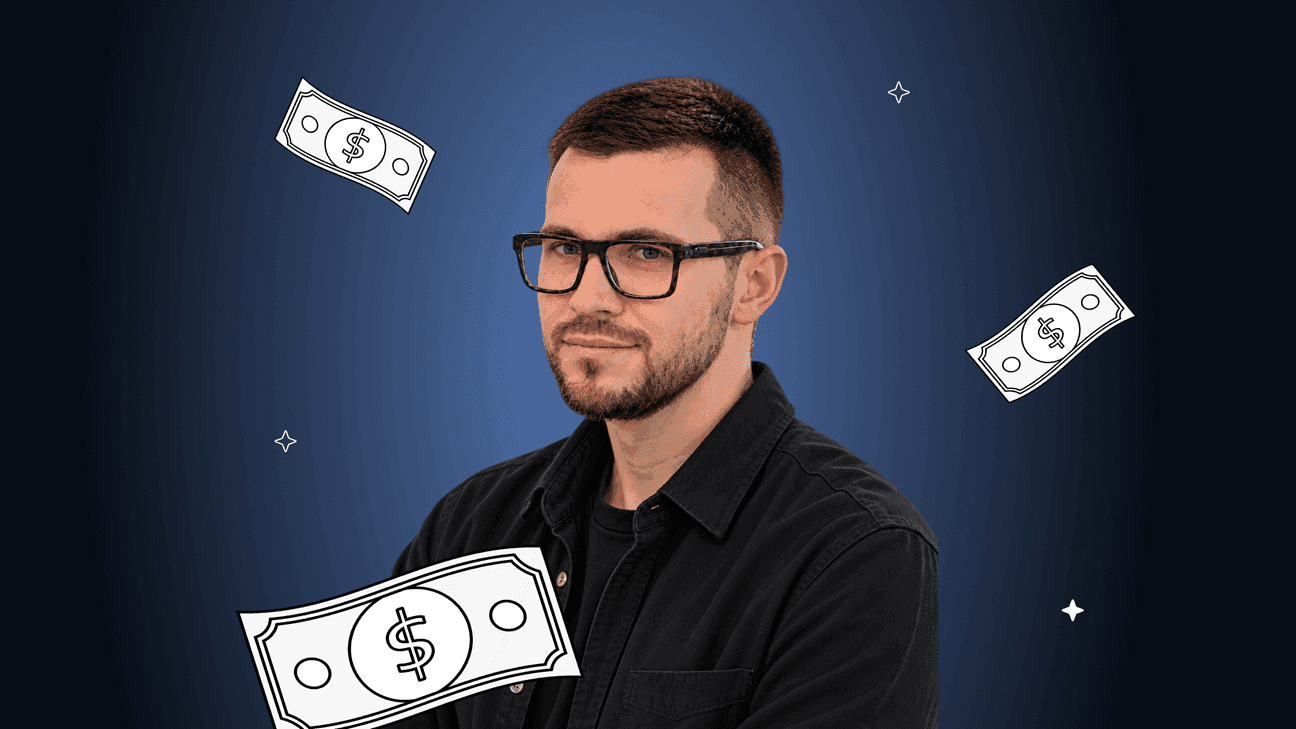
A former fashion model who spent six years working in Asia lost his first $3,000 on a scam exchange in Hong Kong, cycled through memecoins, NFT flipping, and reckless futures trading — then passed a challenge on Upscale in six weeks and received two payouts from a funded account. Nikita (Kubsssssssss) is the story of a trader who came to prop trading not because everything was going great, but because he realized his own discipline wasn't enough without external guardrails. According to FPFX Tech data from 300,000 prop firm accounts, only 7% of traders ever receive a payout — making Nikita's path from scam victim to funded trader a statistical outlier worth examining.
Watch the full interview with Nikita on the Upscale YouTube channel:
From the Runway to the Charts: How a Model Ended Up in Crypto

Nikita is 24 years old. For the last six years, he worked as a fashion model in Asia — primarily in China and Hong Kong. But the industry was shifting: fewer bookings, lower rates, and a deepening economic slowdown. He decided to leave modeling and move into something that would let him work from anywhere in the world.
His first encounter with crypto happened roughly five years ago in Hong Kong. An acquaintance working at a burger joint connected to the Asian exchange GPEX was encouraging everyone to invest and buy tokens during the presale. The exchange's first token reportedly returned around 10x, so when a second one launched, Nikita put in $3,000.
On Nikita's birthday, April 2nd, the tokens were supposed to unlock. He opened his wallet, saw $5,000–$6,000 — a clean 2x on his original investment. He tried to withdraw. It didn't work. His acquaintance delivered the news: the exchange was under criminal investigation, all accounts were frozen, roughly 80 people had been arrested. Many employees fled Hong Kong for Thailand and other countries.
"That's how I entered crypto — by losing my first $3,000."
Memecoins, NFTs, and a Path Through Every Possible Mistake
After the scam, Nikita stepped away from crypto for about a year. Then — by chance — he discovered memecoins on Solana through Twitter. Around the same time, he put $500 into a farming project and watched it climb to $3,500 on screen. His girlfriend told him to sell. He insisted it was just the beginning — the market cap was only $20–30 million. The project went to zero.
Next came NFTs on Solana. An old friend invited him into a team that flipped collections: buying at mint for pennies, selling higher. This lasted about six months and became, in Nikita's words, the most profitable chapter of his crypto journey.
When the NFT market died, Nikita turned to futures. But his approach matched his experience: trading exclusively off calls, no chart analysis, mindless entries.
"I was a very dumb trader who simply saw a call, entered without thinking — absolutely without thinking."
The realization came gradually. Nikita started studying charts independently, watching educational content. At the time of the interview, he'd been trading with intention for about five to six months.
Why Prop Trading: From Skepticism to Structure
Nikita had heard about prop trading before but was skeptical. He bought his first $5,000 challenge as an experiment — minimum investment, just to check whether it was legitimate.
"When I first came to Upscale, I wasn't really confident it was real. So I bought a $5,000 account — just to try."
Trust built gradually: collaborations with influencers, positive reviews, and presence at offline events. After several months of trading, Nikita concluded that the platform met his requirements — particularly for the CIS market, where options are limited after FTMO's withdrawal from the region.
The key moment that transformed his trading was the built-in limits. A 5% daily loss cap and 10% maximum drawdown. For someone who felt "impunity" on his own deposit — catching stops without ever reviewing his mistakes — these constraints became a lifeline. Research by Locke and Mann (2005), studying futures traders at the Chicago Mercantile Exchange, found that traders who cut losses faster earned on average 65% more per year — suggesting that external risk limits can compensate for the discipline gap most retail traders face.
"A safety brake appears — one that pushes down on itself."
Challenge Completed in Six Weeks: The Timeline
| Stage | Date |
|---|---|
| Challenge purchased ($5,000) | November 26, 2025 |
| Phase 1 passed | December 3, 2025 |
| Phase 2 passed, funded account received | December 29, 2025 |
| First payout — $8 | January 13, 2026 |
| Second payout — $266 | January 31, 2026 |
The path wasn't smooth. Between Phase 1 and Phase 2, Nikita dropped to nearly -9% — a serious losing streak he managed to climb out of before advancing to the funded stage.
The $8 Test Withdrawal and a $600 Lesson
The story of the first payout deserves its own section. On the funded account, Nikita earned roughly 13% profit — around $600–620. But because he still didn't fully trust the platform, he decided to make a "demo withdrawal": he requested just $10. With the 80/20 profit split, he received $8.

The payout arrived. The platform works. But instead of withdrawing the remaining $600, Nikita kept trading — and lost all his profit. At the peak of the drawdown, his account balance dropped to $4,800.
"On one hand, I was happy — it works, they actually pay out, and I proved it to myself. But on the other hand, I was disappointed that I'd been foolish and didn't withdraw all 13% of profit — just $10."
As a fun footnote: the number 8 turned out to be symbolic. Having spent a significant part of his life in China, Nikita knows well that the Chinese word for eight ("bā") sounds similar to the word for "prosper" or "generate wealth." It's considered the luckiest number in Chinese culture. So his first $8 certificate became, in a way, a lucky charm.
Trading Strategy: Fibonacci, Volume, and Market Structure
Nikita trades intraday — positions last from a few hours up to a day and a half. Given the choice, he'd prefer swing trading with wider stops and take-profits, but his current experience level and market conditions dictate shorter timeframes.
Core tools:
- Fibonacci levels — his key indicator. Nikita considers the 1.414–1.618 zone the strongest, noting that touches of this zone with subsequent bounces play out, by his estimate, 80–90% of the time.
- Volume — for confirming moves. A rally without significant volume can be easily absorbed, and Nikita factors this in.
- Structural analysis — identifying bearish or bullish market structure, looking for breaks of structure.
Analysis runs top-down: the monthly chart for the global trend, then the 4-hour for local structure, then the search for an entry point.
How he manages positions:
Nikita opens a position with a predetermined stop and take-profit. The stop is placed behind key levels — below accumulation zones or significant lows. He occasionally scales into a position when confirming factors appear, keeping total risk per trade within 1% of the balance.
Preferred assets:
Analysis always starts with Bitcoin — it defines the overall market direction. Beyond BTC, Nikita favors HYPE and ASTER — decentralized exchanges that showed resilience during Bitcoin's correction, losing only minimal percentages while the primary asset was dropping.
Risk Management: 0.5–1% With No Exceptions
Nikita's standard risk per trade is 0.5% to 1% of the account balance. He calls this the single most important rule in trading. This aligns with findings from FPFX Tech's analysis of 300,000 prop firm accounts, where traders risking more than 2% per trade had significantly higher account failure rates.
"You can't be losing 3–4% of your balance in one stop. Two or three trades like that and you lose the account. That shouldn't happen."
When asked for the one piece of advice he'd give to someone starting in prop trading, Nikita's answer is one word: risk management. Don't oversize. Set sensible stops. Don't chase recovery after a losing streak.
Psychology: When Not to Trade
Nikita has clear situations where he won't open trades:
Weekends. The market barely moves, volume is absent — no setups worth taking.
News events. Nikita closely monitors the economic calendar: Fed announcements, unemployment data, oil reports, and other macro releases. If a major event is an hour away, opening a position is a coin flip.
"There were times when you open a trade, Trump comes out and says 'meow!' — and that's it, you're liquidated."
Emotional state. If he's hit one or two stop-losses in a day — trading is over. The urge to "make it back" almost always leads to bigger losses. Jared Tendler, author of "The Mental Game of Trading," classifies this pattern as "desperation tilt" — trading to recover rather than to execute a plan.
Prop Trading vs. Personal Capital: How External Limits Change Behavior
Nikita draws a sharp line between how his trading changed after moving to a prop model:
On personal funds — a feeling of impunity. Caught a stop? Fine, whatever. No motivation to review mistakes, no external limits. This pattern is well-documented: a PipFarm survey of 2,777 prop traders (2025) found that 37.8% cite lack of discipline as their primary cause of failure, while 37.5% blame emotional trading after losses.
On a funded account — the challenge works like a game you don't want to lose. Daily loss caps and total drawdown limits prevent opening positions at 20–30% of the balance. For Nikita, it was exactly the control he couldn't provide himself.
"When you lose big money on the exchange — your own money — it's sad. But on a prop account, you lose an account worth $50,000 while your actual loss might be just $400. The difference is both financial and emotional."
Nikita's Certificates
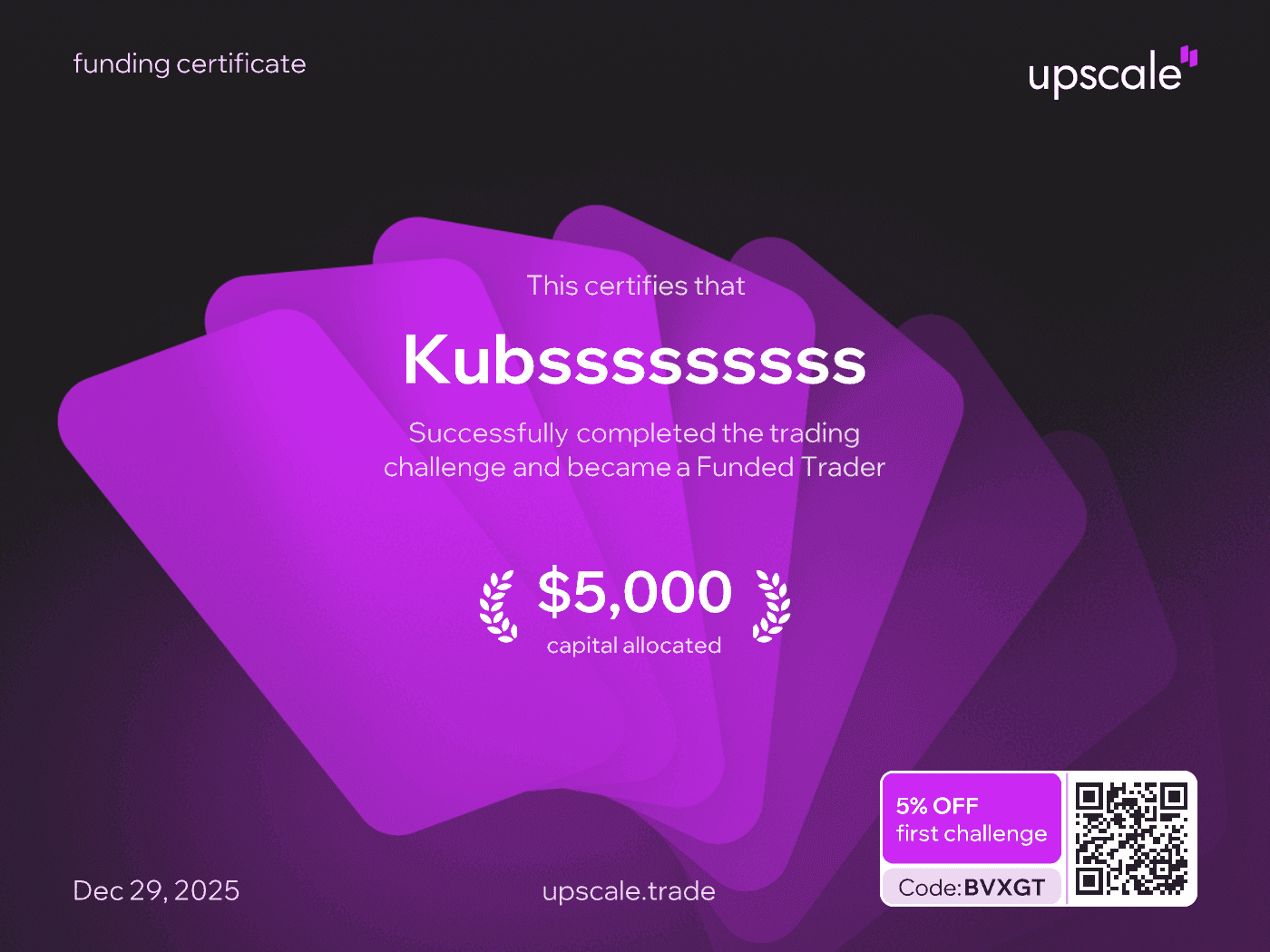
Funding certificate for Kubsssssssss on Upscale — $5,000
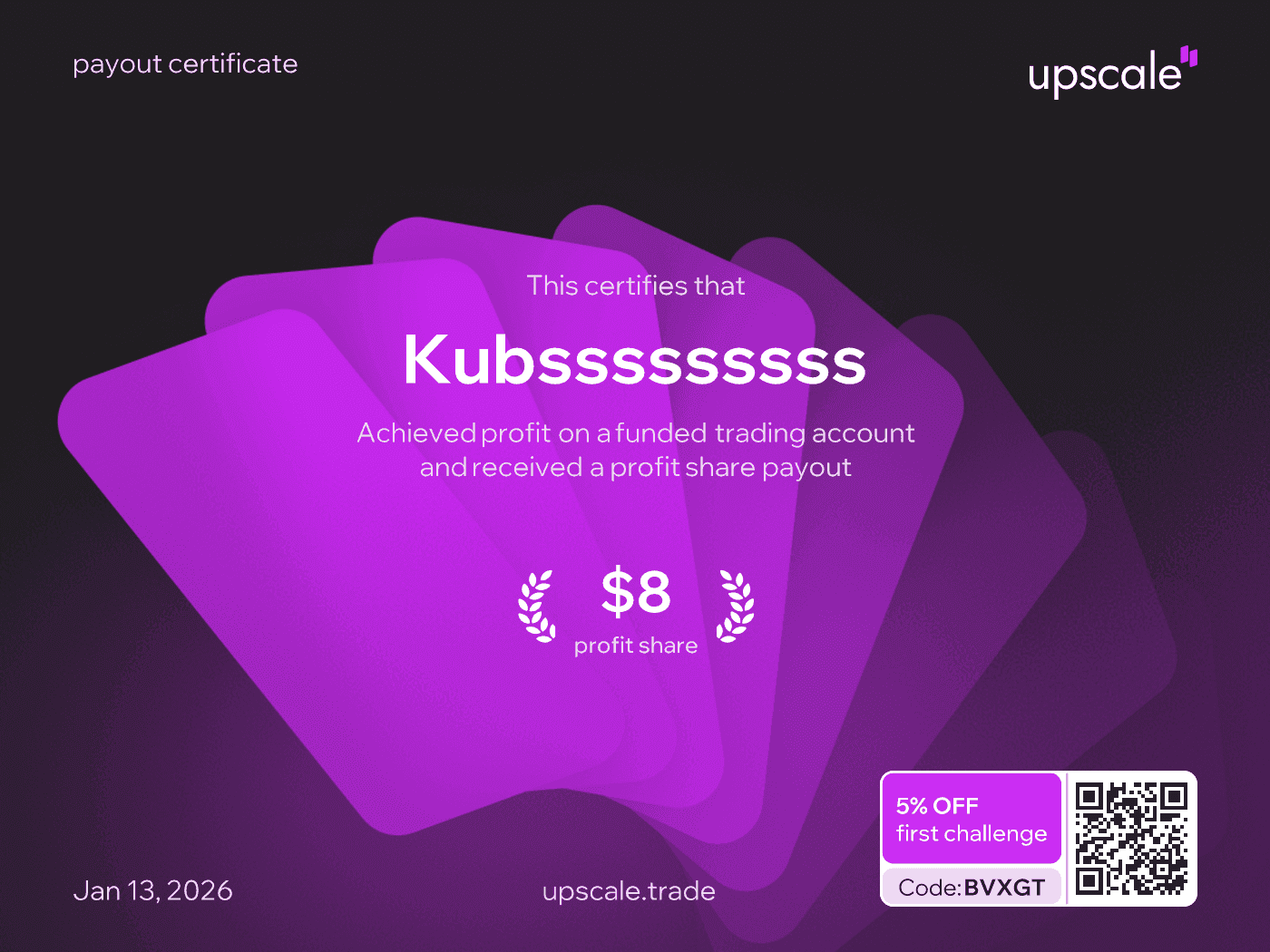
Payout certificate for Kubsssssssss — $8
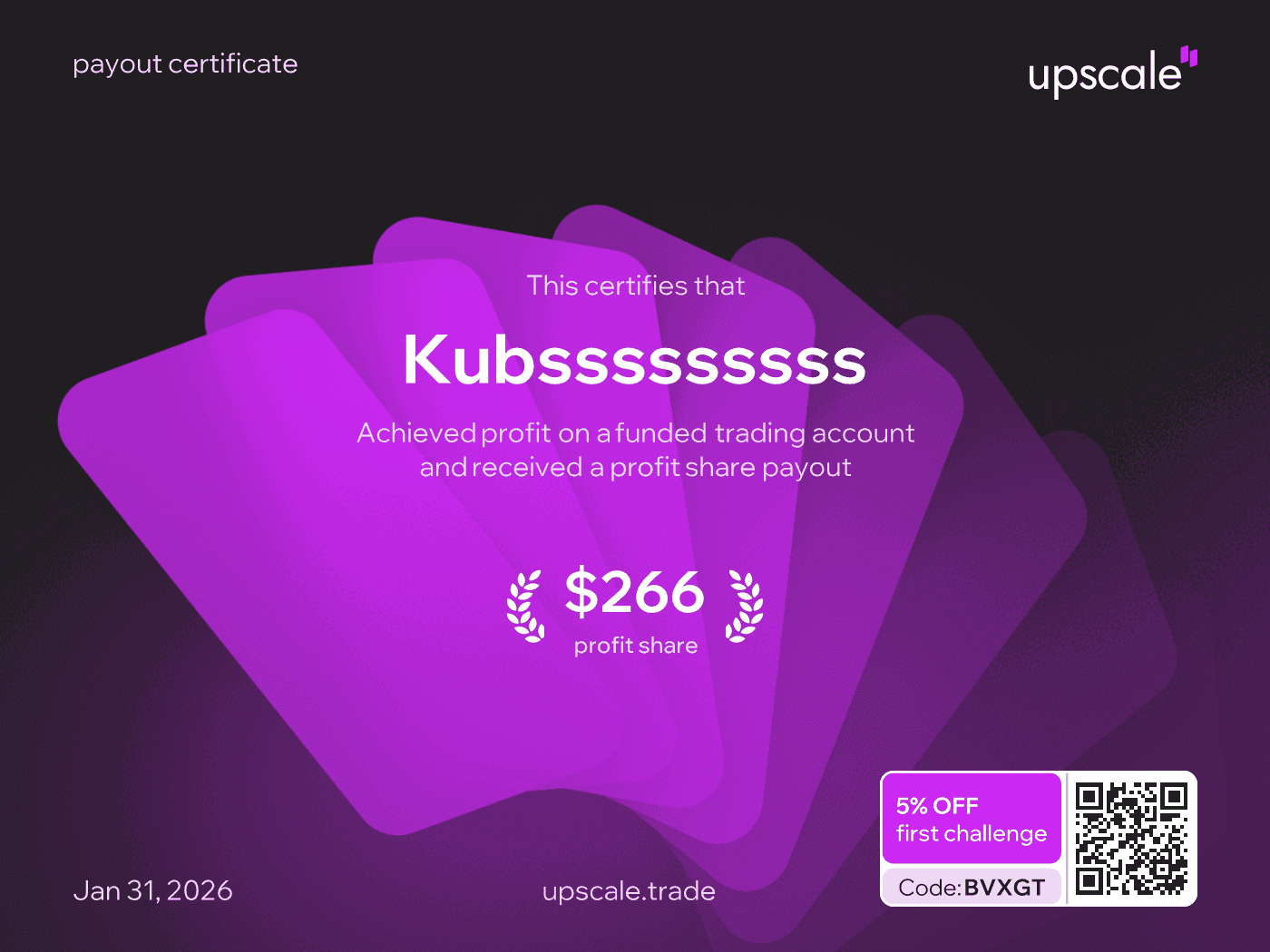
Payout certificate for Kubsssssssss — $266
After two payouts, Nikita reinvested and purchased a $50,000 challenge. The logic is straightforward: making the same 5% profit on a $5,000 account yields $250; on a $50,000 account, it's $2,500. The math stays the same — only the scale changes.
What's Next
In ten years, Nikita wants to be financially free and independent. Not billions — a stable, consistent income from trading that lets him live on his own terms. He understands that six months of intentional trading is only the beginning.
"Don't give up. Losing a deposit is a reason to rethink your strategy, rethink your approach. Maybe trade more on demo, spend more time analyzing charts. I believe you should keep going after your goals, no matter what it takes."
Key Takeaways
Nikita's path to funded trading wasn't built on talent or a winning strategy discovered overnight. It was built on a $3,000 scam, a farming project that went to zero, an NFT cycle that ended, and months of mindless futures entries off calls. What changed wasn't the strategy — it was the structure. Prop trading gave him what his own discipline couldn't: a hard 5% daily cap and 10% total drawdown that turned reckless habits into controlled risk.
Two payouts — $8 and $266 — from a $5,000 funded account are modest numbers. But they represent something the statistics say 93% of traders never achieve: proof that the system works. The next step — a $50,000 challenge — is already underway.
Ready to start your prop trading journey?
Start now: 👉 Upscale.trade | Telegram Bot
Follow us: 📺 YouTube | 𝕏 Twitter
Story recorded in early 2026. All figures verified by on-chain payout certificates and platform records.
Frequently Asked Questions
Can you start prop trading without experience managing large sums?
Yes. Nikita never managed amounts comparable to a prop account using his own capital. Prop trading platforms provide access to capital from $5,000 to $200,000, while personal risk is limited to the challenge fee. Built-in drawdown limits — such as the 5% daily and 10% total caps common across the industry — provide additional protection against critical mistakes.
How long does it take to pass a prop trading challenge?
It depends on strategy and market conditions. Nikita completed his $5,000 challenge in about six weeks: Phase 1 in one week, Phase 2 in 26 days. During the process, he experienced serious drawdowns near -9% before recovering. According to FPFX Tech data, the majority of successful traders pass within 1–3 months.
What is profit sharing and how much does the trader receive?
Profit sharing is the split of profits between the trader and the platform. Industry standard ranges from 75/25 to 90/10 in the trader's favor. In Nikita's case, his plan was set at 80% — from $320 in profit, he received $266. The profit-sharing model is selected when purchasing a challenge.
Why scale up to a larger challenge after proving yourself on a small one?
The math of scale. The same 5% profit yields $250 on a $5,000 account and $2,500 on a $50,000 account. Risk doesn't increase: the percentage per trade stays the same — only the absolute amount changes. This is a common progression pattern among funded traders.
What risk per trade do experienced prop traders use?
Most successful funded traders risk between 0.5% and 1% of the account balance per trade. Nikita calls this the single most important rule in trading. According to FPFX Tech's analysis of 300,000 prop firm accounts, traders risking more than 2% per trade had significantly higher account failure rates. At 0.5–1% risk, even a streak of ten consecutive losing trades costs only 5–10% of the account — survivable within standard drawdown limits.
How much does it cost to start prop trading on Upscale?
The minimum entry on Upscale starts at $59 for a Basic challenge on a $5,000 account — the same tier Nikita used for his first challenge. Three challenge types are available: Basic (two-phase), Accelerated (single-phase, faster), and Turbo (instant funding with no evaluation phases). Account sizes range from $5,000 to $200,000. Profit split is 80/20 with an option to upgrade to 90/10.