Covered 5 Years of Losses in 3 Months: Artem | Upscale


For five years, Artem searched trading for a "money button": binary options, Telegram signal channels, futures on an exchange with his own deposit. It always ended the same way — a blown account and another top-up. In December 2025 he first heard about prop trading, blew three challenges and passed the fourth. A challenge is a paid evaluation after which a trader gets a funded account, meaning an account with a set nominal size whose profits the trader splits with the platform.
From June to September 2026, Artem received six payouts totaling $3,854: five from a $10,000 funded account and one from a $50,000 account he won in an Upscale tournament. By his own account, that was enough to cover all his losses from the previous five years. This story is about how a simple daily profit limit changed his trading, why he lost both accounts in September, and what he advises those who are just starting out.
Five years looking for a "money button"
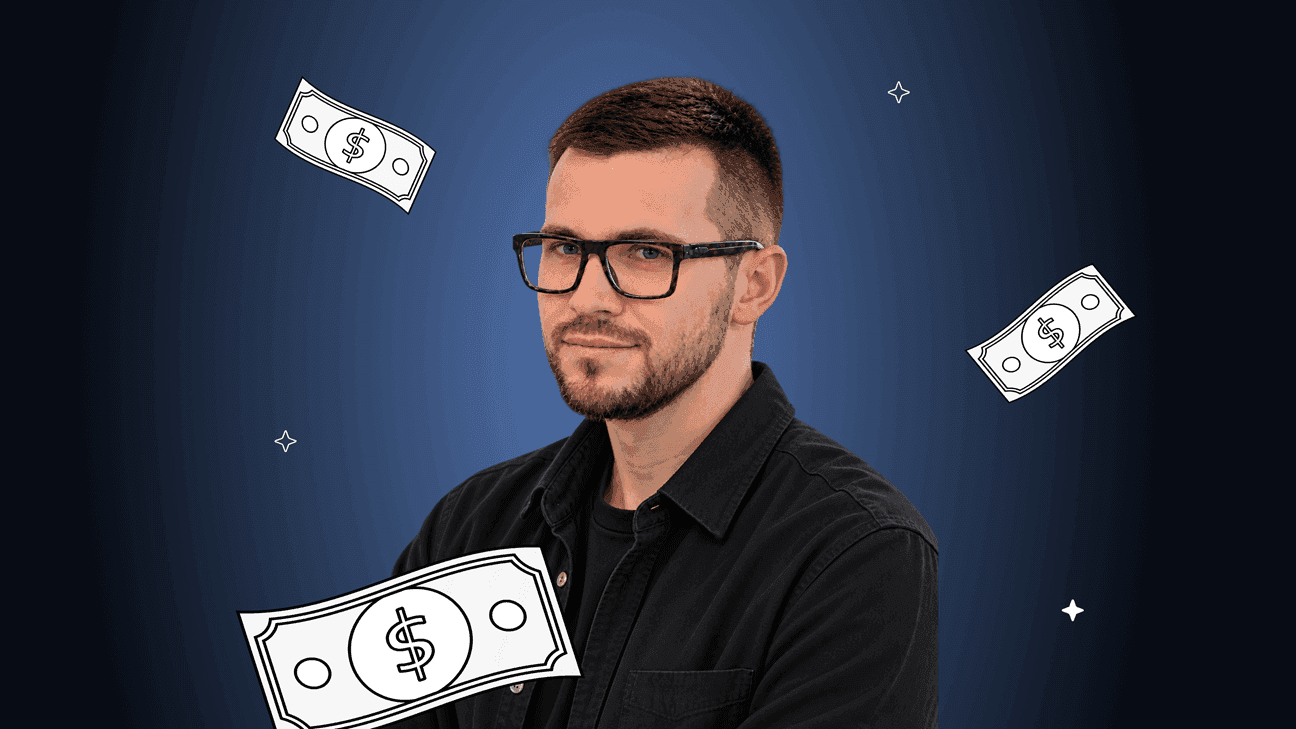
Artem is 25. Besides trading, he works in sports marketing and organizes competitions. Down the line, he wants to switch fully to income from online work.
He first heard about crypto back in 2018–2019 but didn't take it seriously. It all started in fall 2021 with a TikTok video advertising binary options.
Binary options: a quick win and a blocked withdrawal
In his first few days, Artem made $300–400 in a couple of clicks:
"I thought: 'That's it, I've found the money button.' But then it all led me to blowing the account and constantly topping it up. Blow it, top up, blow it, top up."
Once he made about $5,000 on options in a single day, withdrew $1,000 — and then his ability to withdraw was blocked, citing "unusual activity." Artem ended up losing the rest of the balance, and only after that was he told his account was fine. That's when he realized he was dealing with a scam. It's a typical pattern: U.S. regulators the CFTC and SEC warn that fraudulent binary options platforms often refuse to pay out customers' money.
Signals, futures and a liquidation
Next came the futures market on a crypto exchange. For about two years, Artem traded on signals from Telegram channels without even understanding the terminology:
"I never liked that there was no explanation for the trades. Why the stop is here, why the take-profit is there — nobody explained."
In summer 2024 he found the channel of one of Upscale's partners, who broke down the market in detail, and things got better: Artem turned $100 into about $400, then added $1,000 to his account and made $100–200 a week. But the market reversed on the news, and only about $300 of the deposit was left. Artem withdrew what remained and stepped away from trading for six months.
He describes those years honestly:
"Sometimes I just got lucky and made money. But I don't consider that earning — I was winning like in a casino."
How Artem came to prop

By then, Artem had settled on a simple logic: to make decent money, you need a large deposit. Making $500 on a $10,000 account is much easier than on $100. He learned about prop trading in December 2025 from the same Upscale partner and decided to give it a try.
Three blown challenges and a fourth one passed
The first attempts didn't work out: Artem blew a $5,000 challenge, then a $10,000 one, then almost passed a one-phase challenge — and blew that too. Right after that, he bought a fourth $10,000 challenge and passed it in about two to three weeks.
Why did he keep buying new accounts? He wanted to check whether prop really pays:
"It's one thing to read reviews, and another when the money comes to you personally."
Five payouts from one account
From the $10,000 funded account, Artem received five payouts: $614 (June 23), $736 (July 8), $568 (July 23), $437 (August 22) and $298 (September 7, 2026) — $2,653 in total. His first reaction was simple: "It actually pays out." He celebrated the first payout with a trip to a restaurant, and used later ones to buy blackout curtains and a robot vacuum.
Fourth place in a tournament
Artem found out he was taking part in an Upscale tournament by accident: he opened the leaderboard and saw himself in eighth or tenth place. He ended up finishing fourth in his group and won a $50,000 challenge, merch and $250 in prize money.
He passed the $50,000 challenge too and received a $1,201 payout from that account (September 7, 2026). Vlad, who took second place in another tournament, went down a similar path from tournament prize to payouts.
Strategy: trend, breakout and confirmation
Artem trades intraday, mostly bitcoin and Ethereum, on the 15-minute, 1-hour and 4-hour timeframes. He doesn't like holding trades for a week or two.
His logic is simple:
- Identify the trend. Is price going up or down?
- Wait for a breakout. If price breaks the trend line, he needs confirmation — several candles closing beyond the level, not just a wick through it.
- No setup, no trade. If there's no situation, there's no decision.
His risk-to-reward ratio is usually 1:2 or 1:3. He uses the Upscale partner's market reviews as a reference point, but Artem makes his own decisions and doesn't blame anyone for his mistakes. He is currently taking a free course and building a new strategy.
The golden rule: a daily profit limit

Many traders have a daily loss limit. Artem also had a daily profit limit:
"If I made around $70–100 on a $10,000 account, that was it — I closed the terminal and stopped trading. You make $100 and want $200, $300, $400, and at $500 the market will definitely knock you down, because the overconfidence kicks in: I'm the king of the market."
On a $10,000 account, that's 0.7–1% a day. He advises choosing a target to match your account size: 1%, 0.5% or even 0.2% a day. The key is to stop once you hit it:
"If you made $50 in a day, that's not much. But over a week it's already $350. The compounding effect is a really powerful thing."
Risk: 10% margin is not 10% risk
Asked about risk, Artem said that in 90% of his trades he used 10% of the deposit with 5x leverage: $1,000 on a $10,000 account and $5,000 on a $50,000 account.
It's important to get the terms straight here. Artem is talking about margin — the amount he set aside for a position. With 5x leverage, $1,000 of margin opens a $5,000 position. Risk, on the other hand, is the amount a trader loses if the stop-loss is hit, and it depends on the distance to the stop. For example, if the stop is 2% from the entry price, a $5,000 position loses $100 — 1% of the account. With a 5% stop, the loss would be $250.
We covered how to calculate risk from your stop and size positions to fit prop account limits in our guide to risk per trade in prop trading.
How he lost both accounts
Summer went well: stops and take-profits worked as planned. But in September the market became, as Artem puts it, "not mine." Ethereum produced several false breakouts from a range in a row: it looked like price was heading up, but it kept coming back. Both accounts — the $10,000 and the $50,000 — were closed.
Artem admits it wasn't just the market:
"It wasn't so much a mistake as gambling. You'll never beat the gambling urge. You can only learn to live with it and keep it under control."
After the losses, he wanted to win it back, and that led him where it leads everyone. The urge to recover losses is one of the typical forms of tilt, which we covered in our article on the types of trading tilt.
How Artem handles his emotions
He has almost no trader friends around, so Artem found his own approach: when he gets "shaky," he opens a separate ChatGPT chat and describes the situation. The most useful advice he got was along the lines of: close the terminal, get out of the apartment, clear your head and come back tomorrow.
Sometimes it helps just to step away from the chart — make some tea, go for a run or do some chores:

"When you trade on emotions, you will lose 100%. You have to trade with a cool head."
Prop or exchange
For Artem, the main difference is the cost of a mistake. On an exchange, a trader risks their own deposit, while on prop the maximum loss is limited to the price of the challenge.
But there's a psychological trap he discovered: a 1% drawdown on a $10,000 account feels different from one on a $50,000 account. Seeing −$30 is much easier than seeing −$500, even if it's the same in percentage terms.
Artem also highlights the Upscale community: in the Telegram chat, other traders and admins answer questions quickly.
Artem's advice
Never trade drunk
"Never trade drunk, don't even think about opening the exchange. When you're drunk, you're very overconfident and it feels like you're about to become the boss."
Set daily profit and loss limits
Artem advises setting both limits right away. The profit limit, he says, builds discipline. But he's more relaxed about the daily drawdown, suggesting you can go slightly over it. On a prop account, that's not an option: breaching the daily or maximum drawdown limit closes the account immediately and cancels all accumulated profit (participation requirements). That's why it's better to set your personal daily stop well before the platform's limit.
Try and experiment
"Prop gives you the chance to check whether it works for a relatively small amount. Try, experiment and keep at it."
Payout certificates

Artem's payouts from the $10,000 funded account: $614 (June 23, 2026), $736 (July 8, 2026), $568 (July 23, 2026), $437 (August 22, 2026) and $298 (September 7, 2026). Payout from the $50,000 account won for fourth place in a tournament: $1,201 (September 7, 2026). Total: $3,854.
Verification
Artem's results are verified by:
- An interview on the Upscale YouTube channel
- 6 Upscale payout certificates
All Upscale payouts are made on-chain and can be independently verified on the blockchain.
Key takeaways
Artem's story is about five years of chasing quick money giving way to a system. Binary options, signals and trading his own deposit brought random wins and regular blowups. On prop, he blew three challenges, passed the fourth and, from June to September 2026, received six payouts totaling $3,854: five from a $10,000 funded account and one from a $50,000 account won in a tournament.
Artem's main tool isn't a complex strategy but discipline. He trades intraday trends and confirmed breakouts, keeps a risk-to-reward ratio of 1:2–1:3, and stops as soon as he's made 0.7–1% of the account for the day. That rule protected him from overconfidence after winning trades. But when he gave in to the urge to win back losses in September, both accounts were closed.
That leads to practical lessons for beginners. Know the difference between margin and risk: 10% of the deposit put into a leveraged position doesn't mean 10% risk — the distance to the stop is what matters. Set personal profit and loss limits, with your daily stop well before the platform's daily drawdown limit. And when emotions take over, close the terminal: you have to trade with a cool head.
Start now: 👉 Upscale.trade | Telegram Bot
Follow us: 📺 YouTube | 𝕏 Twitter
Community: 💬 Telegram chat | 🎮 Discord
Frequently Asked Questions
How much has Artem earned on Upscale?
$3,854 in six payouts from June to September 2026: $2,653 in five payouts from a $10,000 funded account and $1,201 from a $50,000 account won for fourth place in a tournament. He also received $250 in tournament prize money.
How many attempts did it take Artem to pass a challenge?
Four. He blew $5,000 and $10,000 challenges, almost passed a one-phase challenge but blew that too. He passed the fourth, a $10,000 challenge, in about two to three weeks.
What strategy does Artem trade?
He trades intraday, mostly bitcoin and Ethereum, on the 15-minute, 1-hour and 4-hour timeframes. He identifies the trend, waits for a breakout confirmed by price holding beyond the level, and keeps a risk-to-reward ratio of 1:2 or 1:3.
What is a daily profit limit?
It's the amount after which a trader stops trading until the next day. For Artem, on a $10,000 account, it was $70–100, or 0.7–1% a day. The rule protects against overconfidence after winning trades, which often leads to big losses.
Why did Artem lose his accounts?
In September 2026, Ethereum produced several false breakouts from a range in a row. According to Artem, it was less about the market and more about emotions: after losses he tried to win it back, and both accounts — $10,000 and $50,000 — were closed.
How did Artem get a $50,000 account?
He finished fourth in his group in an Upscale tournament and won a $50,000 challenge, merch and $250 as prizes. He passed the challenge and received a $1,201 payout from that account.
What does Artem advise beginners?
Never trade drunk, set daily profit and loss limits right away, and don't trade on emotions. On a prop account, your personal daily stop should come before the platform's daily drawdown limit, since breaching it closes the account immediately.