Failed a Prop Challenge? How to Review Your Mistakes in 7 Steps

What should you do if you failed a prop challenge? Don't buy a new one right away. First take a 48-hour break from trading, then review your trade history in 7 steps: find the trade or series of trades that closed the account, check your risk per trade, separate strategy mistakes from discipline breaches, write down three rules you broke and build a plan for the next attempt as concrete rules rather than goals. Failing a challenge is a normal outcome, not an exception: according to industry data, about 14% of traders pass. The difference between those who eventually reach a payout and those who quit lies in the conclusions they draw after each attempt. And if the account was closed at the funded stage, Upscale can sometimes restore it within 48 hours, without passing the challenge again.
Why a failed challenge isn't the end
A challenge is a paid evaluation: the trader has to hit a set profit target without exceeding the loss limits. A trader who passes gets a funded account, an account with a defined notional, meaning the starting size from which targets and limits are calculated. The profit from this account is shared with the platform. If a limit is breached, the account is closed and the trader loses the cost of the challenge. Nothing else is lost: the trade history stays, and with it the most accurate data on your own mistakes.
Most traders fail, and what happens next is what matters
Industry statistics are harsh. FPFX Tech analyzed more than 300,000 accounts across 10 prop firms: 14% of traders passed the challenge, and 7% received a payout. The head of one large prop firm put the pass rate even lower, at 5–10%. So failing is the most common outcome of an attempt, not a sign that something is wrong with you as a trader.
A failure doesn't mean trading "isn't for you." It means something went wrong in that particular attempt. The goal of the review is to find that "something" using numbers, not feelings, and turn it into a rule for next time. Without a review, the next challenge often repeats the previous one: the same mistakes, only faster.
The method: 7 steps to review a failed challenge
Step 1. Take a 48-hour break
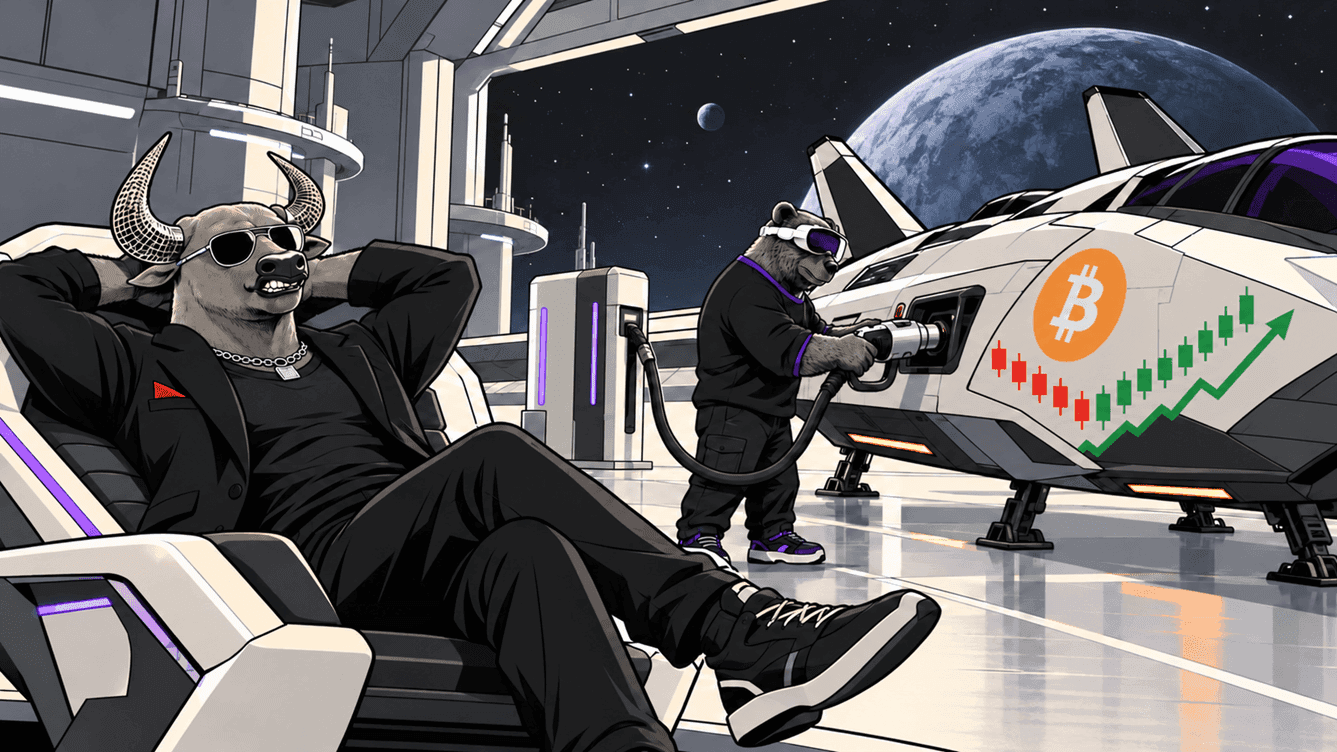
For the first two days after a failure, don't trade, don't review your trades and don't open the chart. Right after an account closes, decisions are driven by emotion. A study published in the journal Psychological Science found that under acute stress, people make riskier choices when facing losses and rely less on deliberate thinking.
These are exactly the moments when the urge to win it back kicks in: buy a new challenge and recover the cost of the last one in a single day. CIBC Investor's Edge warns that with revenge trading the second loss can be even larger than the first. This state is called tilt: the trader acts on emotion and breaks their own rules. We describe its signs in 5 Types of Trading Tilt.
The break applies to trading and reviewing. If the account was closed at the funded stage of a Basic or Accelerated challenge, it's still worth checking the account card during these 48 hours: a restoration offer may appear there, and it's valid for no more than 48 hours after the breach. More on this below.
Step 2. Put your trade history into a table
Review the attempt using numbers, not memories: memory easily distorts the picture in your favor. On Upscale, the Portfolio section gives you access to your trade history, and the trades themselves are shown on the price chart. Copy them into a table; any spreadsheet will do, even Google Sheets.
| Column | What to record |
|---|---|
| Date and time | When the trade was opened and closed |
| Instrument and direction | For example, BTC, buy or sell |
| Position size | The trade volume |
| Stop-loss | Whether there was an order that automatically closes the trade at a set loss, and at what level |
| Result | Profit or loss in dollars and as a % of the notional |
| Per plan? | Yes or no: did the entry follow your rules |
The last column is the most important one; you'll need it in step 5. Fill it in honestly: the table is for you, not for a report.
The AI challenge review will calculate the summary statistics for you. You can request it for a closed real challenge in the "Account closed" window, on the account dashboard or in the Analytics tab. The review is generated in under a minute and shows your share of winning trades, average profit and loss, maximum drawdown, average holding time, the three main mistakes and an improvement plan for each. The table and the AI review complement each other: the review gives the big picture, and the table shows which specific trades led to it.
Step 3. Find the trade that broke the account
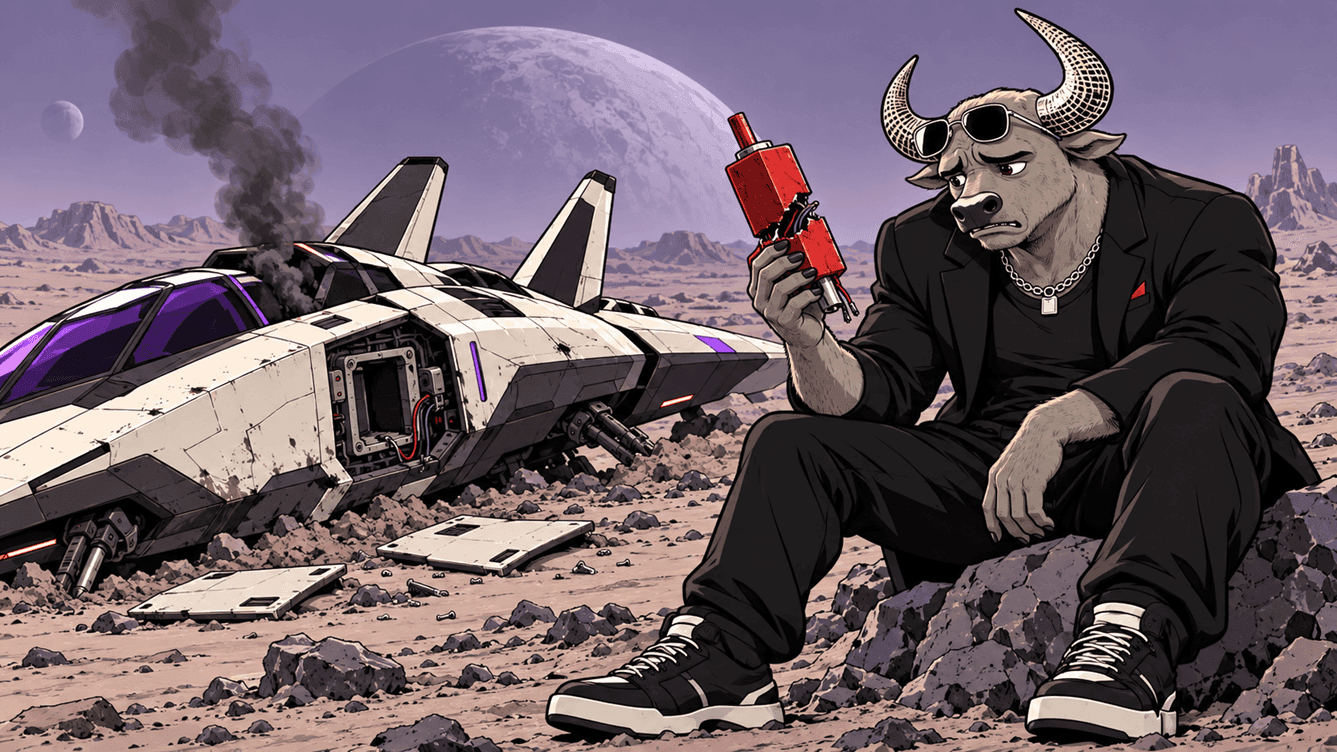
The account closes the moment a loss reaches one of the drawdown limits. Drawdown is a decline in the balance: the daily limit caps the loss for a single day, and the maximum limit caps it over the entire time the account is traded. Find that moment in your table and look at what led to it. There are two possibilities, and they are two different diagnoses.
Example for a $25,000 Basic challenge: the daily limit is 5%, or $1,250, and the maximum limit is 10%, or $2,500.
| Diagnosis | What it looks like in the table | Common causes | What to change |
|---|---|---|---|
| One big loss | A single trade lost $1,250 and closed the account on the daily limit | No stop-loss, stop moved further away, position size too large, position held through major news | A stop-loss before entry and a fixed risk per trade |
| A series of small losses | 12 trades of −$110 in one day added up to −$1,320 | Too many trades, revenge trading after a stop, the strategy doesn't fit current market conditions | A daily trade limit and a break after several losses in a row |
Don't forget about unrealized loss, meaning the loss on trades that are still open: the limits count it too. The account can close even if no trade has been closed at a loss yet. All limits for each format are on the Challenge & Trading Rules page.
Step 4. Check your position size
Now look at your losing trades: what percentage of the notional did you lose on each one? Risk per trade is the amount you lose if the stop-loss is hit. It's calculated like this:
Risk = position size × distance from the entry price to the stop-loss
For example, a position of 100 units of an asset entered at $100 with a stop-loss at $98 risks $200. On a $25,000 account, that's 0.8%.
If risk on your losing trades regularly exceeded 1% of the notional, the problem is most likely position size, not strategy. Here's how risk per trade affects the safety margin of a $25,000 Basic account:
| Risk per trade | Amount | Losing trades in a day that close the account on the $1,250 daily limit | Losing trades that close the account on the $2,500 maximum limit |
|---|---|---|---|
| 0.5% | $125 | 10 | 20 |
| 1% | $250 | 5 | 10 |
| 2% | $500 | 3 | 5 |
| 3% | $750 | 2 | 4 |
At 3% risk, two losing trades in one day already add up to $1,500 and exceed the daily limit. For a personal account, CME Group advises new traders to risk 1–3% of the account on a single trade, but a prop account has hard drawdown limits, so the guideline is stricter: 0.5–1%. We explain how to set risk for your format and number of trades per day in How Much to Risk per Trade in Prop Trading.
Leverage doesn't set your risk on its own: risk is determined by position size and the distance to the stop-loss. But high leverage lets you open a position far larger than the account can withstand, and without a stop-loss the loss grows very quickly.
Step 5. Separate strategy from discipline
Ask yourself one question: "Did I trade according to my plan and the plan didn't work, or did I not follow my plan?" The answer changes everything you'll do next. This is where the "Per plan?" column from step 2 comes in.
| Traded per plan | Deviated from the plan | |
|---|---|---|
| What it means | The rules were followed, but the strategy lost money | The loss came from breaking the rules |
| Where the problem is | In the strategy, or in the fact that it doesn't fit current market conditions | In discipline |
| What to do | Test and refine the strategy on a demo account | Lock in rules and restrictions that stop you from breaking them |
If most of your losing trades are marked "no," changing the strategy is pointless: a new one will break the same way. And if there was no plan at all and trades were opened on gut feeling, you already have your answer: start with a plan.
Step 6. Write down 3 rules you broke

You need concrete wording, the kind you can check against your trade table. "I wasn't paying attention" or "I was unlucky" gives you nothing: you can't draw a conclusion for next time from it.
| Vague | Concrete |
|---|---|
| I wasn't paying attention | Opened 3 trades within 10 minutes after a stop-loss was hit |
| I risked too much | Risk on 4 losing trades was 2–3% instead of 1% |
| I was unlucky with the news | Held a position through the release of major economic data |
| I held a loser too long | Moved the stop-loss further away when the price approached it |
| I wanted to win it back | Added volume to a trade that was already losing |
The last two mistakes are especially common, and there's a scientific explanation for them. A study by economist Terrance Odean of 10,000 brokerage accounts found that investors are more willing to close winning positions than losing ones. Moving the stop and averaging down, meaning adding volume to a losing trade, are the same habit: hoping the price will come back instead of taking the loss as planned.
Pick the three main breaches, the ones that cost you the most money. A list of ten items won't stick, but three rules are easy to keep in mind on every trade.
Step 7. Write a plan for the next challenge
A plan is rules, not goals. "I want to pass in 10 days" is a wish; it says nothing about how to trade. A rule describes an action you can either follow or break. Each of the three breaches from step 6 should become a rule that forbids it.
Example plan for a $25,000 Basic challenge:
- risk per trade of 0.5%, or $125;
- no more than 2 trades per day;
- the stop-loss is set before entry and never moved further from the price;
- after 2 losing trades in a row, trading stops until the next day;
- no new positions ahead of major economic data releases;
- a personal daily loss limit of 2%, stricter than the challenge limit.
A written plan means you don't have to invent decisions in the middle of a trade. CME Group names one of the main purposes of a trade plan as helping the trader minimize emotional decision-making.
Before buying a new challenge, test the plan on a demo account, a free practice account with the same limits as a paid challenge. If you stay within the limits while trading by the new rules, the plan is ready. You can also add Daily Drawdown Protection, an add-on for the Basic and Accelerated challenges: when the daily limit is hit, the account isn't closed, and trading stops until the next day. It works once per challenge.
If the account closed at the funded stage
A failure on a funded account doesn't always mean you have to pass the challenge again. For some Basic and Accelerated accounts, Upscale may offer restoration: a restart of the funded stage on the same account, keeping the trade history, past payouts and certificates.
All of these conditions must be met:
- the account is Basic or Accelerated; demo and Turbo accounts can't be restored;
- the breach happened at the funded stage, not during the challenge stages;
- no more than 48 hours have passed since the breach;
- the account passed an automated trading review.
Restoration is an extra option, not a guarantee. If it's available, the offer appears on the account card on its own, with no need to apply. Restoration is paid, and you can choose a balance below the original: from 92% on Basic and from 96% on Accelerated, and the lower the balance, the cheaper it is. The limits are still calculated from the original starting balance. We explain how it works in Blew a Funded Account? Don't Start From Zero.
Even if you manage to restore the account, you still need the review in steps 2–7: restoration brings the account back, but it doesn't fix the mistakes that closed it.
When to buy your next challenge

Start a new attempt once all of these are true:
- at least 48 hours have passed since the failure;
- the trade history has been reviewed, and it's clear what broke the account: one trade or a series;
- three broken rules have been written down and turned into a plan made of rules;
- the plan has been tested on a demo account;
- the money for the attempt isn't your last.
The last point matters. The US Securities and Exchange Commission (SEC) advises risking only money you can afford to lose. It's better to budget for several attempts rather than one: one payout can cover several failed challenges, as long as each new attempt is better than the last. We break down the economics of attempts in How to Make Money in Prop Trading in 2026.
You can also reconsider the format. If the account closed on the 3% daily limit of an Accelerated challenge, Basic, with a 5% daily and 10% maximum limit, gives you more room for error. Among Upscale traders who receive payouts, there are some who didn't get there on the first try. Roman, for example, failed 4 challenges before coming out ahead.
Failing a prop challenge is a normal part of the journey: according to industry data, about 14% of traders pass. The trader only loses the cost of the attempt, while the trade history stays and becomes material for review.
The review takes 7 steps: a 48-hour break, the trade history in a table, finding the trade or series that closed the account, checking risk per trade, separating strategy mistakes from discipline, three concrete broken rules and a plan for the next attempt written as rules. On Upscale, the AI challenge review shows the summary statistics and main mistakes, and you can test the plan for free on a demo account.
If the account closed at the funded stage of a Basic or Accelerated challenge, check the account card within 48 hours: a restoration offer may appear there. But even then, the next attempt will only be better than the last if the mistakes have been reviewed and turned into rules.
Start now: 👉 Upscale.trade | Telegram Bot
Follow us: 📺 YouTube | 𝕏 Twitter
Community: 💬 Telegram chat | 🎮 Discord
What should you do right after failing a prop challenge?
Take a 48-hour break: don't trade, don't review your trades and don't buy a new challenge. Right after a failure, decisions are driven by emotion, and it's easy to start revenge trading. There's one exception: if the account was closed at the funded stage of a Basic or Accelerated challenge, check the account card, because a restoration offer may appear there, valid for no more than 48 hours.
How do I figure out why I failed the challenge?
Copy your trade history into a table and find the moment the loss reached a drawdown limit. Then work out what led to it: one big loss or a series of small ones. One big loss usually means a trade without a stop-loss or a position that was too large; a series of small losses usually means too many trades or revenge trading after a stop.
How do you tell a strategy mistake from a discipline mistake?
Answer this question: "Did I trade according to my plan and the plan didn't work, or did I not follow my plan?" If the rules were followed and you still lost, refine the strategy on a demo account. If the losing trades broke the rules, changing the strategy is pointless: you need to lock in restrictions that stop you from breaking the plan.
How much should you risk per trade after a failed challenge?
The guideline for a prop account is 0.5–1% of the notional per trade. On a $25,000 Basic account, that's $125–$250. At 1% risk, the account closes on the daily limit after 5 losing trades in a day; at 3% risk, after just 2.
What is the AI challenge review and where can I find it?
It's a summary of your trading on a closed account: statistics on every trade, the three main mistakes and an improvement plan for each. On Upscale, you can request it for a closed real challenge in the "Account closed" window, on the account dashboard or in the Analytics tab. It isn't generated on demo accounts.
Can a failed account be restored?
Only a funded account from a Basic or Accelerated challenge, and only if the breach happened at the funded stage no more than 48 hours ago. Restoration is paid and not guaranteed: if it's available, the offer appears on the account card on its own. Accounts failed during the challenge stages, as well as Turbo and demo accounts, can't be restored.
When can I buy a new challenge?
When at least 48 hours have passed, the trade history has been reviewed, three broken rules have been written down, a plan made of rules is ready and it has been tested on a demo account. And only with money you can afford to lose.
How many traders fail prop challenges?
Most of them. According to FPFX Tech, which analyzed more than 300,000 accounts across 10 prop firms, 14% of traders passed the challenge and 7% received a payout. That's why a failure isn't a reason to quit prop trading, but a reason to review your mistakes before the next attempt.