How to Make Money in Prop Trading in 2026: Economics and Plan


How do you make money in prop trading in 2026? A trader buys a challenge, a paid evaluation where you need to hit a set profit target without exceeding the loss limits. After passing it, the trader gets a funded account: an account with a defined notional of $5,000 to $200,000 whose profit is shared with the platform. The trader keeps 80% of the profit, or 90% with an add-on option. On Upscale, 5% profit on a $25,000 funded account comes to $1,250, and the trader's payout is $1,000. To earn the same on a personal $1,000 deposit, you would need +100%. The trader only risks the cost of the challenge, but few people pass: according to industry data, about 14% of traders pass the challenge and about 7% get a payout. That's why the traders who make money in prop trading budget for several attempts, risk no more than 0.5–1% of the balance per trade, withdraw profit regularly and only then scale up. Below we break down the economics of attempts, a step-by-step plan to the first payout and the path to several funded accounts.
Detailed payout statistics for 24 Upscale traders are in How Much Do Prop Traders Make. We explain how to size your risk per trade to your challenge limits in How Much to Risk per Trade in Prop Trading.
How making money in prop trading works

Prop trading removes the main limitation of an individual trader: the size of the deposit, meaning your own money in the account. Instead of spending years growing a small account, the trader proves their skill on a challenge and then trades a funded account with a defined notional: the starting size of the account, from which profit targets and loss limits are calculated. Their financial risk is limited to the cost of the challenge.
Why trading only your own money is hard
Trading their own money doesn't make most people any income. According to the European regulator ESMA, 74% to 89% of retail client accounts trading CFDs (contracts for difference) lost money. The US Securities and Exchange Commission (SEC) warns that day traders, who open and close trades within the same day, typically suffer severe financial losses in their first months, and advises risking only money you can afford to lose. The prop format doesn't remove this risk, but it caps it at an amount you know in advance.
Three challenge formats on Upscale
The formats differ in the number of stages, meaning parts of the evaluation with their own profit target, and in their drawdown limits, meaning how far the balance is allowed to fall. The daily limit caps the loss for a single day, and the maximum limit caps it over the entire time the account is traded. Another condition is a minimum number of profit days: days on which the balance grows by at least 0.5% of the starting balance.
| Parameter | Basic | Accelerated | Turbo |
|---|---|---|---|
| Stages | 2 stages | 1 stage | no evaluation stage |
| Profit target | 5% and 8% | 10% | none |
| Minimum profit days | 3 and 5 | 3 | 5 to withdraw |
| Daily drawdown | 5% | 3% | not applied |
| Maximum drawdown | 10% | 6% | 6% of the highest balance |
If a loss reaches either drawdown limit even once, the account is closed immediately and the accumulated profit is voided. Turbo accounts also have the 30% rule: the most profitable day must not account for 30% or more of total profit. All parameters are listed on the Challenge & Trading Rules page.
How much one payout brings
A payout is a withdrawal of part of the profit from a funded account to the trader's crypto wallet. Its size depends on the account notional, the profit and the trader's split. Profit is withdrawn in periods: each lasts at least 14 calendar days, and you can get one payout per period within the limit. The table shows the result at 5% profit for a period, along with that limit.
| Funded account notional | 5% profit | Payout at 80% split | Payout at 90% split | Withdrawal limit per period |
|---|---|---|---|---|
| $5,000 | $250 | $200 | $225 | $2,500 |
| $10,000 | $500 | $400 | $450 | $4,000 |
| $25,000 | $1,250 | $1,000 | $1,125 | $10,000 |
| $50,000 | $2,500 | $2,000 | $2,250 | $12,500 |
| $100,000 | $5,000 | $4,000 | $4,500 | $20,000 |
| $200,000 | $10,000 | $8,000 | $9,000 | $30,000 |
5% is an illustrative example, not an expected return: the result of each period depends only on your trading. The limit is a ceiling, not a target: in 24 stories of Upscale traders, most actual payouts were well below the limit.
The economics of attempts: why one failed challenge isn't the end

Industry statistics are harsh. FPFX Tech analyzed more than 300,000 accounts across 10 prop firms: 14% of traders passed the challenge, and 7% received a payout. The head of one large prop firm put the pass rate even lower, at 5–10%. Counting on your very first attempt ending in a payout means planning for the exception, not the rule.
That's why prop trading income is measured not by a single challenge, but by a series of attempts:
Net result = payouts to the trader − cost of all attempts
One payout can cover several failed challenges. For example, at an illustrative price of $100 per attempt, a $1,000 payout from a $25,000 funded account covers 10 attempts. If a trader bought five challenges and only one reached a payout, they are still $500 ahead, and the passed account keeps working and producing further payouts. Current challenge prices for each notional are listed on the Upscale website.
| Price per attempt | Attempts covered by a $1,000 payout |
|---|---|
| $50 | 20 |
| $100 | 10 |
| $200 | 5 |
This math works under one condition only: each new attempt has to be better than the last. If a trader repeats the same mistakes, the budget just burns faster.
How to lower the cost of a mistake
- Free demo account. You can test your strategy on a demo account, a practice account that costs nothing, with the same limits as a paid challenge, and get competitive experience in demo tournaments.
- Daily Drawdown Protection. This is an add-on for the Basic and Accelerated challenges: if the daily loss limit is hit, the account isn't closed, and trading simply stops until the next day. It works once per challenge. Details are on the Daily Drawdown Protection page.
- Funded account restoration. If a limit is breached on the funded account after a Basic or Accelerated challenge, the platform may offer to restore the account for a fee within 48 hours, so you don't have to pass the challenge again. We explain how it works in Blew a Funded Account? Don't Start From Zero.
Step-by-step plan: from buying a challenge to the first payout
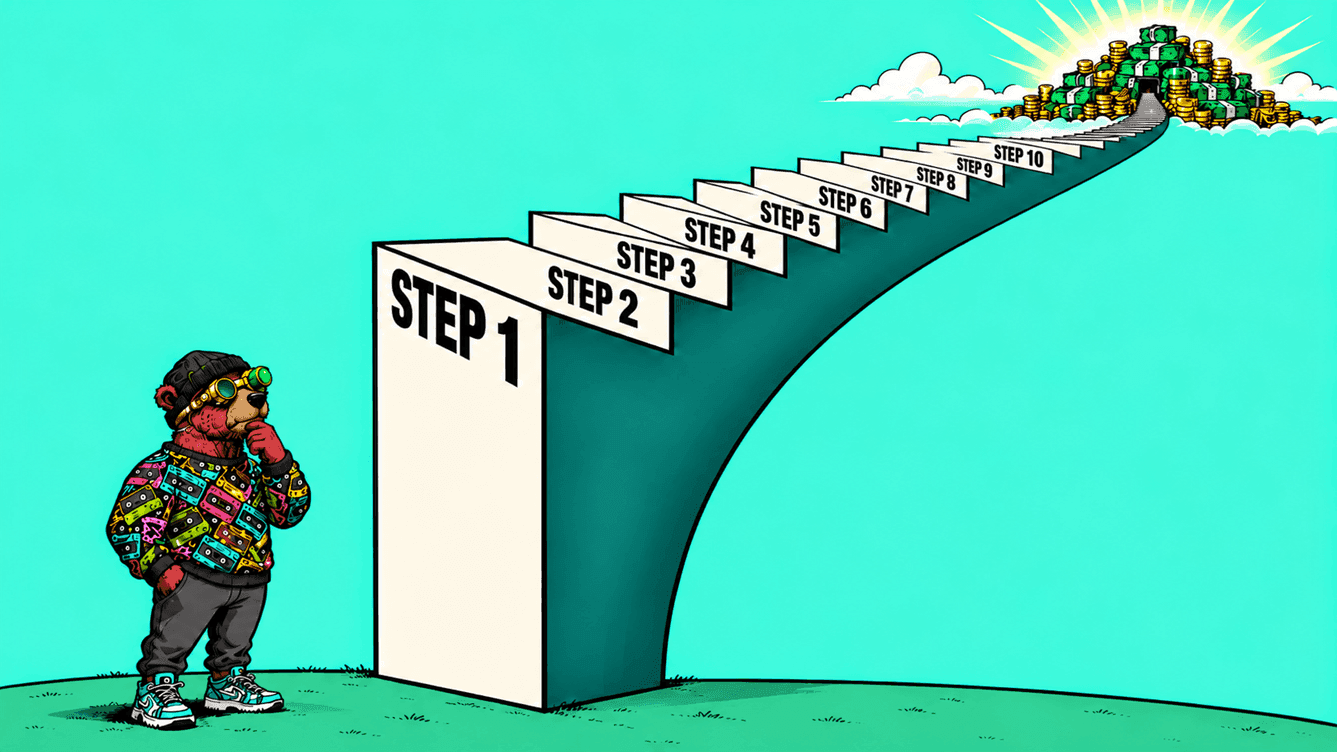
Step 1. Choose a format
Basic is the better fit for a first challenge. It has two stages, but the limits are softer: 5% daily drawdown and 10% maximum. Accelerated is passed in a single stage, but it requires 10% profit with a 3% daily limit, so it suits traders with a proven strategy. Turbo opens straight away as a funded account, with no evaluation. But its drawdown limit is dynamic: the 6% is measured from the highest balance reached, so the level at which the account closes rises along with it. And the 30% rule blocks withdrawals if a single day brought too large a share of the profit. That's why Turbo requires steady trading without big spikes.
Step 2. Match the notional to your budget
Plan your prop trading budget for 3–5 attempts, not one. If your money only covers one challenge with a large notional, it makes more sense to take several attempts on $10,000–$25,000 accounts. Mistakes cost less that way, and you still have room for the next attempt. Many of the traders who withdraw profit regularly started with small accounts.
Step 3. Test your strategy in advance
Before paying for a challenge, run your strategy on a demo account for at least 2–4 weeks. That's enough time to see in which market conditions it performs poorly, how many losing trades in a row happen in practice and whether the strategy fits within the daily limit.
Step 4. Set your risk per trade
Risk per trade is the amount the trader loses if the stop-loss is hit. A stop-loss is an order that automatically closes a trade at a set loss. The guideline is 0.5–1% of the starting balance. That's stricter than the classic advice for a personal account: CME Group advises new traders to risk 1–3% of the account on a single trade, but a prop account has hard drawdown limits. For example, on a $25,000 Basic account that's $125–$250. At this level of risk, the account can take 9 or more losing trades in a row before reaching the maximum drawdown. We explain how to calculate risk for your format and number of trades per day in How Much to Risk per Trade in Prop Trading.
Step 5. Trade the challenge steadily
The minimum number of profit days means you can't pass a stage in one lucky day, so plan for 2–4 weeks. Trying to hit the target in 2–3 days usually means excessive risk. It's better to close positions ahead of major economic events: the Events Calendar in the terminal shows market hours and restrictions around US macro events.
Step 6. Request a payout
You can request your first payout from a funded account once all conditions are met:
- at least 14 calendar days have passed since the move to the funded account;
- you have at least 5 profit days;
- the drawdown limits haven't been breached;
- the current balance is above the starting balance of the iteration, which is the stretch between payouts. The first iteration starts from the notional, and each next one starts from the balance after the previous payout.
Payouts arrive in USDT, a stablecoin pegged to the US dollar, on the TON, Base or BSC network, to the trader's crypto wallet. After each payout, the 14-day period and the profit day count start over. All conditions are on the Withdrawal Rules page, and we break down the limits and fees in How Prop Firm Payouts Work.
Mistakes that make traders fail challenges

- Trading without a system. Entering trades on gut feeling without clear criteria. If you can't write your strategy down as a few rules, you don't have one yet.
- Rushing. The urge to pass a stage faster pushes you toward excessive risk, and one or two losing trades close the account.
- Trying to win it back. After a loss, the trader increases position size and opens trade after trade until the daily limit is hit. As CIBC Investor's Edge warns, with this kind of revenge trading the second loss can be even larger than the first. We describe the signs of this state in 5 Types of Trading Tilt.
- Crypto exchange habits. Leverage lets you open a position larger than your own collateral, but it multiplies both profit and loss by the same factor. Maximum leverage and going all in on the balance lead to breaching the limits within a few trades.
- Not tracking drawdown. The trader doesn't know how much room is left before the daily and maximum limits and only finds out about the breach after the fact. Both limits also count unrealized loss, meaning the loss on trades that are still open.
- Betting everything on one attempt. The whole budget goes into one challenge, and after failing it the trader quits prop trading instead of analyzing the mistakes. The AI challenge review helps you understand what went wrong: it shows the main mistakes and an improvement plan.
Scaling: how to go from one payout to several accounts
After the first payouts, a trader can pass new challenges and hold several funded accounts at once. The total notional of Basic and Accelerated funded accounts is capped at $400,000, and Turbo accounts have a separate $100,000 limit. The limits are calculated from account notionals, so balance growth from profit doesn't affect them. The $400,000 limit fits, for example, two $200,000 accounts or four $100,000 accounts.
If a new account doesn't fit within the limit, it still becomes a funded account, but it gets the Paused status and doesn't expire. You'll be able to trade on it once room frees up in the limit. Details are on the Scaling page.
There are two ways to scale:
- Gradually. Part of each payout goes toward a new challenge of the same or the next notional. Growth is slower, but a mistake on a new account doesn't wipe out your income.
- Quickly. The trader moves to large notionals right away. Income grows faster, but every failed attempt costs more.
The same rules apply on several accounts as on one. Identical trades in the same direction on different accounts are allowed. But you can't open a buy on one account and a sell of the same instrument on another: that's hedging between accounts, and it's prohibited.
In prop trading, you earn a share of the profit from a funded account: 80% under the standard split and 90% with the add-on option. A large notional changes the scale of income: 5% profit on a $25,000 account brings the trader $1,000, while on a personal $1,000 deposit you would have to double the account. And the trader only risks the cost of the challenge.
Few traders pass the challenge, so income is measured over a series of attempts: one payout can cover several failed challenges, as long as each new attempt is better than the last. Budget for 3–5 attempts, test your strategy on a free demo account and keep risk within 0.5–1% per trade.
After the first payouts, you can scale up: hold several funded accounts with a total notional of up to $400,000 on Basic and Accelerated and up to $100,000 on Turbo. Prop trading doesn't guarantee income, but it lets you trade a large notional with a risk you know in advance.
Start now: 👉 Upscale.trade | Telegram Bot
Follow us: 📺 YouTube | 𝕏 Twitter
Community: 💬 Telegram chat | 🎮 Discord
What are a challenge and a funded account, in simple terms?
A challenge is a paid evaluation: the trader needs to hit a set profit target without exceeding the loss limits. A funded account is an account with a defined notional that the trader gets after passing the challenge. Its profit is shared with the platform, and the trader withdraws their share as payouts.
Can you make money in prop trading in 2026?
Yes, but income isn't guaranteed. The trader passes a challenge, gets a funded account and keeps 80% of the profit, or 90% with an add-on option. According to industry data, about 14% of traders pass the challenge and about 7% get a payout, so the ones who make money are those who budget for several attempts and strictly follow the limits.
How much can you make on a funded account?
It depends on the notional and your trading results. For example, 5% profit on a $25,000 account is $1,250, and the trader's payout at an 80% split is $1,000. On a $100,000 account, the same result brings $4,000. In one period, which lasts at least 14 calendar days, you can withdraw no more than the limit: from 50% of the notional on a $5,000 account to 15% on a $200,000 account.
Why is prop trading better than trading your own deposit?
Scale and limited risk. To earn $1,000 on a personal $1,000 deposit, you need to double the account, while on a $25,000 funded account 5% profit is enough. And the trader only risks the cost of the challenge, not the entire deposit.
How many attempts should you budget for a challenge?
Plan your budget for 3–5 attempts, not one. One payout can cover several failed challenges: at an illustrative price of $100 per attempt, a $1,000 payout covers 10 attempts. If your budget only covers one large challenge, it makes more sense to take several attempts on $10,000–$25,000 accounts.
Which challenge should a beginner choose?
Basic is the better fit for a first challenge: it has two stages, but softer limits, with 5% daily and 10% maximum drawdown. Accelerated is passed in one stage but requires 10% profit with a 3% daily limit. Turbo opens straight away as a funded account, with no evaluation, but it requires steady trading because of the 6% dynamic drawdown and the 30% rule.
When can you get your first payout?
No earlier than 14 calendar days after moving to the funded account. You also need at least 5 profit days, no drawdown limit breaches and a balance above the starting one. Payouts arrive in the USDT stablecoin.
How do you scale prop trading income?
Pass new challenges and hold several funded accounts at once. On Upscale, the total notional of Basic and Accelerated funded accounts is capped at $400,000, and Turbo accounts have a separate $100,000 limit. An account that doesn't fit within the limit is paused and doesn't expire.