Prop Firm Drawdown Types: Daily, Maximum and Trailing Explained

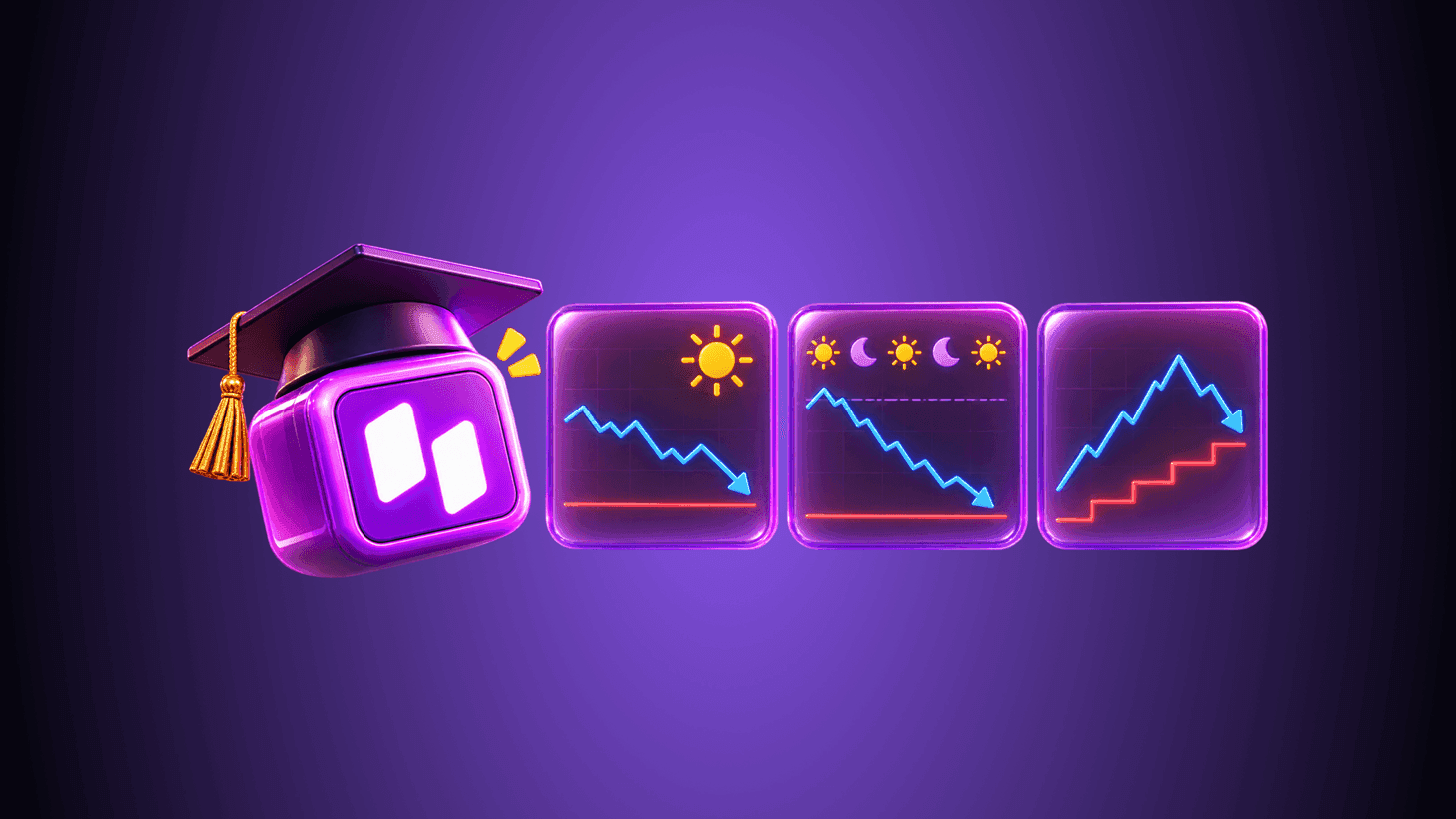
What types of drawdown are there in prop trading? There are three main ones: daily, maximum (also called overall) and trailing drawdown, which some firms call dynamic. Daily drawdown caps how much you can lose in a single trading day and resets every day. Maximum drawdown sets the account's overall floor: in the static model, the floor is tied to the starting balance and does not move as the account grows. Trailing drawdown is a type of maximum drawdown in which the floor follows the highest balance, so profit does not widen your buffer. Each firm's rules also decide whether unrealized PnL on open positions counts and what time of day the daily limit resets. Drawdown is where most failed challenges end: according to one prop firm's internal data, 78.7% of failed evaluations hit the daily limit and another 15% hit the maximum limit. Below we break down how each type works, what makes it dangerous and how drawdown works on Upscale.
If you are new to the model, start with What Is Prop Trading?. For sizing positions around the limits, see our guide on how to pass a crypto prop challenge.
What drawdown is and why it is the key rule in prop trading
In classic risk management, drawdown is the decline in account value from a peak to the low that follows it. Maximum drawdown, or MDD, measures the deepest such decline over a period and is calculated as (trough − peak) ÷ peak. For an investor, it is a statistic used to judge a strategy's risk after the fact.
In prop trading, drawdown works differently: it is not a metric but a limit. The firm sets a threshold in advance, and the moment the balance reaches it, the account is closed. It doesn't matter how much profit you had made before or how promising the trade that caused the breach looked.
That is why drawdown limits are what weed out most participants. According to FPFX Tech data reported by Finance Magnates, of 100,000 traders holding more than 300,000 accounts, only 14% passed a challenge and received a funded account, and about 7% made it to a payout. One prop firm published a breakdown of its failed challenges: 78.7% ended with a daily limit breach, 15% with a maximum limit breach, and just 6.3% with all other rules combined. These are one company's internal figures, not industry statistics, but the pattern is telling: challenges are most often lost not for lack of profit but because of a single bad day.
Why drawdown is hard to recover from
Drawdown has a mathematical trap: to get back to the starting balance, you need a gain larger than the loss. A $10,000 account that loses 10% drops to $9,000, and getting back to $10,000 now takes an 11.11% gain.
| Drawdown | Gain needed to return to the starting balance |
|---|---|
| 3% | 3.09% |
| 5% | 5.26% |
| 6% | 6.38% |
| 8% | 8.70% |
| 10% | 11.11% |
| 20% | 25% |
| 50% | 100% |
At small values the difference is barely noticeable, but in a challenge it stacks on top of the profit target. If Stage 1 of the Basic challenge requires a 5% gain and you have lost 5% over a few days, you now need not 5% but about 10.5% of your current balance to reach the target.
Daily drawdown
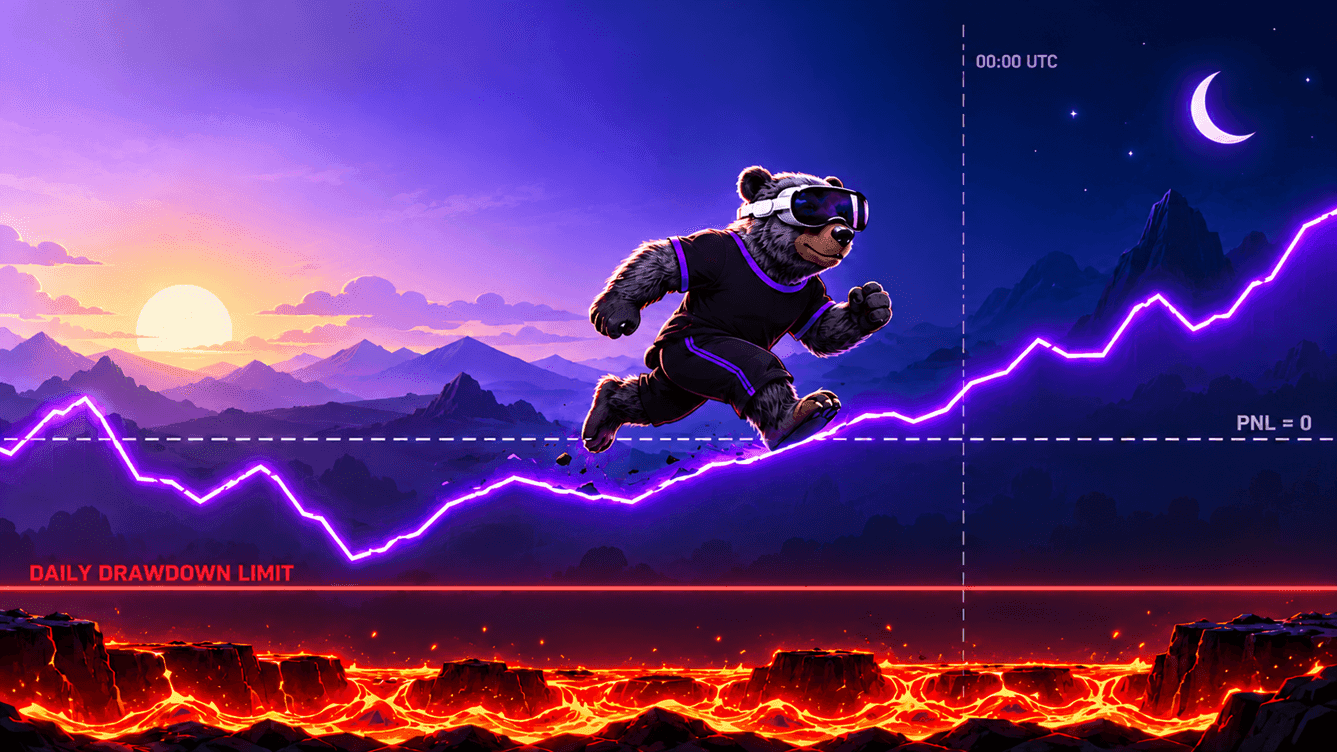
Daily drawdown caps your loss for a single trading day. It is measured from the balance at the start of the day, and at a set time the limit resets and starts over. Yesterday's loss does not affect today's limit, but yesterday's profit does not extend it either.
Firms' rules differ in three details:
- Reference point. The balance at the start of the day, the equity at the start of the day, or whichever of the two is higher.
- Reset time. Midnight UTC, the broker's server time or the exchange's time.
- Open positions. Whether unrealized losses count or the limit is checked against closed trades only.
How it works on Upscale
On Upscale, the daily limit is 5% on the Basic challenge and 3% on the Accelerated challenge, and the same values apply to the funded accounts that follow. The limit is measured from the balance at the start of the trading day, including unrealized PnL, and resets at 00:00 UTC. On a $10,000 Basic account, a drop to $9,500 at any point during the day closes the account immediately.
There is a detail that is easy to miss: if a position is carried past midnight, its unrealized profit or loss at 00:00 UTC becomes part of the new day's starting balance. Say you have a trade open at 23:50 showing $300 in profit. At 00:00 that $300 becomes part of the starting balance, and if the price reverses in the morning, losing that $300 counts as a loss for the new day. All the calculation rules are on the Challenge & Trading Rules page.
Static maximum drawdown
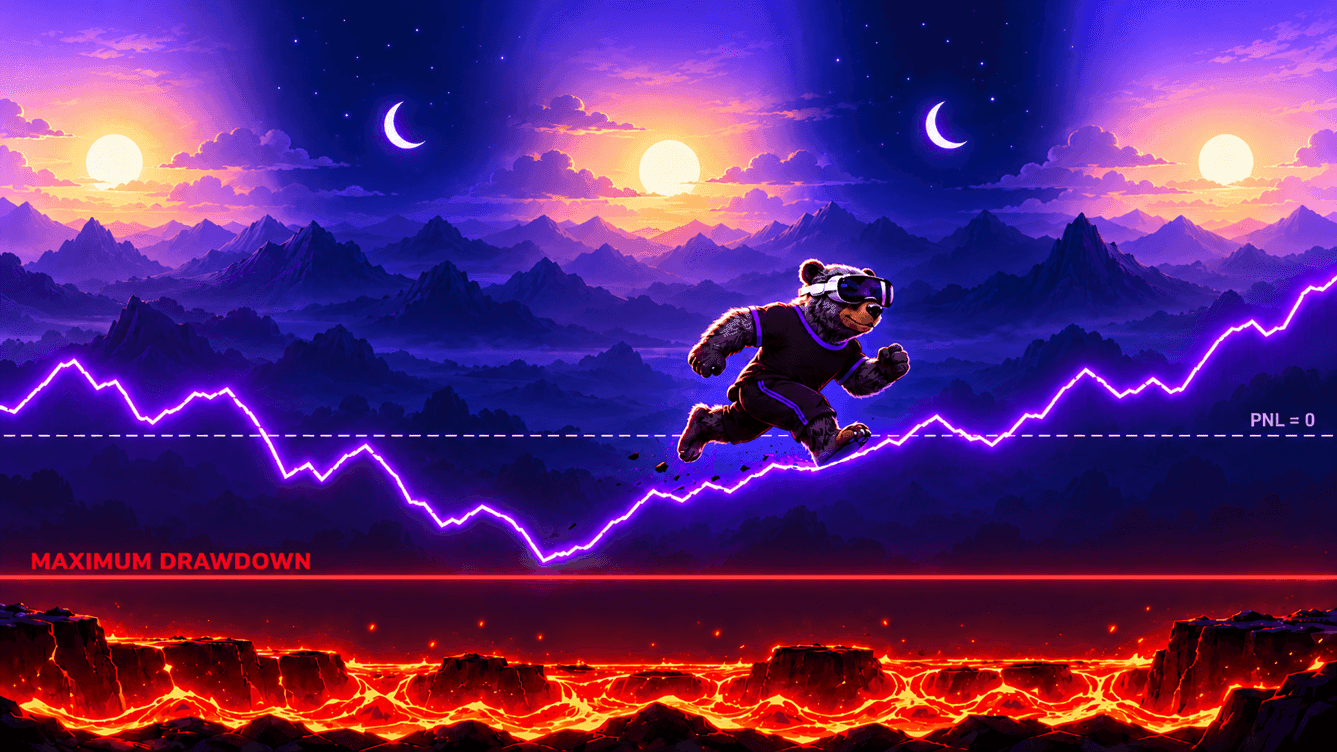
Static, or fixed, maximum drawdown sets the account's overall floor. It is calculated from the starting balance and does not move as the account grows. This is the most straightforward model: you know the floor from day one, and every profitable trade widens your buffer above it.
On a $10,000 account with a 10% limit, the floor sits at $9,000. If the balance grows to $11,000, the floor stays at $9,000, and your buffer grows from $1,000 to $2,000. That is the main advantage of the static model: the profit you earn works as a safety cushion.
How it works on Upscale
Maximum drawdown from the starting balance applies to the Basic and Accelerated challenges and to the funded accounts that follow them:
- Basic: 10%. For new challenges with a $200,000 notional, it is 8% in Stage 2 and on the funded stage. The change is listed in the changelog, and challenges bought earlier keep their previous parameters.
- Accelerated: 6%.
There is one more detail for funded accounts. Each payout ends the current trading iteration, and the balance after the payout is deducted becomes the starting balance of the new iteration. The maximum drawdown floor is recalculated from that balance. You can read more about iterations on the Withdrawal Rules page.
Trailing drawdown
Trailing drawdown, also called dynamic drawdown, is a type of maximum drawdown that is measured not from the starting balance but from the highest balance reached. Every new high lifts the floor, while losses leave the floor where it is. So profit does not build a cushion here: the floor follows the account, and the distance to it stays the same percentage of the high instead of growing by the amount you have earned.
The trailing model comes in several variants:
- Intraday. The floor updates in real time, including on unrealized profit. If a trade showed a large gain at its peak but closed with a small one, the floor has already moved up toward that peak.
- End-of-day. The floor is recalculated once a day based on the closing balance. Intraday peaks do not affect it.
- Locked. The floor rises only to a set level, such as the starting balance, and becomes static after that.
The main danger of trailing drawdown is that it is easy to underestimate. A trader looks at a balance that has grown and feels there is room to spare, even though the floor has risen along with it.

How it works on Upscale
Dynamic drawdown applies to the Turbo format, where you trade on a funded account from the start and there is no daily limit. The limit is 6% of the highest balance and is recalculated at every new high. One Upscale-specific detail: when you withdraw profit, the highest balance and the drawdown floor are lowered accordingly.
A worked example from the Upscale documentation:
| Step | Balance | Highest balance | Drawdown floor |
|---|---|---|---|
| Start | $10,000 | $10,000 | $9,400 |
| Balance grows | $12,000 | $12,000 | $11,280 |
| $1,000 withdrawn | $11,000 | $11,000 | $10,340 |
After the payout, the permitted drop narrows from $720 to $660, because the 6% is now calculated from a smaller amount. All limits on Upscale are calculated from the balance including unrealized PnL. In Turbo, plan your risk from the current high, not from the starting notional.
Balance or equity: what goes into the calculation
Even with identical percentages, two firms can calculate drawdown differently. The key question is whether open positions count.
- Closed-trade balance. The limit is checked only after a position is closed. A floating loss on an open trade can temporarily push equity below the floor.
- Equity (including unrealized PnL). The limit is checked in real time. A floating loss can get the account closed before you have a chance to exit the trade.
Upscale uses the second approach: all drawdown limits on the challenge and on the funded account are calculated from the balance including unrealized PnL. Unrealized profit works the other way and moves the account further from the floor. At the same time, only realized results from closed trades count toward the profit target, so holding a winning position open to hit the target makes no sense.
Drawdown types compared
| Type | Measured from | Does the floor move? | When it resets | Main risk |
|---|---|---|---|---|
| Daily | Balance at the start of the day | New each day | At a set time of day | One bad day or a string of revenge trades |
| Static maximum | Starting balance | No | Never | Slowly accumulating losses |
| Trailing (intraday) | Highest equity in real time | Up only | Never | The floor rises on unrealized peaks |
| Trailing (end-of-day) | Highest end-of-day balance | Up only | Never | The buffer doesn't grow with profit |
Upscale formats at a glance
| Format | Daily drawdown | Maximum drawdown | Maximum drawdown base |
|---|---|---|---|
| Basic | 5% | 10% (8% for new $200,000 accounts in Stage 2 and on the funded stage) | Starting balance |
| Accelerated | 3% | 6% | Starting balance |
| Turbo | Not applied | 6% | Highest balance (dynamic) |
Unless daily drawdown protection is enabled, breaching any limit closes the account immediately, open positions are closed at market price and accumulated profit is forfeited.
How to avoid breaching a limit

Set a personal daily stop below the firm's limit. If the daily limit is 5%, stop trading after a loss of, say, 2.5–3%. That way you still have room after a bad day, and the decision to stop is yours, not the system's.
Size risk from what is left, not from the notional. What matters is not the limit itself but the distance from your current balance to the floor. If you are $400 away from the maximum drawdown floor, risking $200 per trade means two losing trades in a row could close the account.
Watch your positions before 00:00 UTC. Unrealized results at the reset become part of the new day's starting balance. Sometimes it is wiser to lock in profit before midnight than to give it back out of the next day's limit.
In Turbo, plan payouts ahead. Withdrawing profit lowers the highest balance and shrinks the permitted drop in dollar terms. After a payout, recalculate your position sizes.
Use protection against one bad day if it suits your style. On the Basic and Accelerated challenges, you can add daily drawdown protection at purchase. It costs 15% of the base challenge price and triggers once: when the daily limit is reached, positions are closed and trading is blocked until 00:00 UTC, but the account stays active. The option does not cover maximum drawdown.
Review every breach. If a limit does get hit, Upscale's AI challenge review shows which trades and habits led to the failure. And if a Basic or Accelerated funded account is closed, the platform may offer to restore it so you don't have to start from scratch.
In prop trading, drawdown is not a statistic but a limit, and breaching it closes the account. There are three main types. Daily drawdown caps the loss for a day and resets every day. Maximum, or overall, drawdown in the static model is tied to the starting balance, and profit widens the buffer above it. Trailing drawdown is a type of maximum drawdown that follows the highest balance, so profit does not widen the buffer above the floor.
Percentages on their own say little. What matters is what the limit is measured from, whether open positions count and when the daily threshold resets. The same 5% limit can leave you with very different amounts of room depending on those details. That is why the drawdown rules are worth reading before you buy a challenge, not after your first breach.
On Upscale, limits are calculated from the balance including unrealized PnL. The Basic and Accelerated formats use daily and static maximum drawdown, while Turbo uses only dynamic drawdown from the highest balance. Keep a personal daily stop below the limit, size risk from what is left above the floor and watch your positions before 00:00 UTC. You can test how your strategy behaves under these rules on a free demo account.
Start now: 👉 Upscale.trade | Telegram Bot
Follow us: 📺 YouTube | 𝕏 Twitter
Community: 💬 Telegram chat | 🎮 Discord
What is drawdown in prop trading?
It is a limit on how far the account balance can fall. The firm sets a percentage threshold in advance, and if the balance reaches it, the account is closed and accumulated profit is forfeited. There are usually two limits: a daily one that caps the loss for a day, and a maximum one that sets the account's overall floor.
What is the difference between daily and maximum (overall) drawdown?
Daily drawdown is measured from the balance at the start of the trading day and resets every day, so yesterday's loss does not shrink today's limit. Maximum drawdown applies throughout the whole challenge or funded stage and does not reset daily. Breaching either limit closes the account.
What is trailing drawdown?
It is a type of maximum drawdown measured from the highest balance reached rather than the starting one. Every new high lifts the floor, and losses do not lower it. Unlike the static model, profit does not widen your buffer: the floor follows the account.
Do unrealized losses count toward drawdown?
It depends on the firm's rules. Some check the limit against closed trades only, others against equity in real time. On Upscale, all drawdown limits are calculated from the balance including unrealized PnL, so a losing open position can breach a limit before it is closed.
When does the daily drawdown reset on Upscale?
At 00:00 UTC. The new day's limit is measured from the balance at that moment, including the unrealized result of open positions. If a position is carried past midnight in profit and that profit is gone by morning, the loss counts toward the new day.
What drawdown limits does Upscale use?
On the Basic challenge, the daily drawdown is 5% and the maximum is 10% of the starting balance (8% for new $200,000 accounts in Stage 2 and on the funded stage). On the Accelerated challenge, the limits are 3% and 6%. The Turbo format has no daily limit, and its dynamic drawdown is 6% of the highest balance.
Can I keep my account after breaching the daily limit?
Yes, if you added daily drawdown protection when buying a Basic or Accelerated challenge. It costs 15% of the base challenge price and triggers once: positions are closed, trading is blocked until 00:00 UTC and the account stays active. The protection does not cover a maximum drawdown breach.