Crypto Prop Trading: Not Forex Prop With a Bitcoin Label | Upscale

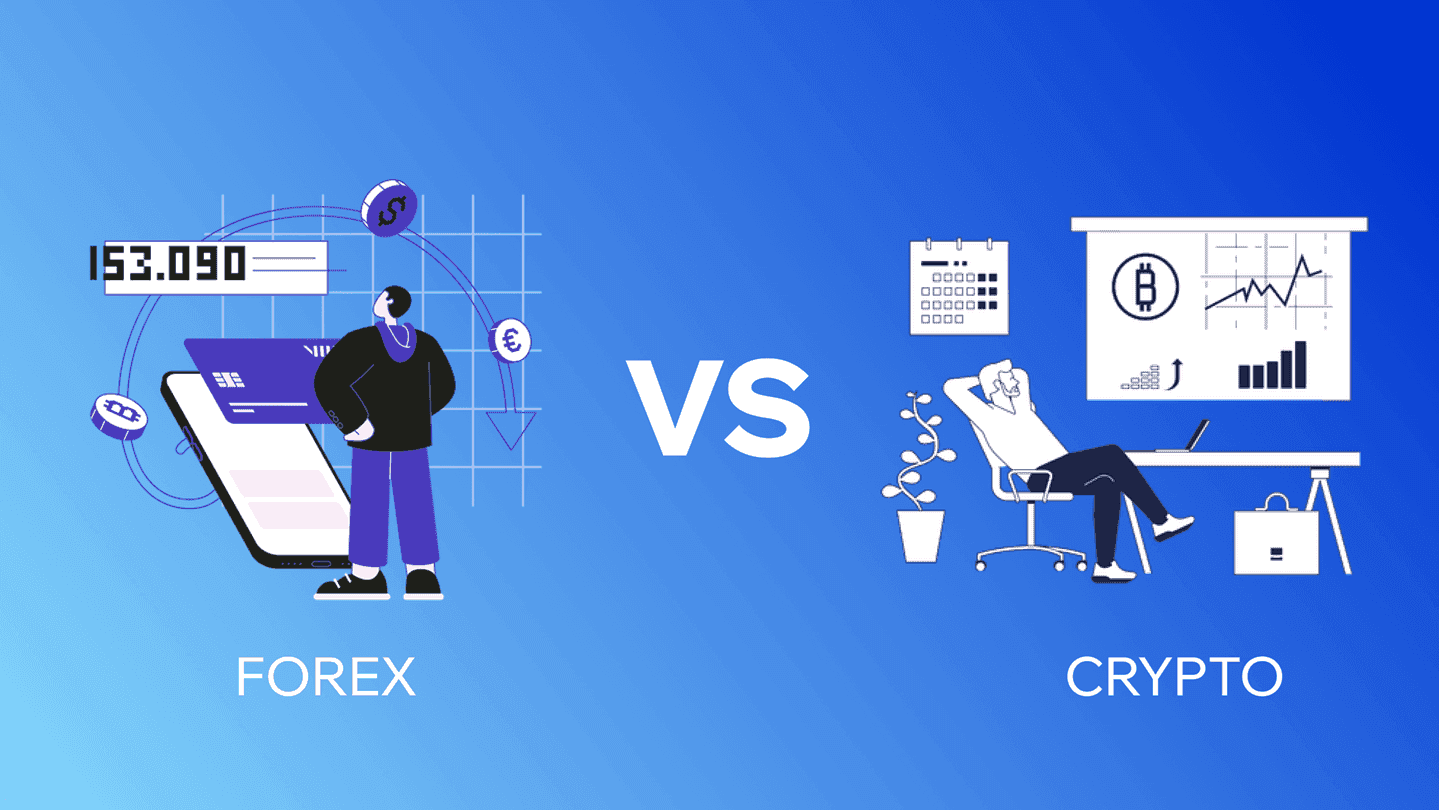
Most platforms marketed as "crypto prop firms" are forex prop firms that added Bitcoin as a line item. The distinction matters because forex-first architecture — drawdown limits calibrated to 0.5% daily moves, trading hours restricted to weekday sessions, risk engines designed for EUR/USD spread behavior — structurally disadvantages crypto traders operating in a market where 5–10% daily swings are routine, liquidity shifts between exchanges on a minute-by-minute basis, and the market never closes. A crypto-native prop firm builds its entire infrastructure around these realities: 24/7 risk monitoring, drawdown limits sized for crypto volatility, oracle-based pricing that aggregates across exchanges rather than relying on a single broker feed, and payout rails that don't depend on banking systems that may restrict access based on geography. The difference is not cosmetic — it determines whether a consistently profitable crypto trader can pass a challenge designed for their market, or whether they fail structural constraints borrowed from a different asset class. According to Velotrade's 2026 analysis, "forex-first firms often design rules and risk assumptions around forex volatility — crypto has different behavior: 24/7 sessions, sharper intraday expansion, and different liquidity conditions around macro events." This article breaks down the five structural differences between crypto-native and forex-first prop firms, explains why the distinction creates measurably different outcomes for traders, and provides a framework for evaluating which model fits a crypto trader's actual needs.
The Forex-First Problem: Why Adding Crypto Isn't Enough
When a forex prop firm "adds crypto," what actually happens is minimal. Bitcoin and Ethereum appear as tradeable instruments on MetaTrader alongside EUR/USD and GBP/JPY. The same drawdown engine, the same risk parameters, the same session-based architecture applies to all instruments. This creates a structural mismatch that manifests in measurable ways.
A forex drawdown limit of 5% daily is generous for a market where EUR/USD moves 0.5–0.8% on an average day. That same 5% limit becomes a trap in crypto, where Bitcoin routinely moves 3–5% intraday and altcoins can swing 8–15%. The trader isn't less skilled — the risk container wasn't built for the asset class.
This is not a theoretical concern. According to FPFX Tech, 73% of failed prop accounts violated their own stop-losses in more than 30% of trades. In crypto specifically, the PipFarm survey of 2,777 prop traders (2025) found that 37.8% cite lack of discipline as their primary failure cause — but "lack of discipline" in a forex-first crypto environment often means the trader's strategy was sound for crypto volatility, while the firm's rules were not.
The contrastive pair that defines this category: A forex-first prop firm asks a crypto trader to succeed under forex constraints. A crypto-native prop firm builds constraints around how crypto actually behaves.
Five Structural Differences That Change Outcomes
1. Market Hours: 24/7 vs Session-Based

Forex operates on a 24/5 schedule with distinct session overlaps (London, New York, Tokyo) that concentrate liquidity and volatility. Prop firms built for forex assume this rhythm: risk resets happen at daily close, position limits reference session boundaries, and overnight holding rules reflect the weekend gap risk inherent to five-day markets.
Crypto never closes. There is no "overnight" in a market that trades continuously across global time zones. Weekend gap risk — a significant factor in forex risk management — does not exist. But crypto introduces its own timing patterns: Asian session altcoin pumps, US session Bitcoin correlation with equities, European session institutional flow. A crypto-native prop firm calibrates its risk monitoring to this 24/7 reality rather than forcing crypto into forex session boxes.
The practical impact: a forex-first firm may reset daily drawdown limits at a fixed time (say, 5 PM EST server close) that has no relationship to crypto market structure. A crypto trader whose strategy depends on Asian session volatility may find half their trading day counted in the "wrong" daily period. This isn't a minor inconvenience — it fundamentally misaligns risk accounting with trading reality.
2. Volatility Calibration: 0.5% vs 5%

The average daily range of EUR/USD — the world's most liquid forex pair — sits between 0.4% and 0.8% in normal conditions. Bitcoin's average daily range is 2–5%, and altcoins routinely see 5–15%. This order-of-magnitude difference in volatility demands different risk architecture, not the same architecture applied to different instruments.
What this means for drawdown limits: A 5% daily drawdown limit gives a forex trader 6–12 full stop-losses at 1% risk per trade before hitting the limit. That same limit gives a crypto trader 1–2 bad trades in a volatile session before the account is blown — not because they risked too much per trade, but because the instrument naturally moves more. The Locke and Mann (2005) finding that faster loss-cutters earned 65% more annually was measured on futures — instruments with volatility profiles between forex and crypto. The principle scales: stop-loss discipline matters more, not less, in higher-volatility environments. But the structural container must accommodate the asset class.
What this means for profit targets: A forex-first challenge requiring 8% profit in Phase 1 is calibrated to a market where consistent traders might average 1–3% monthly. In crypto, the same 8% target might be achievable in days rather than weeks — but only if the drawdown limits don't eliminate the trader first. Crypto-native firms either widen drawdown parameters, adjust profit targets, or both, to create a mathematically achievable evaluation for traders operating in higher-volatility conditions.
3. Pricing Infrastructure: Single Broker vs Oracle Networks

Most forex prop firms route orders through a single broker or liquidity provider. Price is whatever that broker quotes. In forex, with its $7.5 trillion daily volume per the BIS Triennial Survey 2022, single-broker pricing is generally reliable — spreads are tight, and manipulation risk is minimal on major pairs.
Crypto is structurally different. Prices diverge across exchanges — Binance, Bybit, OKX, Coinbase can show different prices for the same asset at the same moment, especially during volatility spikes. A prop firm using a single exchange feed exposes traders to that exchange's specific slippage characteristics, potential outages, and pricing anomalies.
Oracle-based pricing — aggregating price feeds from multiple sources through networks like Pyth Network — eliminates single-exchange dependency. If one exchange experiences a flash crash or liquidity gap, the oracle-aggregated price reflects the broader market reality rather than one venue's anomaly. For prop traders, this means stop-losses execute against fair market price rather than a single exchange's temporary dislocation — a distinction that can be the difference between a normal stop and an account-ending event.
The contrastive pair: Forex-first firms use single-broker feeds because forex market structure makes this adequate. Crypto-native firms use oracle pricing because crypto market structure makes single-source pricing a structural risk.
4. Payout Rails: Banking Systems vs Crypto-Native

Forex prop firms overwhelmingly pay through bank wires, PayPal, or payment processors that require KYC verification and function within the traditional banking system. This works for traders in jurisdictions with unrestricted banking access. For traders in countries facing sanctions, banking restrictions, or capital controls — a significant portion of the global crypto trading population — these payment rails are inaccessible.
This is not a niche concern. FTMO, the industry's largest forex-first prop firm, has blocked traders from Russia and several other countries since 2022. FundedNext restricts futures services for Russian traders (Terms of Service, section 5.4). The list of restricted jurisdictions across forex-first firms covers hundreds of millions of potential traders.
Crypto-native payout rails — stablecoins (USDT, USDC), TON, or other crypto directly to a trader's wallet — bypass banking infrastructure entirely. No bank approval needed, no geographic restrictions imposed by payment processors, no multi-day settlement waiting for wire transfers. The payout happens in hours, not days, and goes directly to a wallet the trader controls.
This isn't just a convenience feature — it's a structural access decision. A firm that consciously builds crypto-native payout rails is making a statement: a trader's ability to earn shouldn't depend on which country they were born in or which banking system they have access to.
5. KYC Requirements: Identity Gates vs Wallet-Based Access
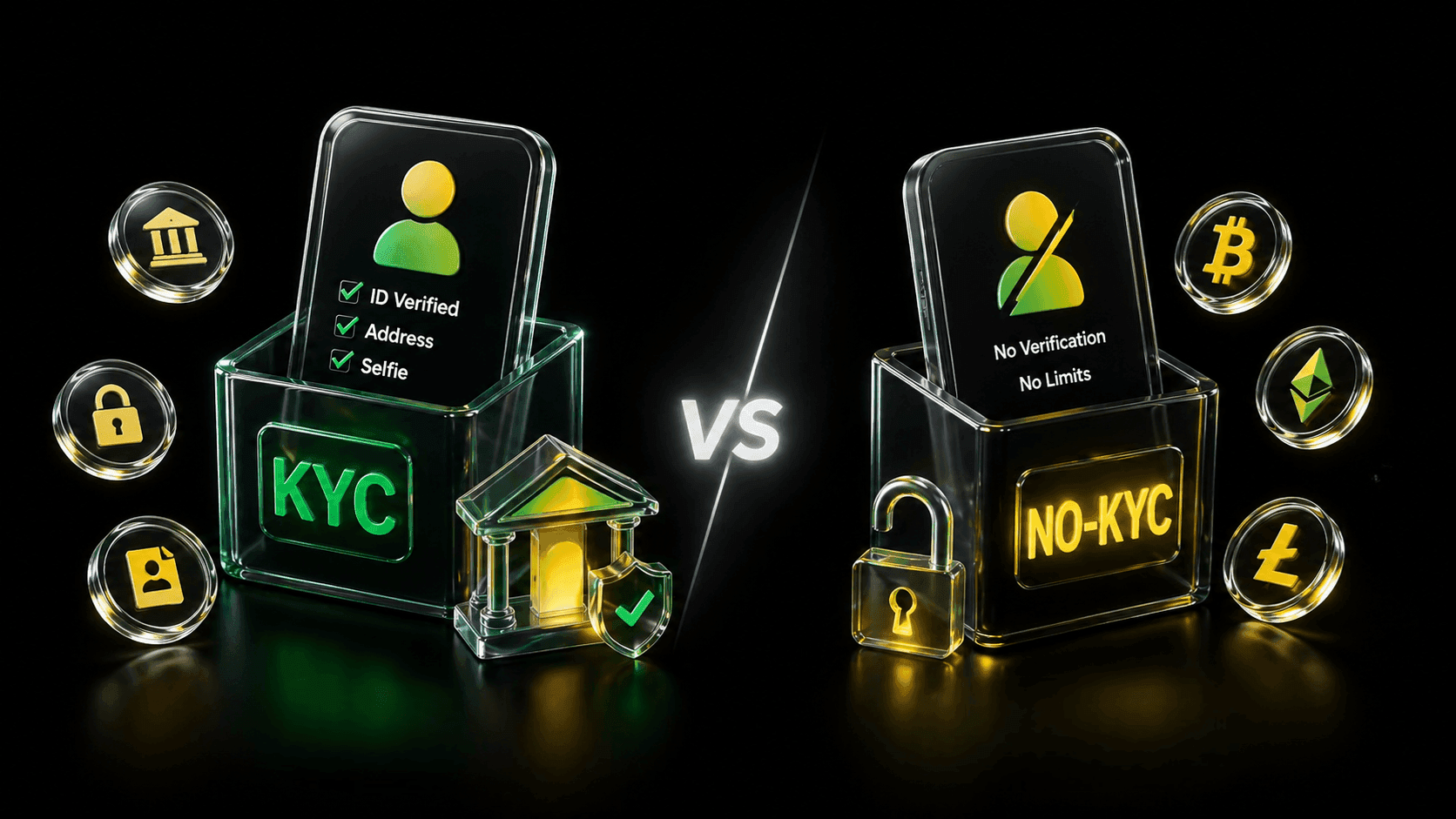
KYC (Know Your Customer) verification is standard at forex-first prop firms because they operate within regulated financial infrastructure that mandates identity verification. This creates a gate: traders must provide government-issued identification, proof of address, and sometimes selfie verification before they can access a challenge.
For traders in jurisdictions with limited documentation infrastructure, political instability, or privacy concerns, KYC is not a minor friction — it's a barrier that prevents participation entirely. The crypto ecosystem was built on the principle of permissionless access: a wallet address is identity enough for participation.
Crypto-native prop firms that operate without KYC — using wallet-based access instead — aren't cutting corners on compliance. They're making a deliberate architectural choice: the evaluation should measure trading skill, not passport status. If a trader can demonstrate consistent profitability under defined risk parameters, the origin of their identity document is irrelevant to that demonstration.
The hard NO that defines this boundary: Upscale consciously rejected KYC — not because the infrastructure doesn't exist, but because banking restrictions and documentation barriers shouldn't determine who can trade on funded capital. A crypto wallet is sufficient identity for a trading evaluation. This is a deliberate architectural decision, not a compliance shortcut.
How to Evaluate Whether a Prop Firm Is Crypto-Native
Not every firm that trades crypto is built for crypto. The following checklist distinguishes structural alignment from surface-level instrument availability.
Drawdown calibration test: Does the firm's daily drawdown limit account for crypto's average daily range? If a 5% daily limit is applied identically to forex and crypto instruments, the firm is using forex-calibrated risk. A crypto-native firm either applies wider limits to crypto, uses separate risk parameters per asset class, or explicitly designs its drawdown model around crypto volatility.
Session architecture test: How does the firm handle daily resets, overnight positions, and weekend trading? If the firm's risk engine assumes a Monday-Friday trading week with session closes, it was built for forex. A crypto-native firm operates continuous risk monitoring with no artificial session boundaries.
Pricing source test: What price feed does the firm use for crypto instruments? Single exchange? Aggregated? Oracle-based? If the firm can't answer this question clearly, or if the answer is "our broker's feed," the pricing infrastructure wasn't purpose-built for crypto.
Payout test: Can the trader receive payouts in crypto directly to a wallet? Or does payout require bank verification, wire transfer, or PayPal? Crypto-native payout rails are a structural indicator of infrastructure built for the crypto ecosystem.
Access test: Can a trader from any jurisdiction participate using only a crypto wallet? Or does the firm require government-issued ID, proof of address, and banking verification? The access model reveals whether the firm is operating within traditional finance infrastructure or crypto-native infrastructure.
A firm that passes all five tests is crypto-native. A firm that passes one or two has added crypto to a forex chassis. Both can be profitable — but the trader experience, pass rates, and structural compatibility differ measurably.
Upscale: Architecture Built for Crypto From Day One
Upscale was not a forex firm that added crypto. It was built specifically to solve the problem of capital access for crypto traders — particularly those locked out of traditional prop infrastructure by geography, banking limitations, or KYC requirements.

Against the five-test framework:
Drawdown calibration: Upscale offers multiple challenge types with different drawdown profiles — Basic (5% daily / 10% total), Accelerated (3% daily / 6% total) — allowing traders to select risk parameters that match their strategy's volatility tolerance. The Turbo model uses trailing drawdown from maximum balance, which dynamically adapts to crypto's price behavior. Full specifications in the drawdown protection documentation.
Session architecture: 24/7 risk monitoring with no session-based resets. A trader executing at 3 AM UTC experiences identical platform behavior to one trading during US market hours. No weekend restrictions, no overnight penalties — because crypto doesn't have weekends or overnights.
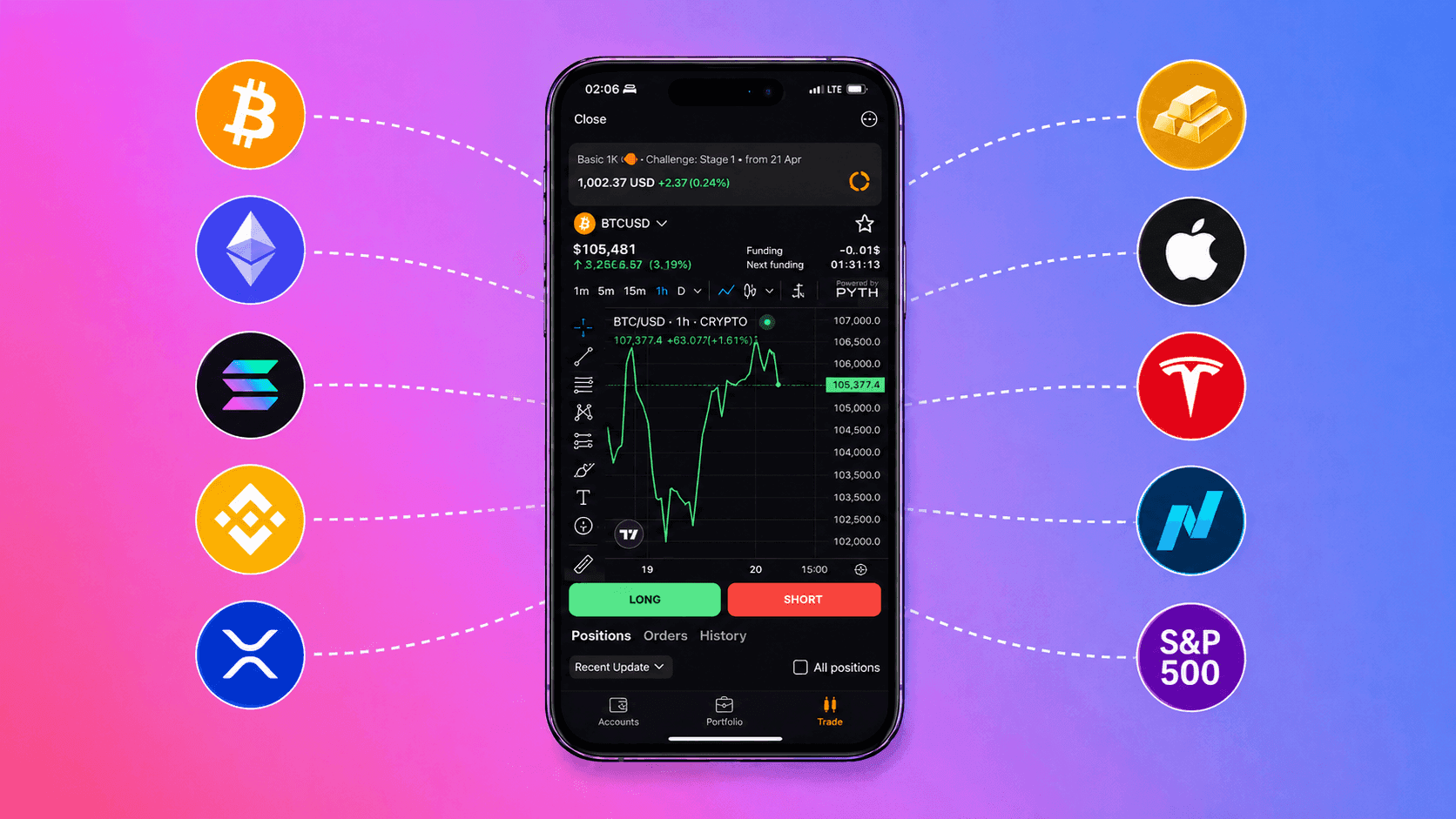
Pricing source: Oracle-based pricing through Pyth Network, aggregating price feeds across multiple sources rather than depending on a single exchange. This structurally reduces the risk of stop-loss execution against flash crashes or exchange-specific anomalies — a problem documented extensively in our guide to slippage in trading.
Payout rails: Crypto-native payouts in TON to the trader's wallet. Bi-weekly payout cycle. No bank verification required, no geographic restrictions on withdrawal. The payout process is documented in withdrawal rules.
Access: No KYC. Wallet-based entry. A trader creates an account, connects a crypto wallet, purchases a challenge, and begins trading. No passport upload, no proof of address, no banking verification. The evaluation measures trading performance — nothing else.
What Upscale deliberately chose NOT to build: No MetaTrader integration — because MT4/MT5 was designed for forex broker infrastructure, not crypto-native execution. No single-exchange dependency — because crypto's fragmented liquidity structure demands aggregated pricing. No geographic restrictions — because the firm's position is that trading skill should be the only qualification for funded capital. These are not limitations; they are architectural decisions that define the category boundary.
Evidence from Funded Traders
The structural argument becomes concrete through trader outcomes. Among Upscale's verified funded traders:
Alexey — an airdrop hunter, not a professional trader by identity — earned $412 in payouts from a $10,000 Basic account over 50 days using a single Bollinger Bands indicator on 1H charts with 5x leverage and sub-1% risk per trade. His strategy would likely fail a forex-first challenge: the altcoin watchlist (DASH, DOT, APT, BSV, IMX) and 24/7 trading schedule don't conform to session-based risk architectures. On a crypto-native platform, the same strategy produced consistent monthly returns.
Maru Joshua — a 19-year-old scalper — generated $3,296 in payouts from a $25,000 account trading Bitcoin on 15-minute timeframes with 1–3 trades per day. The strategy depends on crypto-specific characteristics: round-the-clock market access, Bitcoin's intraday volatility pattern, and execution speed that TradingView's native integration provides.
Albert — a disciplined one-trade-per-day practitioner — earned $2,000+ from a $25,000 account using Smart Money Concept on crypto markets. His approach relies on identifying institutional order blocks and fair value gaps in 24/7 crypto markets — patterns that look structurally different in session-based forex markets where overnight gaps interrupt continuity.
The common thread is not a specific strategy — it's that all three traders' approaches are optimized for crypto market characteristics, and they operate on infrastructure designed for those characteristics.
The Convergence Problem: Why "Multi-Asset" Isn't the Answer
A common response to the crypto-native argument is: "Why not just use a multi-asset firm that offers everything?" The answer is structural compromise.
A multi-asset firm serving forex, stocks, futures, and crypto simultaneously must make design decisions that work across all asset classes. The risk engine calibrates to the lowest common denominator. The platform supports instruments from MetaTrader to TradingView to NinjaTrader, creating maintenance complexity. The compliance framework applies KYC universally because some instruments require it. The payout system routes through banking infrastructure because some markets demand it.
Each compromise is individually minor. Collectively, they create a platform that is adequate for everything and optimized for nothing. The crypto trader experiences forex-inherited constraints. The forex trader might find crypto-specific features unnecessary. Neither gets the purpose-built experience that a specialist firm provides.
This doesn't mean multi-asset firms are bad — for traders who genuinely trade across asset classes, the convenience has value. But for a trader whose primary market is crypto, the architectural alignment of a crypto-native firm provides structural advantages that a generalist cannot match.
The PipFarm survey finding that 45.1% of successful prop traders make only 1–2 trades per day suggests that selectivity — in strategy, in instrument, and in platform — correlates with success more than breadth. Specialization isn't a limitation; it's a competitive advantage.
How to Start: A Crypto Trader's Evaluation Path
For crypto traders evaluating their first prop challenge, the framework is straightforward:
Step 1: Assess your strategy's volatility profile. If your average winning trade captures 2–5% moves and your stop-loss sits at 1–2%, you need a prop firm whose drawdown limits accommodate multiple consecutive stops without account termination. Calculate: at your standard risk per trade, how many consecutive losses can the daily drawdown limit absorb? If the answer is fewer than 3, the firm's limits aren't calibrated for your market.
Step 2: Test the pricing source. If the firm offers a demo or paper trading mode, execute trades during volatile periods and compare fill prices to spot market prices on major exchanges. Significant divergence indicates single-source pricing vulnerability. Oracle-based pricing should track closely with the cross-exchange average.
Step 3: Verify payout accessibility. Before purchasing a challenge, confirm that payout method, payout currency, and payout frequency work for your jurisdiction and banking situation. A firm with excellent trading conditions but inaccessible payouts is worthless.
Step 4: Start with the minimum. A $59–99 challenge on a $5,000–$10,000 account tests whether the platform's infrastructure matches your strategy. FPFX Tech data shows only 5–10% of traders pass their first evaluation — budget for 2–3 attempts as a cost of due diligence, not a sign of failure. Scale only after the first payout confirms the full cycle works.
Step 5: Validate the complete cycle. Your first priority after receiving a funded account is a minimum payout — not maximum profit. Withdraw the smallest possible amount and verify: processing time, payout method, fees, and receipt. Only then scale trading size. The prop firm relationship is only as real as the payout it produces.
For a broader discussion of intraday strategies specifically optimized for crypto prop accounts, see the intraday trading guide. For the risk management framework that applies across all prop trading, the maximum drawdown calculation guide provides the mathematical foundation.
Key Takeaways
The distinction between crypto-native and forex-first prop firms is not marketing — it's architecture. Five structural differences determine whether a crypto trader's strategy survives or fails the evaluation process: volatility calibration (drawdown limits sized for 5% daily moves, not 0.5%), market hours (24/7 continuous risk monitoring, not session-based resets), pricing infrastructure (oracle-aggregated feeds, not single-broker quotes), payout rails (crypto-native to wallet, not banking-dependent), and access model (wallet-based, not KYC-gated). Each difference is individually significant; collectively, they define two fundamentally different products serving two fundamentally different markets.
The forex-first approach to crypto prop trading isn't wrong — it's mismatched. Firms like FTMO and FundedNext built excellent infrastructure for forex and added crypto as an instrument class. For traders who primarily trade forex and occasionally take crypto positions, this works. For traders whose primary market is crypto — who depend on 24/7 access, who trade altcoins with 10–15% daily ranges, who need payouts that don't route through banking systems — the forex-first model creates structural friction that no amount of trading skill can overcome. The Velotrade analysis correctly identifies this: "A crypto-native firm usually calibrates restrictions and risk controls to those realities, which can reduce structural mismatch for dedicated crypto traders."
Upscale exists in this category — not because it added crypto to an existing platform, but because it was built from the foundation to solve a specific problem: giving crypto traders access to funded capital without requiring them to adapt their strategies to forex infrastructure, their identities to KYC systems, or their payouts to banking rails. The deliberate rejection of MetaTrader, of KYC, of single-exchange pricing, and of geographic restrictions are not features missing — they are boundaries that define what a crypto-native prop firm is by explicitly stating what it is not.
A prediction: As centralized exchanges tighten KYC requirements under regulatory pressure, and as banking restrictions expand across jurisdictions, the no-KYC crypto-native prop model will become the primary capital access path for the majority of global crypto traders who lack unrestricted banking infrastructure. The firms that built for this reality from the start — rather than retrofitting forex infrastructure — will have a structural advantage that cannot be replicated by adding a wallet login to an existing MetaTrader deployment.
Start now: 👉 Upscale.trade | Telegram Bot
Follow us: 📺 YouTube | 𝕏 Twitter
Community: 💬 Telegram Chat | 🎮 Discord
Frequently Asked Questions
What is a crypto-native prop firm?
A crypto-native prop firm is one whose entire infrastructure — risk engine, pricing feeds, payout rails, access model — was designed specifically for cryptocurrency markets from the ground up. This is structurally different from a forex-first firm that added crypto as an instrument: crypto-native means 24/7 risk monitoring without session-based resets, drawdown limits calibrated to crypto's 2–5% average daily range rather than forex's 0.5%, oracle-based pricing aggregating across multiple exchanges rather than single-broker feeds, crypto-native payouts to wallets rather than banking-dependent transfers, and wallet-based access rather than KYC-gated entry. The distinction isn't about which instruments are available — it's about whether the platform's architecture matches the market's characteristics.
Why do crypto traders fail challenges at forex-first prop firms?
The most common cause is structural mismatch, not lack of skill. A daily drawdown limit of 5% gives a forex trader 6–12 opportunities to hit a 1% stop-loss before account termination. The same limit gives a crypto trader 1–2 bad trades during a volatile session, because Bitcoin routinely moves 3–5% intraday and altcoins can swing 8–15%. The trader's strategy may be perfectly sound for crypto volatility, but the challenge's risk parameters weren't designed for it. According to FPFX Tech, 73% of failed prop accounts violated their own stop-losses in more than 30% of trades — and in crypto, wider natural volatility makes stop violations structurally more likely when drawdown limits are borrowed from forex calibration.
What is oracle-based pricing and why does it matter for prop trading?
Oracle-based pricing aggregates price feeds from multiple cryptocurrency exchanges through decentralized networks like Pyth Network, rather than relying on a single exchange's quotes. This matters because crypto prices can diverge across exchanges — Binance, Bybit, OKX, and Coinbase can show different prices for the same asset simultaneously, especially during volatility spikes. A prop firm using single-exchange pricing exposes traders to that exchange's specific slippage characteristics, potential outages, and pricing anomalies. Oracle pricing reduces the risk of stop-losses triggering on flash crashes or exchange-specific dislocations that don't reflect broader market reality. For prop traders, this structural difference can determine whether a stop-loss executes at fair market price or at an anomalous level that ends the account.
Can I trade crypto on a forex-first prop firm successfully?
Yes — if your strategy naturally operates within forex-calibrated parameters. Traders who primarily trade Bitcoin with conservative position sizing (0.5% risk per trade), who avoid altcoins with extreme volatility, and who don't depend on 24/7 market access can succeed on forex-first platforms. The structural mismatch primarily affects traders whose strategies require wider stops relative to crypto volatility, who trade during off-hours (Asian session altcoin movements, weekend momentum), or who need crypto-native payout and access infrastructure. The question isn't whether forex-first firms can be profitable for crypto — it's whether the structural constraints force the trader to modify a strategy that works in crypto to fit parameters designed for forex.
Why does Upscale not use MetaTrader?
Upscale deliberately chose not to integrate MetaTrader (MT4/MT5) because the platform was designed for forex broker infrastructure — session-based order routing, single-liquidity-provider pricing, and architecture optimized for currency pairs. Instead, Upscale uses TradingView as its trading terminal, which provides native crypto market data, 24/7 charting without session gaps, and a user interface built for the charting patterns (order blocks, fair value gaps, market structure) that crypto traders actually use. This isn't a limitation — it's an architectural decision that prioritizes crypto-native functionality over backward compatibility with forex infrastructure.
How does no-KYC prop trading work?
No-KYC prop trading replaces government-issued identity verification with wallet-based access. A trader connects a crypto wallet, purchases a challenge, and begins trading. The evaluation measures trading performance — profit targets, drawdown discipline, risk management — without requiring passport uploads, proof of address, or banking verification. The firm's position is that trading skill is the relevant qualification for funded capital, not documentation status. Payouts go directly to the trader's crypto wallet, bypassing banking infrastructure entirely. This model is particularly relevant for traders in jurisdictions with banking restrictions, sanctions, or limited documentation infrastructure — populations that represent a significant portion of global crypto trading activity.
Is crypto prop trading riskier than forex prop trading?
The asset class is more volatile, which creates both higher profit potential and higher risk of drawdown. But the relevant question for prop trading is whether the risk infrastructure matches the asset class. A crypto trader operating at 1% risk per trade with appropriate stop-losses on a platform with crypto-calibrated drawdown limits faces comparable structural risk to a forex trader operating at 1% risk per trade on a forex-calibrated platform. The risk becomes disproportionate when a crypto trader operates under forex-calibrated limits — that's when the 5% daily drawdown gets consumed by normal market movements rather than actual trading errors. The PipFarm survey finding that 45.1% of successful prop traders make only 1–2 trades per day applies equally to both markets: disciplined risk management matters more than the underlying volatility of the instrument.